Are Anker Cables Good? Why Speed Matters in 2026?
Anker cables are widely considered the gold standard for third-party charging accessories in 2026. They offer a perfect balance of premium durability, high-speed performance, and affordability that often outperforms the cables included in your smartphone box.
If you have ever stood in a store aisle staring at a wall of charging cables, you know the struggle. There are cheap options that break in a week and expensive ones that feel like a scam. Somewhere in the middle sits Anker, a brand that has practically become a household name. But are Anker cables good enough to justify the price over the random alternatives you find online?
As we navigate through 2026, the tech landscape has changed. We have faster charging standards, higher power requirements for laptops, and a growing need for long-term cable longevity. After years of testing and community feedback, the consensus remains strong: Anker has managed to maintain its reputation while keeping up with the rapid evolution of USB-C and Thunderbolt technology.
Key Takeaways
- Superior Durability: Anker utilizes advanced materials like double-braided nylon and aramid fiber to ensure their cables survive thousands of bends.
- MFi Certification: Most Apple-compatible cables are MFi certified, ensuring complete safety and compatibility with iPhones and iPads.
- Fast Charging Mastery: Anker leads the way in Power Delivery (PD) and GaN technology integration, supporting the fastest charging standards available today.
- Industry-Leading Warranty: They offer hassle-free, long-term warranties that provide peace of mind for every purchase.
- Eco-Friendly Initiatives: By 2026, Anker has shifted toward more sustainable packaging and materials, making them a conscious choice for tech enthusiasts.
The Anatomy of a High-Quality Cable
To understand why people keep buying these cables, we need to look at what is actually happening inside the rubber or nylon casing. Many generic cables are made with thin, fragile copper wires that lose energy as heat. This results in slow charging and, in worst-case scenarios, damaged ports.
Advanced Material Science
Anker cables are known for their “PowerLine” series, which uses aramid fiber. This is the same material used in bulletproof vests. When you wrap this fiber around the internal wiring, the cable becomes incredibly resistant to fraying, snapping, and internal wire breakage.
In 2026, their newest iteration of braided nylon feels smoother, looks better, and handles accidental spills much better than the standard plastic cables we used to see.
Safety and Certification
Safety is the silent feature that matters most. When you plug your phone into a wall charger, you want to be sure it isn’t going to fry your battery or cause a fire. Anker invests heavily in MFi (Made for iPhone) certification for their Apple cables.
For Android and laptop users, they follow strict USB-IF standards. These certifications aren’t just for show; they mean the cable communicates correctly with your device to pull exactly the amount of power it needs, and not a drop more.
Why Speed Matters in 2026?
In 2026, we aren’t just charging phones. We are charging high-performance laptops, professional-grade cameras, and even gaming consoles using USB-C. A standard cable from five years ago simply cannot handle the power throughput required by today’s devices.
Visual guide about Are Anker Cables Good
Image source: jo-cell.com
Power Delivery (PD) Capabilities
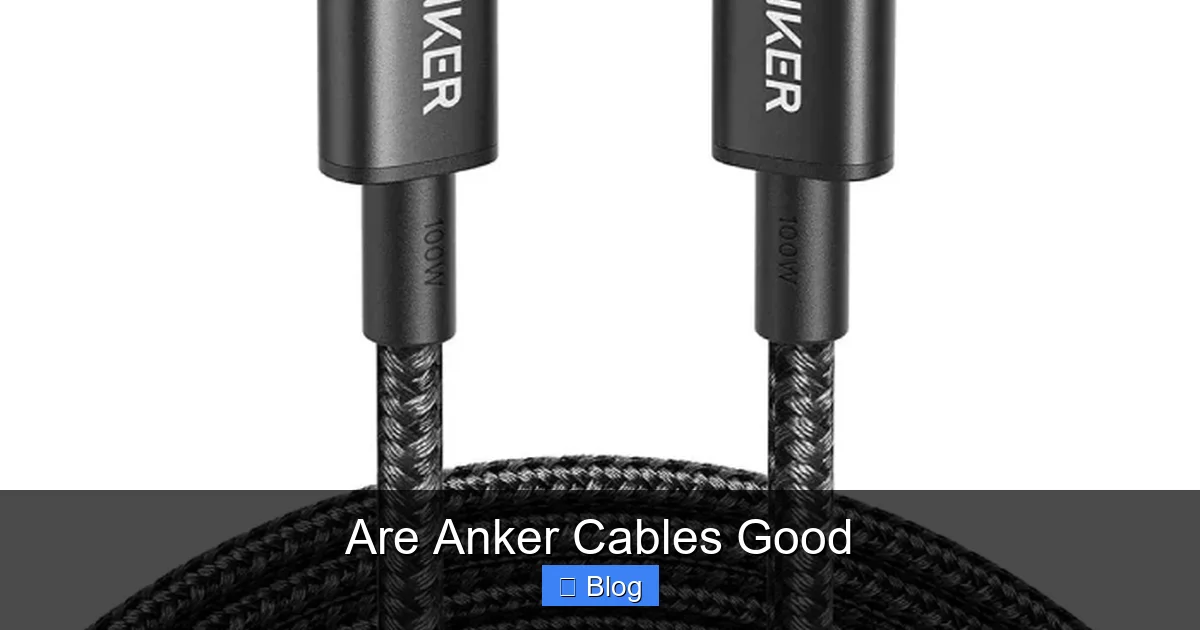
If you use an Anker cable with a 140W charger, you need a cable that can actually carry that 140W of power. Many cheaper “fast charging” cables are actually bottlenecks. Anker’s latest series of USB-C to USB-C cables are built to handle the high-wattage requirements of modern ultra-books. If you use a lower-quality cable, you might find your laptop slowly draining even while plugged in, or charging at a snail’s pace.
Data Transfer Speeds
Charging is only half the battle. If you are a creator or a gamer, moving large files from your SSD to your laptop is a daily task. Anker’s high-end cables support USB 4.0 speeds, meaning you can move huge video files in seconds rather than minutes. Using the right cable makes a massive difference in your workflow efficiency.
The Durability Factor: The “Bend Test”
We have all had that one cable that starts fraying right at the neck where the connector meets the cord. This is the most common point of failure for all electronic accessories. Anker addressed this years ago with reinforced stress points, but in 2026, they have taken it to a new level.
Strain Relief Design
The neck of an Anker cable is engineered to handle thousands of bends. They simulate years of use in their labs to ensure that even if you constantly twist or wrap your cable tightly, it will not expose the internal wires. For someone who carries their charger in a backpack every day, this level of construction is a game-changer.
Long-Term Usability
When you buy a premium cable, you aren’t just paying for the material; you are paying for the longevity. If you buy five cheap cables a year because they keep dying, you are spending more money and creating more electronic waste than if you had simply bought one high-quality Anker cable. By 2026, this “buy it for life” mentality has become a hallmark of the Anker brand.
Is There a Downside to Anker Cables?
No brand is perfect, and it is important to be realistic. Are there situations where an Anker cable might not be the right choice? It really comes down to personal preference and specific needs.
Bulkiness and Flexibility
Because Anker focuses on heavy-duty shielding, some of their cables can feel a bit stiff. If you are looking for a cable that is as thin and flexible as a piece of thread, you might find their ruggedized options a bit bulky. However, this bulk is a trade-off for the durability you are getting.
Pricing vs. Generic Options
Yes, you can find a cable for two dollars at a gas station. Anker cables will always cost more than those mystery-brand alternatives. For some, the extra ten dollars is a luxury. However, when you consider the cost of replacing your phone’s charging port or your battery due to a short-circuiting cheap cable, the cost of an Anker cable starts to look like a very smart insurance policy.
The Verdict: Are They Worth the Hype?
After reviewing the landscape of mobile accessories in 2026, the conclusion remains clear. Anker cables are consistently good. They offer a rare combination of high-end engineering, reliable performance, and a customer-first approach to warranties.
Whether you need a simple Lightning cable for your older iPad, a high-wattage USB-C cable for your gaming laptop, or a high-speed data cord for your camera, Anker has a product that fits. They take the guesswork out of buying tech accessories, which is a rare feat in an industry filled with cheap clones.
Final Recommendations
If you are planning to upgrade your cable setup, here are three tips for choosing the right one:
- Match your wattage: Check your wall charger’s power output and ensure the cable you buy is rated to support that wattage.
- Consider length: Don’t buy a 10-foot cable if you only need 3 feet; you will deal with less tangling.
- Look for the branding: Always ensure you are buying from an official Anker store to avoid counterfeits, which remain a problem in the online marketplace.
By sticking with a reputable brand, you save yourself the headache of “this accessory is not supported” messages and slow-charging frustrations. Treat your devices right, and they will keep working for years to come.
Frequently Asked Questions
Do Anker cables work with all smartphones?
Anker makes specific cables for different standards, such as USB-C for Android and newer iPhones, and Lightning for older Apple devices. As long as you select the correct connector type for your device, they are fully compatible and safe to use.
Are Anker cables faster than the ones that come with my phone?
Often, yes. While the cables included with phones are decent, Anker cables are frequently built to support higher power delivery standards, allowing your device to charge at its maximum possible speed.
What happens if my Anker cable stops working?
Anker is famous for its customer service and generous warranty policies. If your cable fails during the warranty period, you can contact their support team for a straightforward replacement process.
How can I tell if an Anker cable is genuine?
Always purchase from authorized retailers or the official Anker store on major e-commerce platforms. Genuine products will have high-quality packaging and professional labeling, unlike cheap knockoffs.
Are these cables safe for overnight charging?
Yes, Anker cables are designed with safety features that prevent overheating and overcharging. They are perfectly safe to use for overnight charging when paired with a reliable wall charger.
Do I need a special charger to use an Anker cable?
You do not need an Anker-branded wall charger, but the speed of your charging will be determined by both the cable and the power brick. Using a high-quality Anker cable with a high-wattage power adapter will yield the best results.