Do Bathroom Rugs Have To Match: Style Tips
Introduction
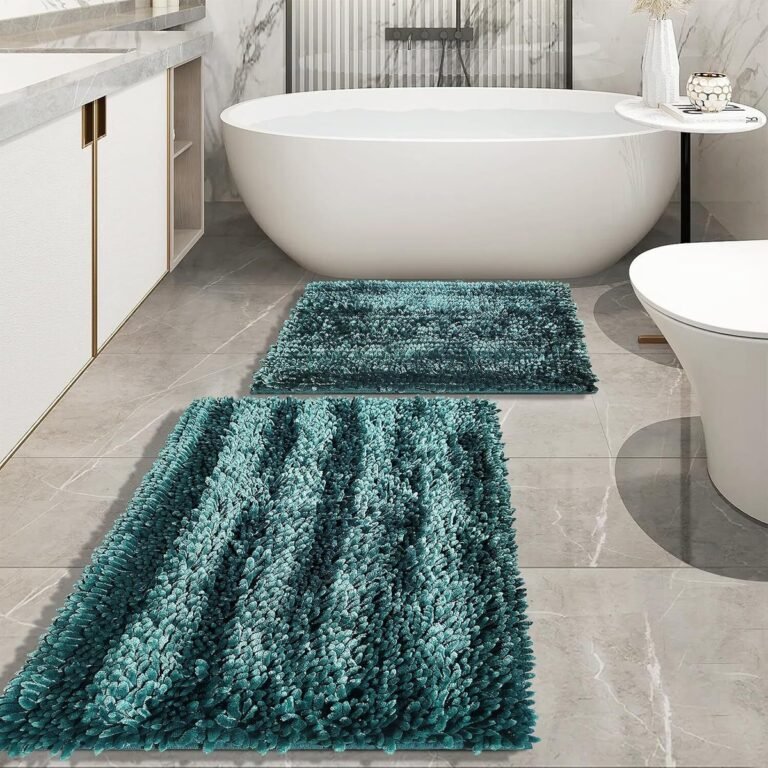
No, bathroom rugs do not have to match. In U.S. homes, the best bathroom rug choice depends on the room’s colors, size, style, moisture level, and safety needs. Rugs can match each other, share one color, or simply look like they belong together.
The goal is coordination, not perfect duplication. A bathroom can look polished with different rugs if they share a color, texture, pattern, or design style. Practical details matter, too: Each rug should dry well, stay flat, and suit the floor and traffic in the room.

What Does “Matching” Mean for Bathroom Rugs?
Matching bathroom rugs can mean several different things. It does not always mean buying an identical set.
Here are the most common ways rugs can work together:
- Exact match: Every rug has the same color, pattern, size, and material.
- Color match: The rugs use the same main color but have different patterns or shapes.
- Style match: The rugs have a similar look, such as modern, farmhouse, coastal, or traditional.
- Texture match: The rugs use similar surfaces, such as soft cotton or low-pile chenille.
- Color-family match: The rugs use related colors, such as navy and pale blue.
- Intentional contrast: The rugs differ on purpose but connect with other features in the room.
For example, a white bath mat and a navy vanity rug do not look identical. Yet they can work well if the bathroom includes navy towels, white tile, and brushed metal fixtures.
The key is to create a visual link. Without one, several different rugs can make a small bathroom feel busy.
Do All Bathroom Rugs Need to Match Each Other?
All bathroom rugs do not need to match each other. They should usually look related, especially when they sit in the same visual area.
A matching set is useful when:
- The bathroom has a simple or minimalist design.
- The room already has several colors or patterns.
- You want a calm, uniform look.
- The rugs sit close together.
- You plan to use a toilet mat, bath mat, and vanity rug at the same time.
Different rugs may work better when:
- The bathroom has a collected or relaxed style.
- The room needs more color.
- The rugs serve different areas.
- One rug is a focal point and the others are simple.
- The bathroom connects to a bedroom or hallway with a different design.
A useful rule is to match two design traits. For example, choose rugs with the same color and texture, or the same style and pattern scale. This creates unity without making the room look overly coordinated.
When identical rugs are the best choice
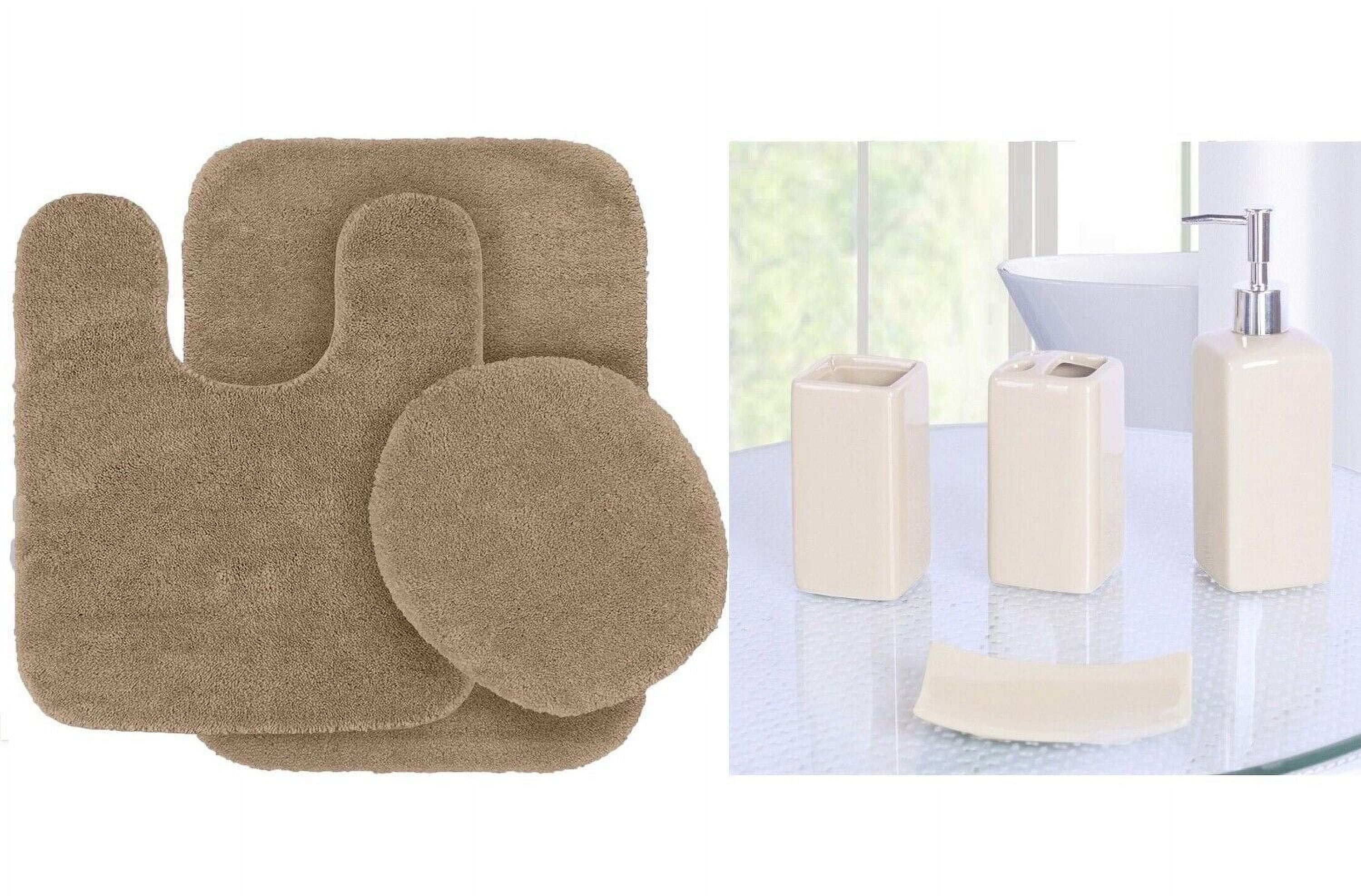
Identical rugs often suit small bathrooms. A small space has fewer surfaces, so different patterns can compete with the vanity, shower curtain, wall color, and tile.
A matching set also works well in a guest bathroom. It gives the room a clean, planned appearance with little effort.
If the room has bold wallpaper, patterned tile, or colorful artwork, plain matching rugs can provide visual rest.
When different rugs are the better choice
Different rugs can add character to a large bathroom. For example, a long runner near a double vanity can pair with a smaller mat near the shower.
This approach works best when the rugs share a clear connection. Use one repeated color, a similar border, or the same material family. Let one rug carry the pattern and keep the others quiet.

How to Coordinate Bathroom Rugs Without Making Them Identical
Start with the bathroom’s existing elements. The floor, walls, vanity, shower curtain, towels, and hardware already create a color and style base.
Use this process:
1. Choose a main color
Pick one color already present in the room. This might be:
- White from the tile
- Gray from the floor
- Blue from the towels
- Green from the wall
- Wood tones from the vanity
- Black from the mirror frame or hardware
Use that color in one or more rugs. The color does not need to match perfectly. Similar shades often look more natural than a nearly matching color that feels slightly off.
2. Add a supporting color
Use a second color that supports the main one. Neutral colors are easy to combine. White, cream, gray, beige, navy, and charcoal often work with many bathroom palettes.
For example:
| Bathroom feature | Rug combination |
|---|---|
| White tile and blue towels | White and blue rugs |
| Gray floor and wood vanity | Gray and beige rugs |
| Green walls and brass fixtures | Cream and muted green rugs |
| Black hardware and white walls | Black-and-white patterned rug |
| Beige tile and terracotta accents | Beige and rust-colored rugs |
The table shows a planning method, not a strict design rule. Lighting can change how colors appear, so view rug samples in the bathroom when possible.
3. Keep pattern scale under control
Patterns should not all compete for attention. If one rug has large stripes or bold shapes, choose a solid or small-print rug for the other areas.
Avoid placing several large patterns side by side. This can make a bathroom feel crowded, especially when the room is small.
4. Repeat one detail
A repeated detail helps separate rugs look intentional. You might repeat:
- A stripe
- A border
- A geometric shape
- A fringe detail
- A muted color
- A woven texture
The repeated detail acts like a visual thread. It ties the rugs together without requiring an exact match.
5. Check the room from the doorway
Stand at the bathroom entrance and look at the whole room. Ask:
- Do the rugs compete with the shower curtain?
- Does one rug look out of place?
- Is the floor still visible?
- Does the room feel calm or crowded?
- Do the rugs guide the eye toward the main features?
This simple check often reveals problems that are hard to see when choosing each rug separately.

Should the Bath Mat Match the Shower Curtain or Towels?
A bath mat does not need to match the shower curtain or towels exactly. It should usually coordinate with them.
The shower curtain often has a large visual area. If it has a strong pattern, a solid bath mat may work best. If the curtain is plain, a patterned mat can add interest.
Towels offer a simple way to repeat color. For instance, a charcoal bath mat can connect with charcoal hand towels, even if the shower curtain is white.
Avoid matching every item in the same shade and pattern unless you want a highly uniform look. Too much exact matching can make the bathroom feel like a packaged set rather than a designed room.
A balanced combination might include:
- A solid bath mat
- Patterned hand towels
- A plain shower curtain
- One small decorative accent in the same color
This gives the room a clear palette while keeping the surfaces from looking repetitive.
Do Bathroom Rugs Need to Match the Floor?
Bathroom rugs do not need to match the floor. They need enough contrast to remain visible and enough harmony to avoid looking disconnected.
Consider these examples:
- A light rug can brighten a dark floor.
- A dark rug can ground a pale floor.
- A patterned rug can soften plain tile.
- A simple rug can calm a busy floor.
- A warm rug color can balance cool gray tile.
Be careful with rugs that are nearly the same color as the floor. They may blend in and make the room look flat. They can also make the rug edge harder to see, which may increase the chance of catching a toe.
Texture can create contrast when color does not. A smooth tile floor and a visibly woven rug may look distinct even when their colors are close.
How Many Bathroom Rugs Should You Use?
Use only as many rugs as the room needs. More rugs do not always make a bathroom more comfortable or attractive.
Common placements include:
- In front of the bathtub
- Outside the shower
- In front of the vanity
- Near the sink
- Along a long double vanity
- In front of a toilet, if the rug fits safely and can be cleaned easily
A small bathroom may need one bath mat near the shower or tub. A larger bathroom may benefit from a runner near the vanity and a separate mat near the shower.
Leave enough visible floor around each rug. When rugs touch or nearly touch, the floor can look cluttered and the room may be harder to clean.
Do not place a rug where it blocks a door, cabinet, drawer, or toilet. Open and close these features before deciding that a rug fits.

Bathroom Rug Safety Matters More Than Color
Design should come after basic safety. A beautiful rug is not useful if it slides, curls, stays wet, or blocks movement.
Choose a rug with features that suit a damp bathroom:
- A flat, stable profile
- A backing designed for the intended floor type
- A surface that does not become overly slick when wet
- A size that does not interfere with doors or cabinets
- A material that can be washed or dried as directed
A non-slip backing can help, but it is not a guarantee. Backing may wear down, collect residue, or behave differently on tile, vinyl, stone, or finished wood. Follow the rug maker’s care and placement instructions.
Avoid using a rug with curled corners or a damaged backing. Replace it or repair it with a product approved for that rug and floor. Do not use adhesive products that could stain or damage the floor finish.
Keep rugs dry when possible. A rug that stays damp can develop an odor and may damage some floors over time. Hang or dry it according to the care label, and make sure the bathroom has enough ventilation.
If someone in the home has limited balance or mobility, prioritize a flat, secure rug or consider leaving the area uncovered. A licensed occupational therapist or other qualified professional can provide personalized home-safety advice for mobility concerns.

What Materials Work Best for Bathroom Rugs?
The best material depends on drying time, comfort, washing needs, and the type of floor.
Cotton
Cotton rugs are soft and often easy to wash. They can absorb water well, but thick cotton may take longer to dry.
Microfiber or chenille
These materials often feel soft and absorbent. Their performance depends on the specific construction and care instructions. Some styles may flatten or shed with repeated washing.
Synthetic fibers
Polyester and similar fibers can offer color variety and may dry faster than very thick natural fibers. Check the label for washing and heat limits.
Memory foam
Memory foam mats can feel comfortable underfoot. They may be thicker than standard mats, so check door clearance and make sure the base stays secure.
Natural fibers
Materials such as bamboo or woven plant fibers can create a spa-like look. They may not absorb water like a fabric mat, and they require care that varies by product. Keep them from staying wet against the floor.
Material labels do not tell the whole story. Thickness, backing, weave, ventilation, and washing instructions also affect performance.
Common Bathroom Rug Mistakes to Avoid
Several design and care mistakes can make a bathroom look less polished or create practical problems.
Matching the wrong colors
A rug may be labeled “blue” or “gray,” but color names vary. Compare the rug with the bathroom in natural and artificial light before buying more than one.
Using too many patterns
Multiple bold rugs can compete with tile, wallpaper, towels, and curtains. Make one pattern the focus and use solids or quiet textures elsewhere.
Choosing rugs that are too large
A large rug can crowd a small bathroom and block doors or cabinets. Measure the open floor area first.
Ignoring the rug’s thickness
A thick mat may catch beneath a door. It may also create a raised edge that is easy to trip over.
Using outdoor rugs without checking the label
Some outdoor rugs may be designed for moisture, but that does not mean they are suitable for every indoor bathroom floor. Check the maker’s instructions and the floor manufacturer’s care guidance.
Washing the rug incorrectly
Hot water, high heat, bleach, or harsh cleaners can damage fibers and backing. Follow the care label rather than assuming all bathroom rugs can be washed the same way.
Letting rugs cover floor damage
A rug should not hide a leaking toilet, damaged flooring, or water near the vanity. Fix the moisture source first. A rug can conceal a problem while the floor continues to deteriorate.
A Simple Decision Guide
Use this quick guide when choosing between matching and coordinating rugs:
| Your bathroom situation | Best approach |
|---|---|
| Small room with bold tile | Use matching solid rugs |
| Large bathroom with a double vanity | Use a runner and a smaller related mat |
| Plain white bathroom | Add color through coordinated rugs |
| Patterned shower curtain | Choose simple rugs |
| Mixed metals and decor | Use a neutral rug palette |
| Shared family bathroom | Choose washable, durable styles |
| Guest bathroom | Use a tidy matching set |
| Older or slippery floor | Prioritize flat, stable, secure rugs |
| Connected bedroom suite | Repeat one bedroom color in the bathroom |
| Tight doorway clearance | Use thin, low-profile mats |
The deciding trade-off is simple: Matching rugs provide order, while coordinated rugs provide more variety. Choose the option that supports the room’s size, style, and daily use.
Frequently Asked Questions
Can bathroom rugs be different colors?
Yes. Different colors can work when they share a design link. Use colors from the same family, repeat one color elsewhere in the room, or keep one rug neutral.
Should a toilet mat match the bath mat?
It does not have to match, but it should coordinate. A toilet mat is often smaller and may have a special cut, so prioritize fit, cleaning, and stability over an exact color match.
Can I use a runner instead of several bathroom rugs?
Yes, if the runner fits the space without blocking doors, drawers, or fixtures. A runner can create a cleaner look along a long vanity, but measure carefully before buying.
Are bathroom rugs necessary?
No. Bathroom rugs are optional. They can add comfort, warmth, and water absorption, but an uncovered floor may be easier to clean and safer than a loose or unstable rug.
How often should bathroom rugs be washed?
Wash them according to the care label and how often they become wet or dirty. A rug used by several people may need more frequent cleaning than one in a lightly used guest bathroom. Dry it fully before placing it back on the floor.
Key Takeaways
- Bathroom rugs do not have to match exactly.
- Coordinated colors, textures, or styles can create a unified look.
- Use simpler rugs when the bathroom already has bold patterns.
- Measure around doors, cabinets, toilets, and vanities before buying.
- Choose flat, stable rugs that suit the floor and can dry well.
- Replace rugs with curled edges, damaged backing, or persistent odor.
- Safety and easy care should matter more than a perfect color match.
Conclusion
Bathroom rugs do not have to match. They only need to work together and suit the room.
For a calm look, choose matching rugs in a simple color. For more character, combine different rugs that share one or two traits, such as color and texture. Before making the final choice, check the rug size, thickness, backing, care label, and drying needs.
The best next step is to photograph your bathroom, note its main colors, and measure the open floor areas. Then choose one anchor rug and build the rest of the room around it.