Are Bathroom Rugs Necessary: Do You Really Need One?
bathroom rugs are not required, but they can make a bathroom safer, warmer, and more comfortable. The best choice depends on your floor, bathroom layout, moisture level, and cleaning habits.
A bath mat can absorb water after a shower and give your feet a warmer surface than tile. It may also reduce the amount of water tracked across the floor. However, a loose, damp, or poorly backed rug can become a trip or slip hazard.
For most U.S. homes, the safest approach is simple: use a washable bath mat with a stable, nonslip backing, place it outside the shower or tub, and dry it often. Avoid rugs that stay wet, curl at the edges, or slide when stepped on.

What Is the Difference Between a Bathroom Rug and a Bath Mat?
A bath mat is made for wet areas near a shower or tub. A bathroom rug is often a decorative floor covering used near a vanity, toilet, or open floor space.
The terms overlap in stores, but the design may differ:
| Type | Main purpose | Best location | Key concern |
|---|---|---|---|
| Bath mat | Absorb water and provide foot grip | Outside a tub or shower | Must dry well and stay stable |
| Bathroom rug | Add comfort and style | In front of a vanity or sink | May not handle heavy moisture |
| Contour mat | Fit around a toilet base | Around a toilet | Can collect moisture and soil |
| Memory foam mat | Add cushioning | Dry areas or low-moisture bathrooms | May dry slowly |
| Wood or bamboo mat | Allow air flow underfoot | Well-ventilated bathrooms | Can feel hard and become slippery when wet |
A rug does not make a bathroom safe by itself. Its performance depends on its backing, surface, size, condition, and placement.
A useful distinction is water absorption versus slip resistance. A plush rug may absorb water well but move across a smooth floor. A thin mat may stay in place but hold little water. If safety is the main goal, stability matters more than softness.

Are Bathroom Rugs Necessary for Safety?
Bathroom rugs are not necessary for every bathroom, but a suitable bath mat can help manage water and improve footing. It should not be treated as a substitute for a dry floor, good lighting, grab bars, or careful movement.
The U.S. Centers for Disease Control and Prevention identifies falls as a major source of injury, especially among older adults. Bathrooms can present several fall risks at once: smooth surfaces, water, narrow spaces, and changes in floor height. A rug may reduce some water exposure, but a loose rug can add another hazard.
The U.S. Consumer Product Safety Commission also advises consumers to reduce fall hazards in the home. A bathroom mat should therefore pass three basic checks:
- It stays in place when stepped on.
- It lies flat without curled corners.
- It can dry fully between uses.
A mat that fails any of these checks may create more risk than it removes.
When a bathroom rug can help
A bath mat may be useful when:
- Water regularly splashes onto the floor.
- The floor is cold, such as ceramic or porcelain tile.
- Someone in the home has limited balance or mobility.
- The shower or tub has no built-in dry landing area.
- The bathroom opens directly onto wood, laminate, or another moisture-sensitive floor.
- You want to reduce wet footprints near the sink or shower.
When a bathroom rug may be a poor choice
Skip or limit rugs when:
- The room has poor airflow and rugs stay damp.
- The mat slides on the floor.
- The floor is uneven or damaged.
- The rug blocks a door, cabinet, toilet, or mobility aid.
- Household members cannot wash and dry it often.
- A pet soils the rug and it cannot be cleaned easily.
For homes with older adults, children, or people with balance problems, test the mat before regular use. Stand on it, shift your weight, and check whether the edges move. A mat that feels stable to one person may still slide for another.

What Are the Main Benefits of Bathroom Rugs?
Bathroom rugs offer comfort and moisture control, but their value comes with maintenance needs. The strongest benefits are practical rather than decorative.
They absorb water
A bath mat catches water from wet feet and splashes. This can help keep nearby flooring drier and reduce the need to wipe the floor after every shower.
Absorption does not mean the mat removes all risk. A saturated mat can become a wet surface itself. If it remains damp for hours, it may also develop an odor.
They add warmth and comfort
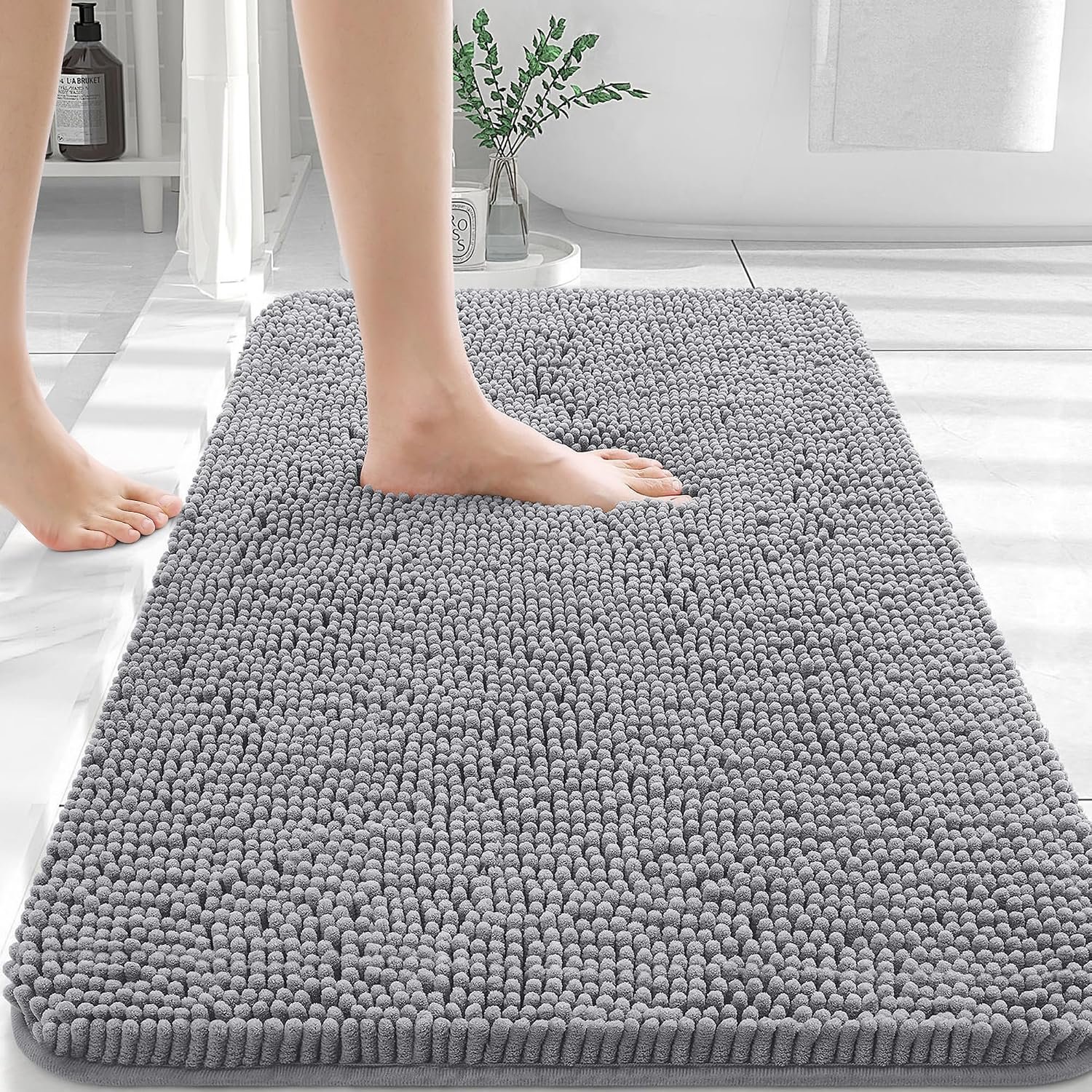
Tile and stone floors can feel cold, especially in winter. A fabric rug gives your feet a warmer surface and can make the room feel more comfortable.
This benefit is mainly about comfort. It does not prove that one material is safer than another.
They protect some floors from moisture
Repeated water exposure can damage certain flooring materials, seams, trim, and subfloors. A mat can catch small amounts of water before they spread.
It cannot protect a floor from a plumbing leak, standing water, or a soaked rug. Wipe major spills at once and investigate repeated dampness.
They improve the look of a bathroom
A rug can add color and soften a room with hard surfaces. This is a design benefit, not a safety feature.
Do not choose a decorative rug solely because it looks good. Check whether it has a stable base, washable construction, and a size that fits the space.
They can reduce water tracked through the home
A mat near a shower or bathroom exit may reduce wet footprints on hallways and nearby rooms. This is most useful when the mat is large enough for one or two steps and remains in place.

What Are the Disadvantages of Bathroom Rugs?
The main disadvantages are moisture, hidden dirt, cleaning effort, and movement. These problems are manageable, but only if the rug fits the room and receives regular care.
Damp rugs can support odor and microbial growth
Bathrooms are humid spaces. A rug that stays wet may smell musty and become difficult to clean. Moisture control guidance from the U.S. Environmental Protection Agency recommends reducing indoor dampness and drying wet materials promptly.
To limit this problem:
- Hang or lift the mat so air can reach the underside.
- Use a bathroom exhaust fan during showers and for a short time afterward.
- Open a door or window when practical and safe.
- Do not place a thick mat over an already wet floor.
- Replace mats that remain damp, smell bad, or show visible mold.
Visible mold on a washable mat may sometimes be removed by following the care label. If mold is widespread, the backing is damaged, or the rug cannot be cleaned fully, replacement is usually more practical.
Rugs can slide or bunch up
A rug may move because of smooth flooring, worn backing, soap residue, moisture, or an oversized rug that catches on fixtures. Sliding is especially concerning near a tub or shower.
A rubber or latex-style backing may help, but backing materials differ. Some can stain, stick to, or discolor certain floors. Check the flooring and rug care instructions before use.
Rugs can collect soil
Bathroom rugs can collect skin flakes, hair, dust, toilet splash, and cleaning residue. A toilet contour mat may be especially difficult to keep clean because it sits close to the floor and plumbing fixture.
A simple rectangular mat is often easier to lift, wash, and inspect than a shaped mat.
Thick rugs can create a trip edge
A thick or curled mat can catch a toe. This matters near doors, toilets, tubs, and areas used with walkers or wheelchairs.
Low-profile mats are often easier to place safely. Keep the edge away from door swings and make sure the door does not drag over it.

How Do You Choose a Safe Bathroom Rug?
Choose a bathroom rug by checking stability, moisture handling, cleaning, fit, and floor compatibility. Do not start with color or pile height.
1. Check the backing
Look for a backing that stays in place on your specific floor. Place the mat on a clean, dry surface and test it with normal steps.
Avoid relying on a loose rug pad unless the pad is made for that floor and wet-area use. A separate pad can itself shift or trap moisture.
2. Choose a washable material
Cotton and synthetic fibers are common choices. The better option depends on how quickly the material dries and whether you can wash it according to the label.
A washable mat is usually easier to manage than one that requires special cleaning. Read the label before buying, especially if you use a compact washer or dryer.
3. Match the mat to the moisture level
For a shower used several times a day, choose a mat that dries quickly or keep two mats in rotation. Thick foam can feel comfortable but may hold water longer than a thin, airier design.
For a half-bath with little floor water, a small decorative rug may be enough. For a main bathroom, moisture control should take priority over plushness.
4. Measure before buying
Measure the clear floor area. Leave enough space for doors, drawers, cabinets, and safe walking paths.
A mat should not:
- Cover a floor vent.
- Block a door.
- Touch a toilet base if it cannot be cleaned well.
- Create a narrow path around the tub.
- Interfere with a walker or other mobility device.
5. Inspect the floor underneath
Lift the rug from time to time. Look for trapped water, discoloration, cracked flooring, or a damaged backing.
If water repeatedly appears under the mat, solve the moisture source rather than adding another layer.
6. Consider accessibility
A person using a cane, walker, or wheelchair may need a different setup. Even a low-profile rug can catch wheels or shift during a turn.
For accessibility decisions, follow the person’s mobility needs and consider an assessment by a qualified occupational therapist or other appropriate professional. Do not assume a rug improves safety for every user.

Where Should You Put a Bathroom Rug?
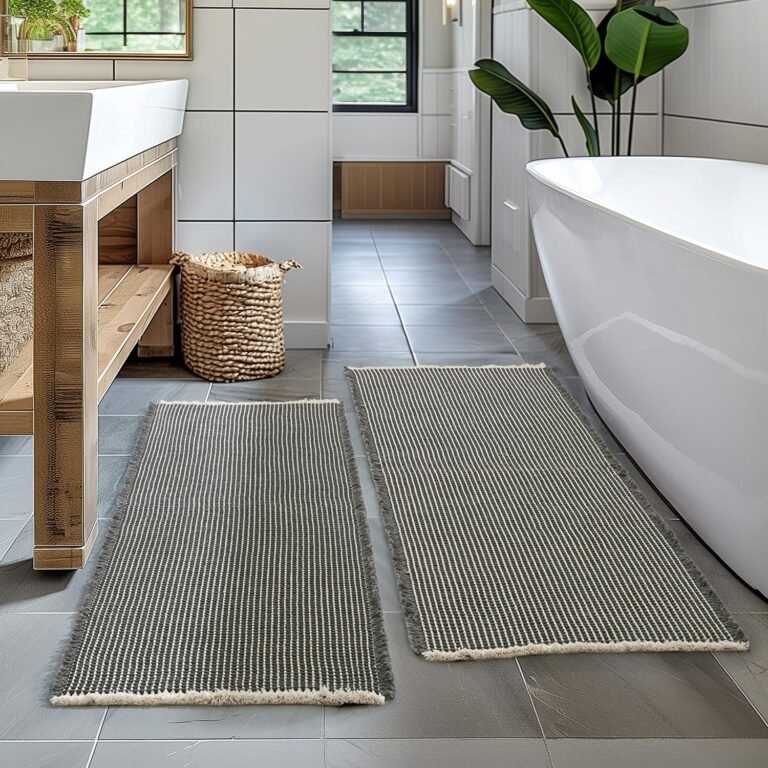
Place the mat where water lands, but keep walkways and door paths clear. The best location is often just outside the tub or shower, not directly under the entire fixture.
Common placements include:
- In front of a shower exit.
- Along the side of a tub where people step down.
- In front of a vanity if water splashes there.
- Near a sink when handwashing creates floor drops.
Avoid placing rugs:
- Under a toilet if they are hard to clean.
- Across a doorway.
- On top of a floor drain.
- Where a cabinet door must open over them.
- On a wet surface.
- Near a heating appliance or portable heater.
A bath mat works best as a small landing zone. It should not cover every inch of the bathroom floor.
Should a bath mat go inside the shower?
Usually, no. A fabric bath mat inside a shower can become saturated and may move underfoot. It may also block drainage.
A purpose-made shower surface or professionally installed nonslip treatment is a different product category. Follow the manufacturer’s instructions and do not assume that any rubber mat is safe for every tub or shower surface.

How Often Should You Wash a Bathroom Rug?
Wash a bathroom rug whenever it is visibly dirty, smells musty, or stays damp. In a busy household, weekly washing is a reasonable starting point if the care label allows it. A less-used guest bathroom may need less frequent washing, while a shared bathroom may need more frequent care.
The right schedule depends on:
- Number of users.
- Shower frequency.
- Ventilation.
- Whether people step on the rug with wet feet.
- Pets or small children in the home.
- Whether the rug dries fully.
Use the care label as the main guide. Some rugs can go in a washing machine, while others need hand washing or surface cleaning.
A basic care routine is:
- Shake or vacuum the dry rug as needed.
- Wash it using the label’s instructions.
- Rinse out soap fully.
- Dry it completely before returning it to the floor.
- Clean the floor beneath it.
- Check the backing for cracks, peeling, stickiness, or curling.
Do not return a damp rug to the bathroom just because the top feels dry. The underside may still hold moisture.
When should you replace a bathroom rug?
Replace the rug when:
- The backing peels or flakes.
- It slides after cleaning.
- The edges curl.
- It remains smelly after washing.
- Mold keeps returning.
- The fabric no longer dries well.
- The rug creates a trip edge.
- The material has worn thin around high-use areas.
A replacement is often safer and easier than trying to repair badly damaged backing.

Bathroom Rug Materials Compared
No material is best for every bathroom. Compare the material by drying speed, comfort, cleaning needs, and floor compatibility.
| Material | Strengths | Limits | Good fit |
|---|---|---|---|
| Cotton | Soft, washable, comfortable | May stay wet and shrink | Bathrooms with good airflow |
| Polyester or microfiber | Often dries quickly and is easy to wash | Can feel less natural | Frequently used bathrooms |
| Nylon | Durable and often stain resistant | May feel less plush | High-use areas |
| Memory foam | Cushioned and soft | Can hold moisture; may dry slowly | Dry areas or well-ventilated rooms |
| Bamboo or wood | Allows airflow and dries quickly | Harder underfoot; may be slippery when wet | Users who prefer a firm surface |
| Rubber-like mat | May provide a stable surface | Can trap moisture or affect flooring | Only when compatible with the floor |
These are general material traits, not guarantees. Construction, backing, weave, care, and room ventilation can change real-world performance.

Are Bathroom Rugs Hygienic?
Bathroom rugs can be hygienic when they stay dry and are cleaned on a suitable schedule. They can become unhygienic when they remain damp, touch contaminated water, or are rarely washed.
A rug near a toilet deserves extra care because flushing, splashing, and cleaning can transfer moisture and soil to nearby surfaces. A lid may reduce some spread, but it does not make the surrounding floor or rug self-cleaning.
For better hygiene:
- Keep the mat away from the toilet base when possible.
- Wash it after visible contamination.
- Clean the floor under the mat.
- Do not share a heavily soiled mat between bathrooms.
- Use separate cleaning cloths for toilets and other surfaces.
- Wash hands after handling dirty laundry or cleaning products.
If someone in the household has a contagious illness, follow the cleaning directions from a health authority or medical professional. Do not mix cleaning products, especially bleach with ammonia or acids.

Bathroom Rugs Versus No Rugs
The better choice depends on the room, not a universal rule.
| Situation | Rugs likely help | Rugs may not help |
|---|---|---|
| Wet shower exit | Yes, if the mat is stable and washable | No, if it stays soaked |
| Cold tile floor | Yes, for comfort | No, if the rug creates a trip edge |
| Older adult at risk of falling | Maybe, after stability testing | No, if the mat moves |
| Small powder room | Sometimes, for comfort and style | Often unnecessary if the floor stays dry |
| Poor ventilation | Only with quick-drying mats and frequent washing | Thick rugs that remain damp |
| Accessible bathroom | Only if the mat does not interfere with mobility | Loose or high-pile rugs |
| Wood or laminate flooring | May catch small spills | Can trap moisture against the floor |
The decision is not really “rug versus no rug.” It is controlled moisture and stable footing versus added moisture and movement.

Common Bathroom Rug Mistakes
The most common mistakes involve placement and maintenance rather than the rug itself.
Using a rug with a worn backing
A backing can lose grip over time. Inspect it after washing and replace the rug if it becomes brittle, cracked, sticky, or loose.
Covering a wet floor
A rug does not solve a leak or standing-water problem. Dry the floor first and find the source of the water.
Choosing a thick rug for a narrow room
Thick rugs may feel soft, but they can raise the trip edge and prevent doors from opening.
Leaving the rug in one place forever
Lift the rug regularly. This lets you clean beneath it and find early signs of floor damage.
Buying a toilet-shaped rug for appearance alone
A contour mat may look neat but can be harder to wash and clean around. Choose it only if the material and care routine fit your household.
Assuming nonslip means slip-proof
No household mat can remove every fall risk. Water, soap, floor finish, worn backing, and user movement can change how stable it feels.

Frequently Asked Questions
Do you need a rug in front of the toilet?
No. A toilet rug is optional and often creates extra cleaning work. If you use one, choose a washable, low-profile mat that does not touch contaminated areas or interfere with movement.
Are bathroom rugs safe on tile floors?
They can be safe when the backing is compatible with the tile, the mat lies flat, and the floor is clean and dry. Test the rug before regular use and inspect it after washing.
Is it better to use one large bathroom rug or several small rugs?
One properly sized mat is often easier to keep stable and clean than several small rugs. However, the correct choice depends on door clearance, fixtures, and walking space.
Can bathroom rugs cause mold?
They can contribute to mold or mildew problems if they stay wet, trap moisture against the floor, or remain in a poorly ventilated room. Dry the rug fully and remove it when cleaning the floor.
Are rubber-backed bath mats safe for vinyl or wood floors?
Not always. Some backings can trap moisture, leave marks, or react with certain finishes. Check the flooring and rug instructions, and lift the mat regularly to inspect the surface.
What is the safest bathroom floor covering for an older adult?
There is no single safest product for every person. A stable, low-profile, easy-to-clean mat may help if it does not move or interfere with mobility. For a person with significant balance or walking problems, professional home-safety guidance is more reliable than choosing a rug by appearance.
Key Takeaways
- Bathroom rugs are optional, not necessary.
- A good bath mat can absorb water, add warmth, and reduce wet footprints.
- A loose, damp, curled, or high-pile rug can increase fall risk.
- Choose a low-profile, washable mat with stable backing.
- Keep it away from doors, drains, mobility paths, and areas that stay wet.
- Wash and dry the mat based on its condition, use, and care label.
- Lift the mat often to check the floor and backing.
- If the rug cannot stay dry and stable, removing it is the safer choice.
Conclusion
A bathroom rug is worthwhile when it controls water without creating a new hazard. For many U.S. homes, one washable bath mat outside the shower or tub offers a useful balance of comfort and function.
The best next step is to test your current mat. Step on it with dry feet, check whether it shifts, lift it to inspect the floor, and confirm that it dries fully after use. If it slides, smells, stays damp, or blocks a path, replace it or leave the floor bare.