How To Choose Bathroom Rug Material: Best Buying Guide
The best bathroom rug material depends on how much water the rug will handle, how often you can wash it, and whether it needs to dry quickly. For most U.S. homes, machine-washable cotton or quick-drying microfiber is the best balance of comfort, care, and cost. Choose a rubber- or latex-backed rug only when the backing is labeled safe for your floor.
A soft rug may feel good under bare feet, but softness is only one part of the choice. A bathroom rug must also manage moisture, resist odors, stay stable on the floor, and survive regular washing. The right material for a guest bath may not be right for a busy family bathroom.

Quick Answer: Which Bathroom Rug Material Is Best?
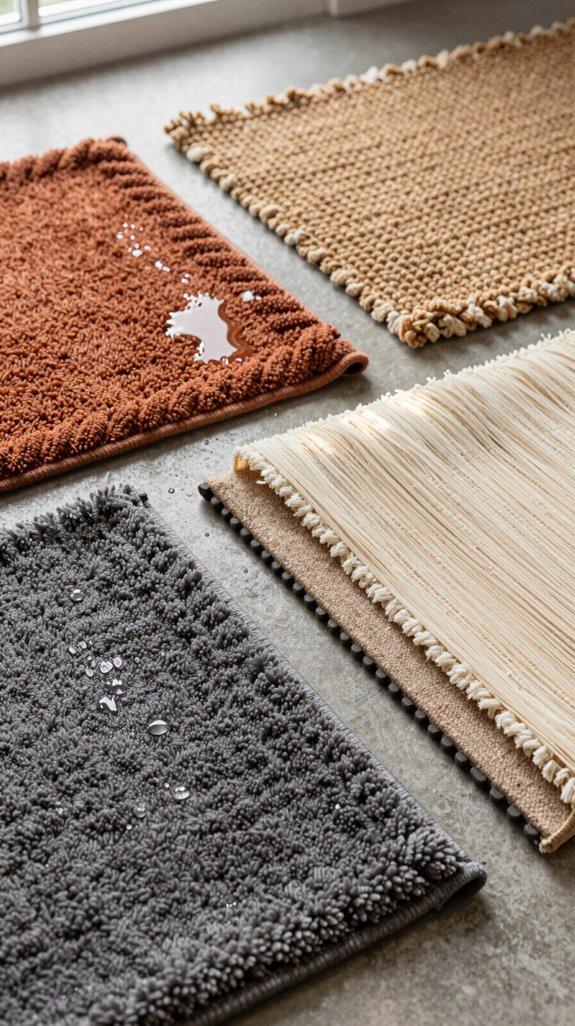
Choose cotton if you want a natural, washable rug with a classic feel. Choose microfiber or polyester if fast drying and stain resistance matter most. Choose chenille for a thick, soft surface, but only if you can wash and dry it well.
Here is a simple comparison:
| Material | Best for | Main strengths | Main limits |
|---|---|---|---|
| Cotton | Most bathrooms | Soft, washable, absorbent | Dries more slowly |
| Microfiber | Fast drying | Light, quick to dry, easy to clean | May feel less natural |
| Polyester | Low-maintenance use | Resists fading and many stains | May hold odors if left damp |
| Chenille | Plush comfort | Thick and soft | Needs thorough drying |
| Wool | Premium, dry bathrooms | Durable and naturally resilient | Costly and harder to clean |
| Bamboo or wood | Minimal moisture areas | Dries quickly and looks clean | Less soft; may become slippery |
| Diatomaceous earth | Very fast surface drying | Hard, low-pile surface | Can crack and needs careful use |
For most households, start with washability and drying speed. A rug that looks attractive but stays damp can become a daily maintenance problem.
What Matters Most When Choosing Bathroom Rug Material?
The key factors are absorbency, drying speed, washability, floor safety, and the rug’s location. No material wins in every category, so choose based on the conditions in your bathroom.
1. Absorbency
Absorbency describes how much water a fiber can take in. Cotton absorbs well, which makes it comfortable beside a shower or bathtub. However, the same quality can make cotton slow to dry.
Synthetic fibers, such as polyester and microfiber, often absorb less water than cotton. Some microfiber rugs still pick up surface water well because their fine fibers spread moisture across a larger area. They may dry faster when hung up after use.
2. Drying speed
Drying speed matters because damp fabric can develop a stale smell. The U.S. Environmental Protection Agency links moisture control with mold prevention. A rug does not need to be sterile, but it should not remain wet for long periods.
A thin microfiber rug may dry faster than a thick cotton or chenille rug. A dense rug can stay wet at its base even when the top feels dry. Good bathroom ventilation helps, but it cannot fully correct a rug that is too thick for the room.
3. washability
check the care label before buying. The Federal Trade Commission’s Care Labeling Rule requires care instructions for many textile products sold in the United States. Follow the label rather than assuming that a “machine-washable” rug can withstand hot water, bleach, or high heat.
A useful bathroom rug should be easy to remove and wash. If it requires special cleaning every time it gets wet, it may not suit a high-use bathroom.
4. Floor safety
The surface material and the backing both affect safety. A rug can slip on tile, vinyl, laminate, or polished stone if it has no grip or if the floor is wet.
Look for a backing that is designed for the type of floor you have. Some rubber or latex backings can discolor certain vinyl floors, trap moisture, or leave a sticky residue. Follow the flooring maker’s guidance when possible. Never assume that a non-slip label works equally well on every surface.
5. Thickness and edge design
A thick rug feels comfortable, but it may catch under a door or create a raised edge near a toilet. Measure the clearance under the door before buying.
Low-profile rugs are often easier to clean and less likely to create a trip point. Thick pile works best when the bathroom has good airflow and the rug can be washed and dried fully.

Compare the Main Bathroom Rug Materials
Material affects comfort, water handling, cleaning, and service life. Use the following comparisons to narrow your choice.
Cotton: The best all-purpose option
Cotton is a common choice because it feels soft, absorbs water, and comes in many styles. It is also widely available in machine-washable designs.
Cotton works well beside a sink, tub, or shower when you can wash it often and hang it to dry. It is less suitable for a bathroom with poor ventilation, a damp floor, or several people using the same shower each day.
Choose cotton when:
- You want a natural fiber.
- Bare-foot comfort is a priority.
- You can wash the rug regularly.
- The room has enough airflow for drying.
Watch for:
- Shrinkage after washing.
- Slow drying in thick weaves.
- Color bleeding if the dye is not wash-fast.
- A damp backing that stays against the floor.
A flat cotton mat usually dries more easily than a deep, tufted cotton rug.
Microfiber: The best for quick drying
Microfiber is made from very fine synthetic fibers, often polyester or a polyester blend. These fibers create a soft surface that can pick up water from bare feet while remaining light and easy to move.
Microfiber is a strong choice for a busy bathroom or a home where rugs need to dry between uses. It is also useful for people who prefer a thin rug that can fit under a door.
The main trade-off is feel. Microfiber may not have the same natural texture as cotton. Some products also use a backing that can crack, peel, or lose grip after repeated washing.
Choose microfiber when:
- Fast drying is more important than natural fiber content.
- The bathroom has limited airflow.
- You want a lightweight rug.
- You need frequent machine washing.
Inspect the backing after washing. Replace the rug if the backing becomes brittle, flakes, curls, or slides.
Polyester: The best for color and easy care
Polyester is often used in bathroom rugs because it is durable, light, and resistant to fading. It can also be shaped into soft pile or chenille-like textures.
Polyester does not automatically mean fast drying. A thick polyester rug can still hold water, especially when it has a dense pile or a coated backing. Drying depends on the full construction, not just the fiber name.
Choose polyester when:
- You want many color and pattern choices.
- The rug will face frequent washing.
- You prefer a material that resists many common stains.
- You want a synthetic rug with a soft surface.
Avoid leaving any polyester rug bunched up while wet. Synthetic fibers can still hold body oils, soap residue, and odors if the rug is not cleaned and dried.
Chenille: The best for plush comfort
Chenille describes a textured yarn and surface style rather than one single fiber. Bathroom chenille rugs may use cotton, polyester, microfiber, or a blend.
Chenille feels thick and soft underfoot. Its raised surface can collect water well, but its dense pile may take longer to dry. The rug may also develop flattened areas with use.
Choose chenille for a bathroom where comfort matters and the rug can be washed and dried fully. Avoid very thick chenille in a small, poorly ventilated room.
Wool: Durable but not usually practical
Wool can be resilient and comfortable, but it is not the easiest material for a wet bathroom. Many wool rugs require careful cleaning, and prolonged moisture can contribute to odor or fiber damage.
Wool may suit a mostly dry powder room with a decorative rug placed away from the shower. It is usually a poor choice for the main floor outside a frequently used tub or shower.
Do not use a wool rug simply because it is labeled “natural.” Natural fiber does not mean waterproof, mold-proof, or maintenance-free.
Bamboo and wood: Best for a dry, clean look
Bamboo slat mats and wooden bath mats allow air to move beneath the surface. They do not absorb water like cloth, so they can dry quickly when placed correctly.
These mats can feel firm underfoot. Their surface may also become slippery when wet, depending on the finish and design. Inspect the feet or grip points often, and keep the floor beneath them clean and dry.
Use bamboo or wood near a sink or in a well-ventilated bathroom. They are less forgiving when water pools beneath the mat.
Diatomaceous earth: Fast surface drying with special care needs
Diatomaceous earth bath mats are hard, porous panels that can absorb surface moisture quickly. They do not feel like a soft rug, and they require different care from textile mats.
Place one on a level, dry, stable floor. Do not bend it, soak it, or use it if it becomes cracked. A damaged hard mat can create sharp edges or an uneven surface. Follow the maker’s instructions for cleaning and sanding, if such care is permitted.
This type is best for someone who wants a firm mat that does not need routine machine washing.

How to Choose the Backing and Non-Slip Layer
Choose the backing based on your floor type, moisture level, and cleaning routine. The backing should reduce movement without trapping water or damaging the floor.
Common backing types include:
- Latex: Often provides good grip, but may react with some flooring finishes and can break down with age.
- Rubber: Can grip well, but may leave marks or trap moisture if the floor is not dry.
- PVC or vinyl: Common in low-cost mats; it may crack, peel, or discolor some floors over time.
- Textile-only backing: Less likely to trap moisture, but may slide more easily.
- Silicone grip dots: Can work well on some smooth floors, but performance varies with dust and moisture.
Before using a new rug, clean and dry the floor. Place the rug flat, then test it with slow steps. If the rug shifts, curls, or bunches, do not rely on it near a shower or tub.
Do not put a rug over a floor that already has standing water. A non-slip backing is not a substitute for wiping up spills or fixing a leak.
If a rug has a strong chemical smell, air it out in a well-ventilated area before use. Stop using it if the smell causes irritation. Keep rugs away from damaged flooring until the floor has been repaired.

Match the Material to the Bathroom Area
The best material changes with location. A rug outside a shower faces more moisture than a small mat in front of a vanity.
Outside a shower or tub
Choose cotton, microfiber, or washable polyester. These materials provide a soft, stable landing area and can be cleaned often.
For a shower used several times each day, a thin microfiber rug may be easier to keep dry than a thick cotton or chenille rug. If you prefer cotton, choose a low-pile design and hang it after use.
In front of a sink
Choose cotton, microfiber, or a low-pile polyester rug. The main concerns are toothpaste, soap, cosmetics, and occasional splashes.
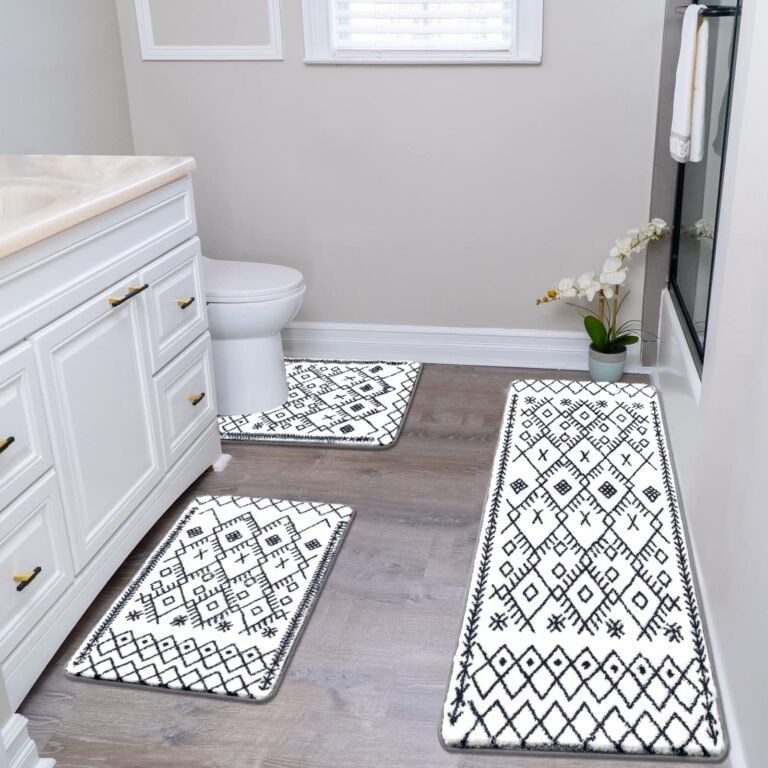
A patterned rug can hide small marks, but it still needs regular cleaning. Do not use appearance as a substitute for washing.
Around a toilet
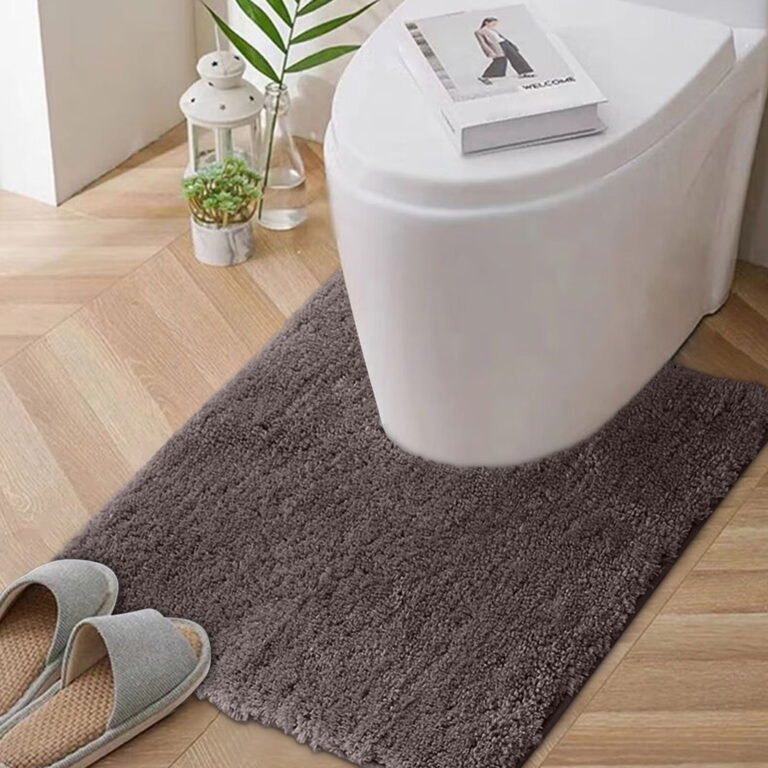
Choose a washable, low-profile rug that does not touch the toilet base or block cleaning. Avoid contoured rugs that fit tightly around the toilet if they are hard to remove.
A rug that sits close to the toilet can collect moisture and debris. Wash it more often than a decorative rug in a dry corner.
In a powder room
A decorative cotton, wool, or flat-weave rug may work if the room has no shower or tub. The lower moisture level gives you more freedom to choose based on style and comfort.
Even in a powder room, keep the rug away from leaks and wipe up water quickly.
In a small or poorly ventilated bathroom
Choose a thin, fast-drying material. Microfiber or lightweight polyester is often easier to manage than thick cotton or chenille.
Use the exhaust fan during and after showers when possible. The EPA recommends controlling indoor moisture to help prevent mold growth. If the room stays damp despite ventilation, reduce textile layers and investigate the source of moisture.

How to Check Quality Before You Buy
A material label alone does not tell you how a bathroom rug will perform. Check the whole product.
Use this inspection list:
- Read the fiber content. Look for cotton, polyester, microfiber, wool, or blends.
- Check the care label. Confirm washing method, water temperature, drying limits, and bleach guidance.
- Inspect the backing. Look for an even surface without peeling, cracks, or exposed adhesive.
- Measure the height. Confirm that the rug will clear the door and will not create a raised trip edge.
- Check the edge binding. Loose threads and curled edges can worsen after washing.
- Look for a stable shape. A rug that arrives folded should lie flat after the stated setup period.
- Consider the washing machine. A thick rug may become heavy when wet. Make sure your washer can handle it without strain.
- Check replacement access. If the rug is hard to wash or dry, you may use it less safely and less often.
Do not judge durability only by weight. A heavy rug may feel substantial but can take too long to dry. Construction, stitching, backing, and care instructions matter just as much as fiber type.

How to Clean and Maintain a Bathroom Rug
Wash the rug when it becomes visibly dirty, smells stale, or has absorbed repeated moisture. The exact schedule depends on the number of users, ventilation, and whether the rug dries fully between uses.
Follow these steps:
- Shake out loose hair and dust outdoors or over a trash bin.
- Read the care label before washing.
- Wash the rug separately or with similar items if the label permits.
- Use the recommended detergent and water temperature.
- Skip fabric softener if the manufacturer warns against it or if it may reduce absorbency.
- Dry the rug completely before placing it back.
- Clean and dry the floor beneath the rug.
- Inspect the backing and seams after each wash.
Do not put a damp rug back on the floor. Hang it over a rail or drying rack so air reaches both sides. Avoid folding it while wet.
Replace the rug when the backing peels, the edges curl, the pile stays musty after washing, or the rug slips even after the floor is clean and dry. A worn rug is not worth keeping near a wet tub or shower.
If you see repeated mold growth, a persistent musty smell, or damp flooring beneath the rug, look for a leak or ventilation problem. Cleaning the rug alone will not solve an ongoing moisture source.

Common Mistakes to Avoid
Choosing by softness alone
A soft, thick rug can feel luxurious but may dry slowly. Compare comfort with drying time and washability.
Assuming “water-resistant” means mold-proof
No ordinary bathroom rug is automatically mold-proof. Moisture, warmth, dirt, and poor airflow can affect many materials.
Ignoring the backing
The top may be washable while the backing is not. Check the entire care label and inspect the backing after washing.
Using rubber-backed rugs on every floor
Rubber and latex may not suit every vinyl, laminate, or finished floor. Check the flooring manufacturer’s advice when the floor warranty matters.
Leaving the rug flat after a shower
A rug can stay wet underneath even when the surface feels dry. Hang it or improve airflow.
Buying a rug that blocks the door
Measure the space first. A rug that catches on the door can curl, slide, or become a trip hazard.
Treating all microfiber as the same
Microfiber products vary in thickness, fiber blend, backing, and construction. Compare the care label and design, not just the word “microfiber.”
Key Takeaways
- Choose cotton for softness, absorbency, and a natural feel.
- Choose microfiber for fast drying and frequent washing.
- Choose polyester for color variety and low-maintenance care.
- Use chenille when plush comfort matters and the rug can dry fully.
- Reserve wool for mostly dry areas.
- Use bamboo, wood, or diatomaceous earth when you prefer a firm, non-textile surface.
- Check the backing for floor compatibility, grip, and signs of wear.
- Measure door clearance and avoid thick edges that create a trip point.
- Dry the rug and the floor beneath it after use.
- Replace any rug that slips, smells musty, has damaged backing, or stays damp.
Frequently Asked Questions
Is cotton or microfiber better for a bathroom rug?
Cotton is better for natural softness and high absorbency. Microfiber is often better for quick drying and frequent use. Choose cotton for comfort if the room has good airflow; choose microfiber when drying speed is the main concern.
What is the safest material for a non-slip bathroom rug?
Safety depends on the rug’s backing, floor type, condition, and moisture level, not on the surface fiber alone. Choose a product made for your floor, keep the floor dry, and replace the rug when the backing loses grip.
Are rubber-backed bathroom rugs safe for vinyl floors?
They may not be safe for every vinyl floor. Some rubber or latex backings can discolor or mark certain surfaces. Check the flooring manufacturer’s care instructions and use a compatible backing.
How often should a bathroom rug be washed?
Wash it when it becomes dirty, damp-smelling, or heavily used. A rug outside a frequently used shower may need more frequent washing than a decorative rug in a powder room. Always dry it fully before returning it to the floor.
Can a bathroom rug go in the dryer?
Only if the care label allows it. High heat may shrink cotton or damage rubber, latex, PVC, or other coated backings. When in doubt, air-dry the rug flat or hang it so both sides receive airflow.
Conclusion
The best bathroom rug material is the one that matches your moisture level, cleaning routine, and floor. For most U.S. bathrooms, a low-profile cotton or microfiber rug with a compatible, intact backing is a practical starting point. Choose a thicker or more decorative material only when you can wash it and dry it completely.
Before buying, check five things: fiber, drying speed, care label, backing, and floor clearance. That short check can prevent odors, slipping, floor damage, and a rug that becomes more work than it is worth.