What Is The Best Material For Bathroom Rugs: Best Choice
The best material for most bathroom rugs in the United States is machine-washable microfiber. It dries fast, absorbs water well, feels soft, and is easy to clean. Cotton is a strong choice if you prefer a natural fiber and can dry it often. Nylon or polyester may work well in busy bathrooms because they resist wear and dry faster than thick cotton.
The right choice depends on four things: water exposure, drying time, comfort, and care. A rug that stays damp can develop odor and may encourage mold growth, so quick drying matters as much as softness.

Quick answer: Which bathroom rug material is best?
Microfiber is the best all-around material for most U.S. bathrooms. It offers a useful balance of absorbency, fast drying, softness, low weight, and easy care.
Choose another material when your needs differ:
| Bathroom need | Best material | Why |
|---|---|---|
| Best overall | Microfiber | Absorbs water and dries fairly fast |
| Natural fiber | Cotton | Soft, comfortable, and widely available |
| High traffic | Nylon or polyester | Resists wear and often dries quickly |
| Thick, plush feel | Chenille microfiber | Soft and comfortable underfoot |
| Minimal washing | Thin synthetic rug | Holds less water and dries sooner |
| Firm, spa-like surface | Diatomaceous earth mat | Dries quickly but needs careful use |
| Eco-focused purchase | Organic cotton or recycled polyester | May reduce certain material impacts, depending on production and care |
No material stays hygienic if it remains wet for long periods. Even the best bathroom rug needs regular washing, air flow, and a dry floor beneath it.
What makes a good bathroom rug material?
A good bathroom rug should absorb splashes without holding water for too long. It should also dry between uses, stay stable on the floor, and tolerate repeated washing.
The main features to compare are:
- Absorbency: How much water the fibers can take in.
- Drying speed: How quickly the rug releases moisture into the air.
- Washability: Whether it can be cleaned at home without damage.
- Grip: Whether the backing helps reduce sliding.
- Durability: How well it handles foot traffic and laundering.
- Comfort: How it feels when you step out of the shower.
- Floor compatibility: Whether the backing may mark, stain, or trap moisture on the floor.
A thick rug may feel more comfortable, but it can take longer to dry. A thin rug may dry quickly, but it may absorb less water and feel less cushioned. The best choice is a balance, not simply the thickest or softest option.
Bathroom rugs also differ from bath mats. A bath mat is often placed next to a shower or tub and is designed to absorb water. A bathroom rug may cover a larger area and may focus more on comfort and appearance. The same material can work for both, but the rug’s size and thickness affect drying time.

Microfiber: the best all-around choice
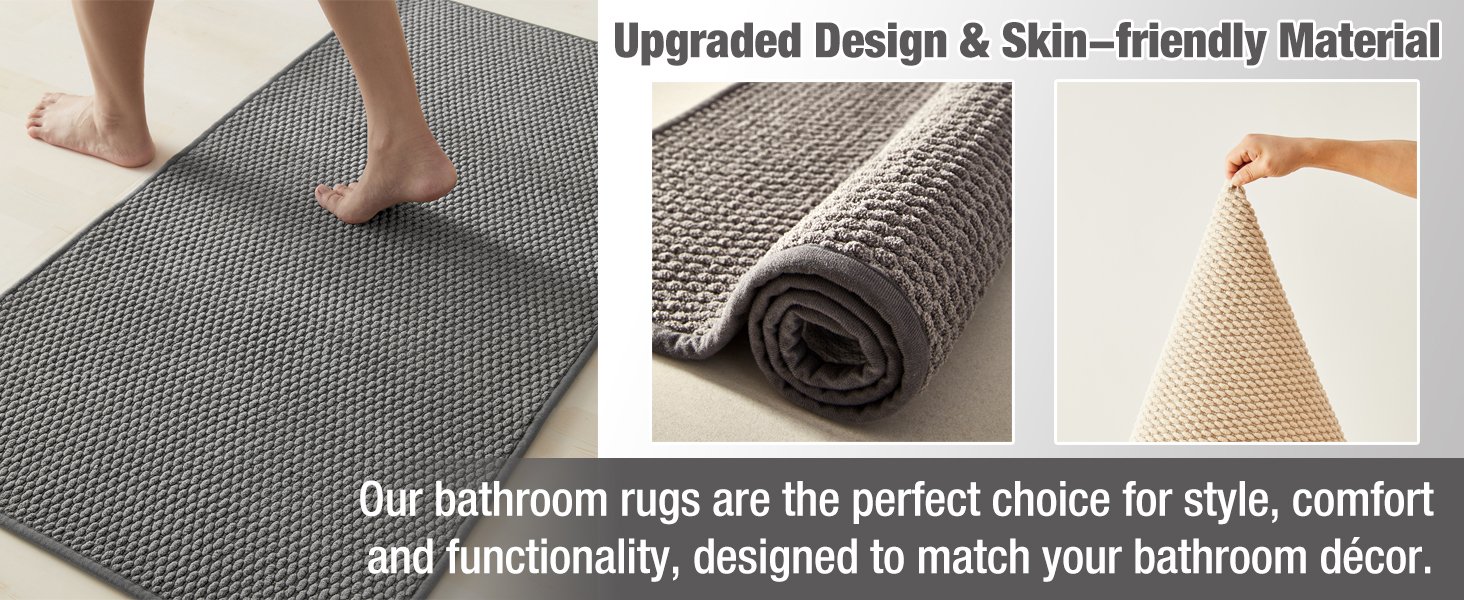
Microfiber is usually made from very fine polyester, polyamide, or a blend of both. The thin fibers create a large surface area that can pick up water and dry faster than many thick natural-fiber rugs.
Microfiber works well beside showers, tubs, and sinks. It is light enough to move and wash with ease. Many microfiber rugs also have a soft pile that feels comfortable on bare feet.
Advantages of microfiber
- Dries faster than many thick cotton rugs
- Absorbs water from wet feet and small splashes
- Feels soft and light
- Often fits in a standard home washing machine
- Usually costs less than specialty natural-fiber mats
- Comes in many sizes and shapes
Limits of microfiber
Microfiber is not automatically better just because it is synthetic. A dense, thick microfiber rug can still trap moisture. Some low-cost rugs also have backings that peel, crack, or leave marks after repeated washing.
Check the care label before buying. A removable or washable rug should be easier to keep clean than one that cannot fit in your washer. Avoid fabric softener when the manufacturer advises against it, since residue can reduce water absorption.
Microfiber is the strongest general recommendation for households that want one easy-care rug. It is especially useful in bathrooms used by several people during the day.

Cotton: the best natural-fiber option
Cotton remains a popular choice because it is soft, familiar, and absorbent. Cotton bathroom rugs are often comfortable underfoot and can have a simple, home-like look.
Cotton works best when you can wash and dry the rug often. It absorbs water well, but thick cotton can hold that water for a long time. A damp cotton rug placed on a poorly ventilated floor may develop a stale smell.
Choose cotton when:
- You prefer natural fibers
- The rug can be washed often
- The bathroom has good air flow
- You want a soft and comfortable surface
- You can hang or tumble-dry it fully after washing
Look for a low- or medium-pile cotton rug rather than an unusually thick one if drying time is a concern. A thin cotton mat may be more practical than a plush cotton rug in a humid bathroom.
Cotton can shrink, fade, or lose shape if washed or dried outside the care instructions. Follow the label, and do not put a damp rug back on the floor after washing.

Nylon and polyester: durable synthetic choices
Nylon and polyester are useful when a bathroom gets heavy traffic or needs a rug that dries with little delay. They are common in synthetic floor coverings because they can resist wear and hold color well.
These fibers may not feel as plush as cotton or chenille. However, a short-pile nylon or polyester rug can be practical for a half-bath, children’s bathroom, or shared family bathroom.
Nylon
Nylon is known for good wear resistance. It may suit a bathroom where people walk across the rug often. Its performance still depends on the weave, pile, backing, and construction.
Polyester
Polyester is often soft, colorfast, and affordable. Some polyester rugs are designed to resist stains, but a stain-resistant finish does not mean the rug is waterproof or mold-proof.
Choose a thin, washable design if drying speed matters. A thick synthetic rug may still trap moisture even when its fibers do not absorb much water.

Chenille: soft and plush, but slower to dry
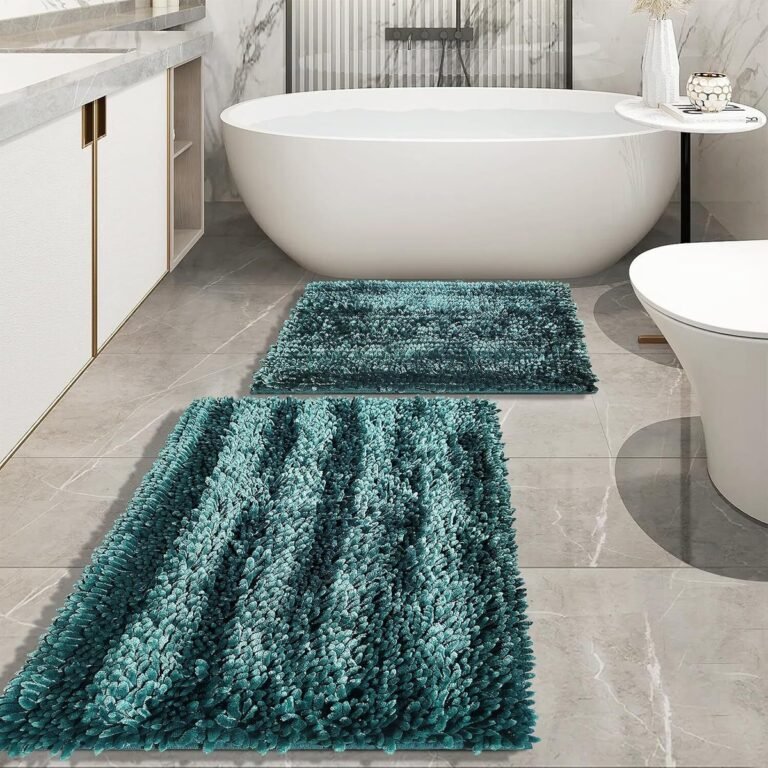
Chenille bathroom rugs have raised, fuzzy yarns that create a soft, cushioned surface. Many chenille mats are made from microfiber or polyester, so the term describes the texture and construction more than one exact fiber.
Chenille feels good under bare feet and can absorb water from a shower exit. Its deep texture also creates more space for water to collect. That can increase drying time.
Chenille is a good fit for:
- Low- to medium-use bathrooms
- People who value softness
- Bathrooms with strong ventilation
- Homes where the rug can be washed and dried often
It is less suitable when the rug must dry quickly between many users. Shake out or hang a chenille mat after use if the care label allows it.

Diatomaceous earth mats: fast drying, with important limits
Diatomaceous earth mats are hard or semi-hard boards made from a mineral material. They absorb surface moisture and can feel dry soon after use. They are not textile rugs, and they do not provide the same softness or cushioning as cotton or microfiber.
These mats need a stable, level floor. A cracked, warped, or poorly placed mat can create a trip or breakage risk. Some products may also feel slippery when wet, so follow the manufacturer’s instructions and test the mat carefully.
Do not treat a diatomaceous earth mat as maintenance-free. It may need cleaning, sanding, or replacement according to the product instructions. Avoid using it where a sharp edge, crack, or unstable surface could harm someone.
This type of mat may suit a user who values a firm, quick-drying surface more than a soft rug. It is not the best choice for every household, especially where children, older adults, or people with balance concerns use the bathroom.

Which backing is safest for bathroom floors?
A non-slip backing can help a rug stay in place, but the backing must match the floor and care instructions. Rubber, latex, PVC, and silicone backings behave differently.
A backing should:
- Stay flat on the floor
- Resist sliding when the rug is dry and damp
- Allow the underside to dry
- Not transfer color or chemicals to the floor
- Remain intact after washing
Do not assume that any rubber-backed rug is safe for every surface. Some backings can discolor vinyl flooring, damage finish, or stick to certain floors when exposed to heat or moisture. Ask the flooring maker or rug maker if compatibility is unclear.
Place the rug on a clean, dry floor. Lift it often to check for trapped moisture, peeling backing, staining, or mildew odor. Replace the rug if the backing breaks apart or the rug moves underfoot.
A non-slip rug pad may help, but it must also be approved for the floor type. Never use a pad that curls, slides, or leaves residue.

How to choose the best bathroom rug for your home
Use this simple process before buying:
1. Measure the space
Measure the area beside the tub, shower, sink, or toilet. Leave enough clearance for doors and drawers. A rug that blocks a door can become a trip hazard.
2. Check how much water the rug will receive
A rug beside a shower needs more absorbency than a rug in a powder room. A guest bathroom used once a week has different needs from a shared bathroom used many times each day.
3. Consider drying conditions
Look at ventilation, humidity, and available drying space. If the rug cannot dry fully between uses, choose a thinner microfiber, nylon, or polyester design.
4. Read the care label
Confirm that the rug is machine washable if that matters to you. Check washing temperature, drying method, bleach guidance, and whether the backing requires special care.
5. Inspect the backing
Avoid a backing that feels brittle, flakes when bent, or has a strong chemical odor. Make sure it lies flat and fits the floor.
6. Choose a manageable size
A large rug may look attractive but can be hard to wash and dry. Two smaller washable mats may be easier to maintain than one oversized rug.
7. Plan a replacement point
Replace the rug when it smells after washing, stays damp, sheds backing, curls at the edges, or no longer stays in place. Cleaning cannot restore a damaged backing.

Best bathroom rug material by situation
The best material changes with the room and the user.
| Situation | Recommended material | Reason |
|---|---|---|
| Main family bathroom | Microfiber or short-pile polyester | Easy care and reasonable drying speed |
| Small half-bath | Cotton, nylon, or thin polyester | Comfort without heavy water retention |
| Humid bathroom | Thin microfiber or nylon | Less moisture retention than thick cotton |
| Luxury-feel bathroom | Chenille microfiber or plush cotton | Soft, cushioned feel |
| Children’s bathroom | Washable microfiber with a secure backing | Easy cleaning and less bulk |
| High-traffic bathroom | Nylon or polyester | Better resistance to repeated foot traffic |
| Low-maintenance home | Thin synthetic mat | Faster drying and simpler washing |
| Natural-material preference | Low-pile cotton | Soft, familiar, and widely available |
These are starting points, not absolute rules. Construction matters as much as fiber. A thin cotton mat may dry sooner than a thick synthetic rug, while a dense polyester mat may hold more moisture than a loosely woven cotton one.

How to keep bathroom rugs clean and dry
Wash bathroom rugs based on use, moisture, and the care label. A rug used beside a daily shower needs more attention than one in a dry guest bath.
Follow these steps:
- Shake out loose dirt outdoors or over a washable surface.
- Wash according to the label. Use the recommended water temperature and cycle.
- Do not overload the washer. The rug needs room for water and detergent to move through it.
- Dry it fully. Use the approved dryer setting or hang it with air space around both sides.
- Lift the rug often. Check the underside and floor for trapped moisture.
- Clean the floor below it. Dirt and water can collect under the rug.
- Wash more often after illness or heavy soiling. Follow product instructions for laundering.
Do not use bleach, heat, or fabric softener unless the care label allows it. Strong chemicals and high heat can damage fibers or backing. If a rug has a persistent odor after proper washing and complete drying, replacement may be safer than repeated chemical treatment.
Good ventilation helps. Use the bathroom exhaust fan as directed by the fan maker and keep the rug spread out rather than folded while damp.

Common mistakes to avoid
The most common mistake is choosing softness over drying time. A thick rug may feel luxurious but can stay wet longer than a thin mat.
Avoid these problems:
- Buying a rug that cannot fit in your washing machine
- Covering a bathroom vent or blocking a door
- Leaving a damp rug flat on vinyl, wood, or laminate flooring
- Assuming “water-resistant” means quick-drying
- Using a rug with peeling or cracked backing
- Placing a rug over an uneven floor
- Washing the rug without checking the care label
- Choosing a very large rug for a small, humid bathroom
- Using a non-slip pad that is not approved for the floor
A bathroom rug is not a substitute for fixing a leak, poor ventilation, or standing water. Address those problems first.

Frequently asked questions
Is cotton or microfiber better for a bathroom rug?
Microfiber is usually better for quick drying and easy care. Cotton is better if you want a natural fiber and a soft feel. Choose cotton only if you can dry it fully and wash it often.
Are polyester bathroom rugs safe?
Polyester rugs can be suitable for bathrooms when they have a stable backing, clear care instructions, and a surface that does not stay wet. Check that the backing is compatible with your floor.
What bathroom rug material dries the fastest?
Thin synthetic rugs made from microfiber, nylon, or polyester often dry faster than thick cotton or chenille. Actual drying time depends on pile depth, water exposure, air flow, humidity, and how the rug is hung.
Are rubber-backed bathroom rugs good for vinyl floors?
Not always. Some rubber or latex backings may discolor or mark vinyl flooring. Check the flooring and rug manufacturer’s guidance before use, and inspect the floor beneath the rug often.
How often should bathroom rugs be washed?
Wash them whenever they become visibly dirty, smell damp, or stay wet. In a frequently used bathroom, weekly washing may be practical. A lightly used guest-bath rug may need less frequent washing, provided it stays dry and clean.
Conclusion
For most U.S. homes, machine-washable microfiber is the best bathroom rug material overall. It absorbs water, dries fairly fast, feels soft, and is easy to handle.
Choose cotton for a natural, comfortable feel; nylon or polyester for durability and faster drying; and chenille when plush comfort matters more than quick moisture release. Whatever material you choose, prioritize a secure backing, washable construction, full drying, and compatibility with your floor.
The best next step is to measure your bathroom, check how often the rug will get wet, and select the thinnest washable material that still gives you the comfort and absorbency you need.