Can You Cut A Bathroom Rug: Easy Safe Guide
Yes, you can cut a bathroom rug if the material and backing allow it. Cotton, microfiber, chenille, and many thin fabric rugs are easy to trim. Rugs with latex, rubber, PVC, foam, or thick woven backing need more care because the cut edge may fray, curl, shed, or become a slipping hazard.
For most bathrooms in the United States, the safest approach is to make a paper template first, cut slowly with sharp shears, and finish the new edge. A raw edge may look fine at first but can unravel after washing or create a trip point near the toilet, vanity, or tub.

Key Takeaways
- You can cut many bathroom rugs, especially cotton and fabric styles.
- Check the backing before cutting. Thick foam, rubber, and PVC can behave differently from cloth.
- Make a full-size paper template before touching the rug.
- Use sharp fabric scissors and cut from the back when possible.
- Rebind, hem, or seal the new edge to prevent fraying.
- Do not use the rug if the new shape causes curling, sliding, or exposed backing.
- A cut rug may lose its original warranty or manufacturer support.
Which Bathroom Rugs Can You Cut?
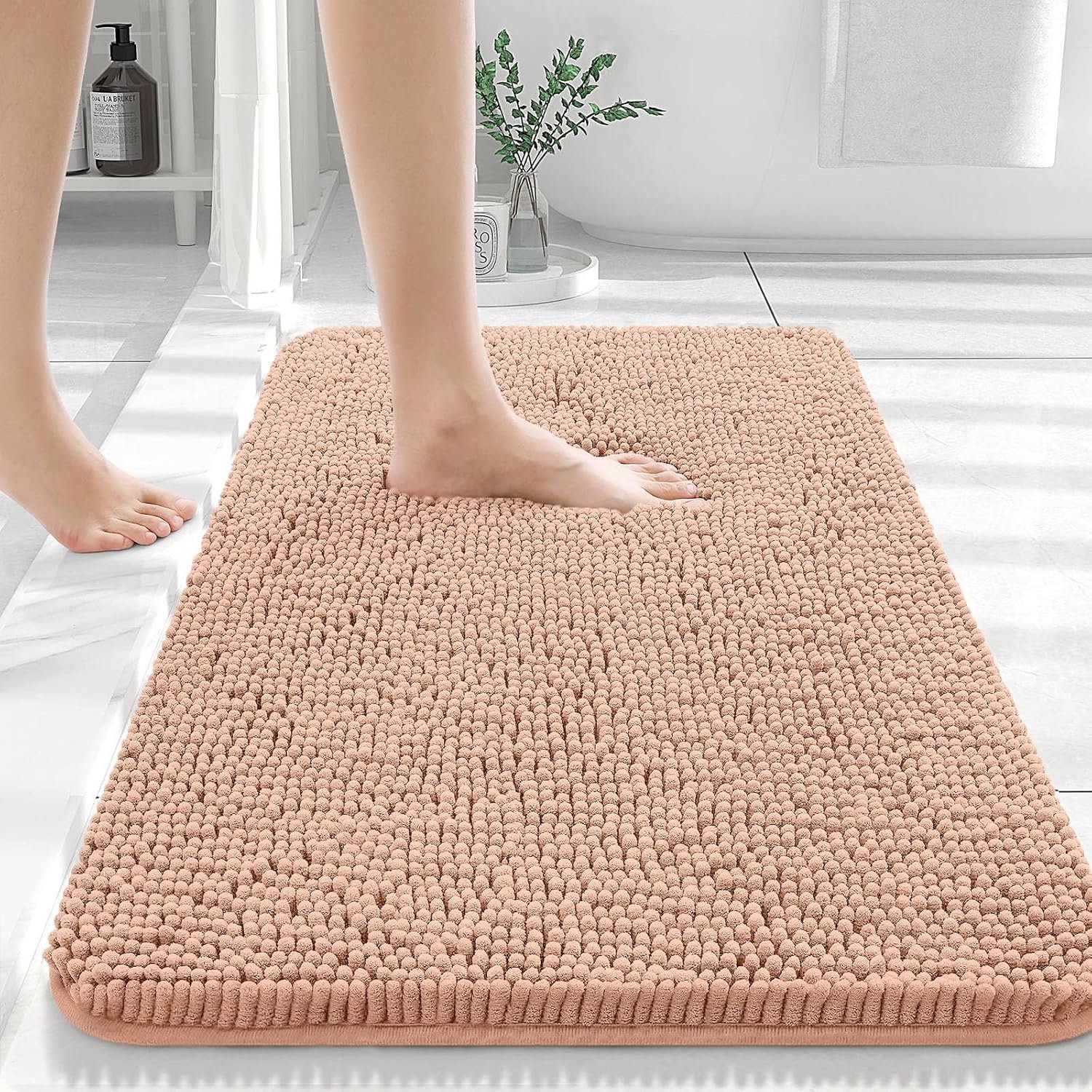
The best rugs to cut are thin, flexible rugs made from cotton, microfiber, chenille, or woven fabric. These materials usually cut cleanly with sharp scissors. They may still need a hem or binding tape after trimming.
| Bathroom rug type | Can it be cut? | Main concern |
|---|---|---|
| Cotton or woven fabric | Usually | Fraying and shrinking |
| Microfiber or chenille | Usually | Loose fibers and edge shedding |
| Low-pile carpet-style rug | Often | Frayed loops or cut pile |
| Rubber-backed fabric | Sometimes | Backing may crack or peel |
| Memory-foam mat | Sometimes | Foam may crumble or lose shape |
| PVC or vinyl-backed mat | With care | Rough edges and curling |
| Thick shag rug | Possible, but difficult | Uneven pile and loose yarn |
| Heated or electrical mat | No, unless the maker permits it | Shock, fire, or product damage |
A rug with a sewn border is still cuttable, but cutting removes that finished edge. The new edge must receive a replacement finish.
Do not cut a mat with heating wires, electrical parts, or an attached sensor. Cutting through those parts can damage insulation and create a serious safety risk. When in doubt, check the care label or product instructions before making any cut.

Why Cut a Bathroom Rug?
Cutting a bathroom rug can solve a fit problem when a standard size is too wide, too long, or shaped poorly for the room. A smaller rug may fit between a vanity and a toilet without bunching. A custom corner can also help the rug sit flat around a pedestal sink or cabinet.
However, cutting is not always the best fix. If the rug has a complex border, thick foam, or a non-slip coating, replacing it with a better-sized rug may give a cleaner and safer result.
Measure the available floor space, not just the old rug. Leave enough room for doors, drawers, cabinet doors, and foot traffic. In a small U.S. bathroom, even an extra inch can make the difference between a flat rug and one that folds against a fixture.
What You Need Before Cutting
Gather the following tools:
- Measuring tape
- Pencil or washable fabric marker
- Kraft paper, newspaper, or a paper drop cloth
- Ruler or straightedge
- Sharp fabric scissors
- Utility knife, if the backing is thick
- Cutting mat or a protected work surface
- Clips or painter’s tape
- Seam binding, bias tape, or fabric hem tape
- Needle and thread or a sewing machine, if suitable
- Silicone edge sealant made for the rug material, when appropriate
Use fabric scissors for the cloth. Dull scissors can pull loops and leave a jagged edge. If you use a utility knife, cut on a stable surface and keep your free hand away from the blade path.
Before cutting, wash and dry the rug according to its care label if it is new or has changed size after washing. Cotton can shrink. Cutting before that change may leave you with a shape that no longer fits.

How to Cut a Bathroom Rug
Follow these steps to make the cut more accurate and reduce damage.
1. Measure the space
Measure the length and width of the floor area where the rug will sit. Check the space at several points because walls, cabinets, and toilets may not be perfectly square.
Record the smaller measurement if the space narrows. A rug that is slightly smaller can lie flat. A rug that is too large may buckle or catch beneath a door.
2. Make a paper template
Place paper over the floor area and mark the shape you need. Cut the paper template first. Put it in place and test it by opening the bathroom door, cabinet doors, and drawers.
For a curved cut around a toilet base or cabinet, use several small marks instead of trying to draw one perfect curve. Join the marks with a smooth line.
The template is the cheapest part of the project to get wrong. Test it until it fits before marking the rug.
3. Mark the back of the rug
Turn the rug upside down. Place the template on the backing and secure it with clips or low-tack painter’s tape.
Trace the cutting line with a pencil or washable marker. Add a seam allowance if you plan to hem the edge. A practical allowance is about 1/2 inch, but the amount depends on the binding method and the thickness of the rug.
Do not mark only the visible top surface. The backing shows the true construction and makes it easier to follow a straight line.
4. Protect the work surface
Lay the rug on a cutting mat, thick cardboard, or another surface that can handle a blade. Do not cut directly on a wood floor, countertop, tile floor, or finished table.
Smooth the rug before cutting. Wrinkles can shift the marked line and create a shape that does not lie flat.
5. Cut slowly
For a fabric rug, use long, controlled cuts with sharp scissors. Keep the blades upright and follow the line in small sections.
For thick rubber or vinyl backing, score the line with a utility knife rather than forcing the blade through in one pass. Several light passes are easier to control than one deep, rushed cut.
If the rug contains a dense woven border, cut between rows when possible. Cutting across a row can release more yarn and cause the edge to unravel.
6. Test the fit
Place the trimmed rug in the bathroom before finishing the edge. Walk around it carefully and check:
- The rug lies flat.
- The edge does not curl upward.
- The rug does not block a door or cabinet.
- The cut does not expose sharp or hard backing.
- The rug stays in place when stepped on.
- The shape leaves a comfortable path around the toilet and vanity.
Do not skip this test. Once you bind or hem the edge, changing the shape becomes harder.

How to Finish the Cut Edge
A finished edge helps the rug keep its shape and reduces fraying. The best method depends on the rug material.
Sew a hem
Fold the cut edge toward the back by about 1/2 inch and press or clip it in place. Sew the fold with a strong thread.
This method works well for cotton and other flexible fabric rugs. It may not work on thick rubber-backed mats because the needle can struggle with the backing.
Add binding tape
Seam binding or bias tape can cover the raw edge. Open the tape, place it over the edge, and sew it in place. Binding gives the rug a clean outline and can be useful when the cut edge is uneven.
For a thick rug, use clips rather than pins. Pins may leave holes in rubber or foam backing.
Use a suitable edge sealant
Some synthetic rugs can use a compatible seam or edge sealant. Apply it only in a well-ventilated area and follow the product label.
Test the sealant on a hidden section first. Some products can stain fabric, harden into a sharp ridge, or weaken a rubber backing. Do not use a sealant unless it is suitable for the rug’s material.
Use a professional binding service
Professional binding is the best choice for a thick carpet-style rug, expensive textile, or rug with a complex border. A carpet or upholstery shop may be able to bind the new edge with a matching or contrasting material.
This costs more than a home cut, but it can produce a stronger and neater edge.

Can You Cut a Bathroom Rug Around a Toilet?
Yes, but a cut around a toilet must be smooth, stable, and large enough to avoid bunching. Do not make a tight notch that presses against the toilet base. The rug needs room to move slightly during cleaning and normal use.
Make a paper pattern around the toilet first. Mark the widest part of the base, then add a small clearance gap. Transfer the shape to the rug and cut a gradual curve rather than sharp inside corners.
A toilet-shaped cut can weaken the rug. Binding the entire curved edge is better than leaving it raw. If the rug has a thick foam or rubber layer, replacing it may be safer than making a deep custom cut.
Can You Cut a Rubber-Backed Bathroom Rug?
You can cut some rubber-backed rugs, but the result depends on the backing. Flexible latex or rubber may cut cleanly but can split, peel, or curl along the new edge. A stiff PVC layer may leave a hard ridge that catches toes or scratches flooring.
Inspect the cut edge after trimming. Stop using the rug if you see:
- Loose pieces of rubber
- Sharp plastic points
- A curled edge
- Cracking across the backing
- Fabric separating from the backing
- A slippery patch on the floor
Never rely on a damaged non-slip backing. A rug that slides is not safe simply because it fits the room.
How to Keep a Cut Bathroom Rug From Fraying
The most reliable method is to cover the raw edge with a sewn hem or binding. For low-pile fabric, a narrow zigzag stitch can also hold the fibers together.
Do not burn synthetic fibers with a lighter. The melted edge can become hard, uneven, or toxic to breathe. It can also leave a hot surface that damages the rug or flooring.
Wash the rug after the edge is finished and inspect it again. Use the care instructions on the label. A new edge that looks secure when dry may loosen during machine washing.

Common Mistakes to Avoid
Cutting without a template
A freehand cut can look simple but often produces a crooked line. A paper template lets you test the shape before damaging the rug.
Cutting from the top
The pile can hide the true line. Mark and cut from the backing whenever possible.
Ignoring shrinkage
Cotton and some woven rugs can change size in the wash. Wash and dry the rug first if the care label allows it.
Leaving the edge unfinished
Raw fabric can unravel. Raw foam or rubber can crumble and curl. Finish the edge or choose another rug.
Making sharp inside corners
Sharp corners concentrate stress and may tear. Use rounded transitions, especially around a toilet or cabinet.
Cutting too close to a fixture
A rug that touches the toilet, vanity, or bathtub may bunch during cleaning or use. Leave a small, even gap.
Using adhesive without testing it
Glue or sealant can stain the rug, harden the edge, or damage the floor. Test on a hidden area and follow the label.
Reusing a damaged non-slip backing
If cutting breaks the backing, the rug may slide. Replace the rug or add a compatible, removable rug pad designed for bathroom flooring.

When Should You Replace the Rug Instead?
Replace the rug when the material is brittle, badly worn, moldy, or already shedding. Replacement is also the better option when the rug contains electrical components or has a thick molded shape that cannot be finished neatly.
A new rug is usually more practical when the cut would remove most of the border or leave a large section unsupported. The same applies when the rug must fit a complex shape around several fixtures.
Choose a smaller rug with a finished edge if you need a quick, low-risk solution. Cutting makes sense when the rug is otherwise in good condition and the new shape can be finished securely.
What to Do If the Cut Rug Does Not Lie Flat
First, remove the rug and place it on a flat surface. Check whether the problem comes from a crooked cut, a curled backing, a thick hem, or a rug that has changed shape during washing.
For a mild fabric curl, dampen and reshape the rug according to its care instructions. Place it flat while it dries. Do not use high heat unless the manufacturer permits it.
If the backing remains curled or the edge creates a trip point, stop using the rug. A flat, well-fitting rug is safer than one that technically fits but moves underfoot.
Frequently Asked Questions
Can you cut a bath mat to make it smaller?
Usually, yes, if it is a fabric bath mat without electrical parts. Cut from the back, test the shape first, and finish the new edge. Foam and rubber-backed mats require closer inspection.
Can you cut a bathroom rug with regular scissors?
You can cut a thin fabric rug with sharp household scissors, but fabric scissors usually give better control. Thick backing may require a utility knife and a protected cutting surface.
Will cutting a bathroom rug ruin it?
Cutting may ruin the rug if the edge cannot be finished or the backing loses its non-slip function. It can also void a product warranty. Test the material and make a paper template first.
Can you cut memory foam bathroom mats?
Some memory foam mats can be cut, but the foam may crumble and the backing may curl. A cut edge may also lose its original shape. Replace the mat unless you can create a stable, covered edge.
How do you cut a rug around a pedestal sink?
Make a paper template around the sink base, leaving a small clearance gap. Use a smooth curve rather than sharp corners, then bind or hem the cut edge.
Final Recommendation
You can cut a bathroom rug when it is made from a flexible material and the new edge can be finished securely. Cotton and thin fabric rugs are the easiest choices. Rubber-backed, foam, PVC, shag, and electrical mats need more caution.
Before cutting, make a paper template, check door and cabinet clearance, mark the back, and use sharp tools. After cutting, finish the edge and test the rug for flatness and slip resistance. If the backing curls, cracks, or slides, replace the rug rather than forcing it to work.