Do You Need A Rug In Front Of A Bathroom Sink: Rug Guide
Quick answer
No, you do not need a rug in front of a bathroom sink. However, a small bathroom rug or sink mat can make the room safer and more comfortable by catching splashes, warming cold floors, and giving your feet a dry place to stand.
The best choice depends on your floor, sink layout, moisture level, and household needs. Use a rug only if it lies flat, dries quickly, and has a secure nonslip backing or pad. Skip it if it stays damp, curls at the edges, blocks a door, or slides underfoot.

What is the difference between a bathroom rug and a bath mat?
A bath mat is made for wet areas, such as beside a bathtub or shower. A bathroom rug is often a larger decorative piece placed near a vanity, toilet, or open floor area.
The terms overlap, but the materials may differ:
- Bath mat: Usually absorbent and designed to handle frequent water.
- Sink mat: A smaller mat placed directly in front of a bathroom sink.
- Bathroom rug: May be decorative and less absorbent than a bath mat.
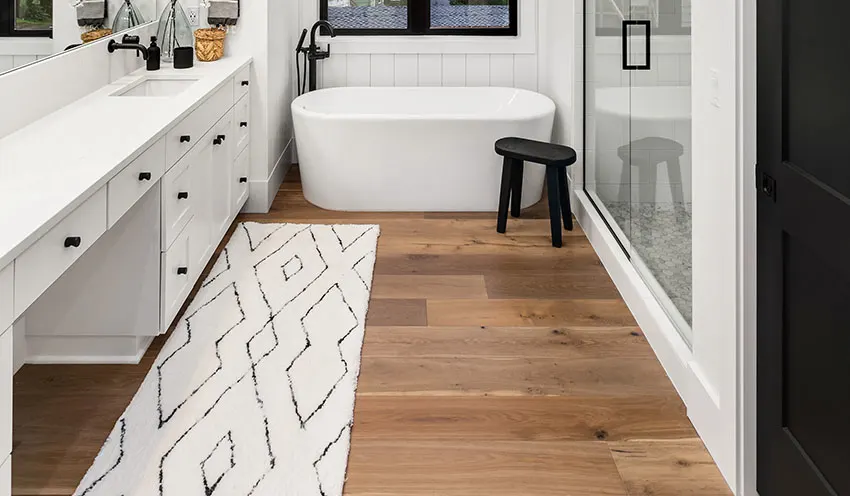
- Runner: A long, narrow rug used in front of a double vanity or along a larger bathroom wall.
- Area rug: A larger rug that covers part of the bathroom floor.
A rug in front of the sink does not replace a bath mat beside the shower. Water from a shower creates a different level of moisture and may require a more absorbent, quick-drying mat.
The safest option is a product labeled for bathroom use. A regular cotton or wool rug may look attractive, but it can hold moisture, stain easily, or develop an odor if the room has poor airflow.

Why put a rug in front of a bathroom sink?
A sink rug can offer comfort and protect the floor, but it is not useful in every bathroom.
It catches water
Hand washing, shaving, brushing teeth, and washing your face can leave small drops near the sink. A washable rug can absorb some of this water before it reaches the floor.
This helps most on:
- Wood or wood-look flooring that should not stay wet
- Porous natural stone
- Grout lines that are hard to clean
- Light-colored floors that show water spots
- Sinks with shallow basins or short faucets
A rug will not stop a plumbing leak or protect the floor from standing water. If water appears often, inspect the faucet, supply lines, drain, and countertop edge.
It feels warmer
Tile, stone, and concrete can feel cold in the morning. A rug creates a soft layer between your feet and the floor.
This benefit is mainly about comfort. It does not mean the rug makes the room warmer or improves the bathroom’s heating system.
It reduces standing fatigue
A cushioned mat can make tasks such as shaving, styling hair, or washing your face feel easier. This may help people who stand at the vanity for several minutes.
Choose a stable, low-profile mat. A thick, soft rug may feel comfortable but can create a trip edge or interfere with a swinging door.
It adds visual balance
a sink rug can help connect the vanity, wall color, towels, and floor. In a large bathroom, a runner can make an open space feel less empty.
Decor should come after safety. A rug that looks good but slides, stays wet, or blocks access is not a good fit.

When should you skip a rug in front of the sink?
You may be better off without a sink rug when the risks or maintenance outweigh the benefits.
Skip the rug if:
- The bathroom has frequent standing water.
- The room has poor ventilation.
- The rug cannot be washed or dried easily.
- The edges curl or the backing breaks down.
- The rug slides when you step on it.
- A door, drawer, or cabinet hits the rug.
- The rug covers a floor drain.
- Someone in the home has balance or mobility limits and may trip on it.
- Pets may chew, scratch, or soil the rug.
- The floor already provides enough warmth and traction.
A bare floor is often easier to inspect and clean. This can matter in a small bathroom where a rug would make the space feel crowded.
If you like the comfort of a rug but not the maintenance, consider a small sink mat that you can remove and wash often. You can also use a floor finish or washable indoor footwear, depending on the floor material and household needs.

How to choose the right bathroom sink rug
Choose a rug by checking safety, moisture control, size, and care needs in that order.
1. Look for a secure base
A rug should stay in place when you step on it. Choose a mat with a nonslip backing, or use a compatible nonslip rug pad.
Do not assume every rubber or latex backing is safe for every floor. Some backings can leave marks, trap moisture, or react with certain finishes. Follow the flooring and rug care instructions.
Avoid loose underlays that move separately from the rug. A sliding pad can create the same hazard as a sliding rug.
2. Select a low profile
A low-pile rug has short, dense fibers. It is usually easier to clean and less likely to catch a toe than a thick shag rug.
A low profile also helps with:
- Cabinet doors
- Vanity drawers
- Bathroom doors
- Robot vacuums
- Wheelchairs and walkers
- Small floor transitions
Check the full rug thickness, including the backing and pad. A thin rug with a thick pad can still become a trip point.
3. Pick a washable or easy-care material
The best material depends on how much water reaches the floor.
Common options include:
| Material | Benefits | Limits |
|---|---|---|
| Cotton | Soft, absorbent, and often machine washable | Can stay wet and may need frequent drying |
| Microfiber | Dries fairly fast and feels soft | May flatten or show wear over time |
| Polyester | Often stain resistant and easy to clean | May absorb less water than cotton |
| Nylon | Durable and suitable for high traffic | May feel less soft |
| Bamboo or wood slats | Dries quickly and keeps feet off the floor | Can be slippery if poorly finished |
| Wool | Warm and durable | Often costly and harder to dry and clean |
These are general material traits, not guarantees. Construction, backing, ventilation, and washing instructions can change performance.
Avoid a rug that cannot be dried fully after washing. Damp fabric can develop an odor and may contribute to surface growth in a humid room.
4. Match the rug to the sink area
Measure the space before buying. Include the distance from the vanity to the opposite wall, the door swing, and the path used to enter the room.
Useful starting points include:
- Single sink: A small mat centered with the basin
- Double vanity: A runner that fits the open floor without touching the door or cabinets
- Floating vanity: A rug can add warmth, but leave enough clearance for cleaning
- Pedestal sink: A small, rounded, or narrow mat may fit better than a wide rectangle
- Small powder room: A compact mat may be enough, or no rug may be the better choice
Do not place the rug so close to the toilet that it becomes difficult to clean. Leave a practical gap around fixtures when possible.
5. Use color and pattern with a purpose
A patterned rug can hide small water marks. Light rugs show dirt and hair more quickly, while very dark rugs may show lint and mineral spots.
Color does not solve a moisture problem. A rug that hides dampness can make it easier to overlook a cleaning or ventilation issue.

How to place a rug safely in front of the sink
Placement matters as much as the rug itself.
- Clean and dry the floor. Remove dust and moisture before placing the rug.
- Center the rug with the sink. Position it where your feet naturally stand.
- Keep the edges flat. Smooth curled corners and replace damaged backing.
- Test cabinet and door movement. Open drawers, vanity doors, and the bathroom door fully.
- Walk across the rug slowly. Check whether it shifts, bunches, or catches your toes.
- Check nearby wet areas. Make sure the rug does not create a damp layer against the wall or vanity.
- Recheck after cleaning. A rug may move after washing or after the floor becomes wet.
The rug should not cover a floor vent or drain. It should also leave enough clear space for normal movement and cleaning.
For older adults or anyone with reduced balance, remove the rug if it moves even slightly. The CDC lists loose rugs and mats as fall hazards in home settings and recommends removing them or securing them properly. A bathroom deserves extra care because water can make both the floor and rug more slippery.

How to keep a bathroom sink rug clean and dry
Wash the rug according to its care label. Do not rely only on appearance; a rug may look clean while holding moisture in its fibers or backing.
A simple care routine is:
- Shake or vacuum the rug regularly.
- Hang it to dry when it feels damp.
- Wash it when it develops an odor or visible soil.
- Dry both sides before returning it to the floor.
- Clean the floor beneath the rug.
- Inspect the backing for cracks, peeling, or stiffness.
- Replace the rug when it no longer lies flat or stays in place.
Improve ventilation by using the bathroom exhaust fan during bathing and for the time recommended by the fan or home guidance. Open a door or window only when that is practical and safe.
Do not put a damp rug back on a wood floor. Moisture trapped between the rug and floor can damage some finishes. Follow the flooring manufacturer’s care instructions, especially for engineered wood, laminate, luxury vinyl, and natural stone.

Is a bathroom rug safer than a bare floor?
Not automatically. A dry, flat rug with a secure backing may reduce exposure to small splashes and make standing more comfortable. A loose, wet, or curled rug may increase the chance of slipping or tripping.
The safer choice depends on the full setting:
| Bathroom condition | Usually better choice |
|---|---|
| Dry floor and good ventilation | A rug is optional |
| Frequent sink splashes | A washable, quick-drying mat |
| Smooth floor with poor traction | A stable mat designed for that floor |
| Limited mobility or balance concerns | No loose rug, or a professionally assessed secured option |
| Small room with a tight door swing | No rug or a very low-profile mat |
| Wood floor near a splash-prone sink | A washable mat, with prompt drying |
| Persistent standing water | Fix the water source before adding a rug |
For fall prevention, the floor and rug must work together. The National Institute on Aging recommends removing or securing loose rugs and improving lighting and walking paths in the home. These principles apply well to bathrooms, where wet surfaces create an added risk.

Common mistakes to avoid
Buying a rug that is too large
A large rug can block the door, cover a drain, or make the room hard to clean. Measure the space and mark the proposed size with painter’s tape before buying.
Using a loose rug pad
A rug pad that slides can move the rug with it. Use a pad made for the floor type, or choose a rug with a suitable nonslip backing.
Choosing a thick shag rug
High-pile rugs can feel soft, but they may catch feet, hold water, and interfere with doors or drawers.
Leaving the rug wet
A wet rug is not doing its job well. Hang it to dry, improve airflow, or replace it with a faster-drying option.
Ignoring the floor finish
Some backing materials can discolor or mark flooring. Test in a hidden area when the manufacturer allows it, and follow both care labels.
Covering a problem with a rug
A rug should not hide a leaking faucet, damaged caulk, loose toilet, or poor drainage. Repair the cause first.

Bathroom sink rug decision checklist
A rug is likely a good fit when you can answer “yes” to most of these questions:
- Does water often land near the sink?
- Is the rug made for damp areas?
- Can you wash and dry it easily?
- Does it stay flat when stepped on?
- Does the backing suit your floor?
- Will doors and drawers open freely?
- Can you clean under it?
- Does it improve comfort without narrowing the walking path?
If you answer “no” to several questions, leave the floor bare or choose a smaller mat.
A practical test is to use painter’s tape to outline the rug’s footprint. Walk through the room, open every door and drawer, and stand at the sink. If the marked area feels crowded, the rug will probably feel crowded too.

Frequently asked questions
Should a rug touch the bathroom vanity?
It does not need to touch the vanity. A small gap can make cleaning easier and reduce the chance of moisture staying against the cabinet or wall. The rug should still sit close enough to catch water where you stand.
What size rug belongs in front of a single bathroom sink?
A compact mat is often enough for a single sink. Measure the standing area first rather than choosing a size based only on the vanity width. The rug should fit the space without blocking doors, drawers, or the main walkway.
Should you put a rug in front of a double bathroom vanity?
A runner can work well in front of a double vanity if it lies flat and leaves room for doors and walking paths. Center it with the vanity, but do not let it extend into a door swing or become wider than the usable floor space.
Are bathroom rugs safe on tile floors?
They can be safe when the rug has a suitable nonslip backing or pad and remains dry. Tile can become slippery when wet, so remove any rug that shifts or bunches. Check the backing instructions for compatibility with the tile and grout.
How often should you wash a bathroom sink rug?
Wash it whenever it is visibly dirty, smells damp, or stays wet between uses. The exact schedule depends on traffic, ventilation, splashes, and whether people use the rug with wet feet. Dry it fully before putting it back.
Final recommendation
You do not need a rug in front of a bathroom sink. Add one when it solves a clear problem, such as cold flooring, small sink splashes, or standing discomfort.
Choose a low-profile, washable rug that stays flat and dries fully. If it slides, curls, traps moisture, blocks movement, or hides a leak, remove it. In many bathrooms, a small sink mat is more practical than a large decorative rug.