How To Find A Good Bathroom Rug: Smart Buying Guide
A good bathroom rug should fit your space, dry fast, stay flat, resist slipping, and be easy to wash. Start by measuring the floor, then choose a low-pile rug with a stable backing, absorbent fibers, and care instructions that match your laundry routine. The best choice depends on your bathroom size, floor type, moisture level, and safety needs.
Introduction
Bathroom rugs do more than add color. They catch water near the shower or tub, make cold floors more comfortable, and help reduce wet footprints across the room. However, the wrong rug can stay damp, curl at the edges, slide on tile, or trap dirt.
This guide explains how to choose a bathroom rug for a typical U.S. home. It covers size, materials, backing, cleaning, placement, accessibility, and common mistakes. It also explains why a rug that feels soft in a store may not work well in a humid bathroom.

1. Measure the Bathroom Before You Shop
Measure the open floor area first. A rug should cover the place where water lands without blocking doors, drawers, vents, or the toilet base.
Use a tape measure to record:
- The length and width of the open floor
- The space in front of the shower or tub
- The clearance under the bathroom door
- The distance between the vanity, toilet, and tub
- The location of floor vents and heating registers
A rug that is too large may bunch under a door or touch a toilet base. A rug that is too small may miss the main splash zone.
Common bathroom rug sizes
| Bathroom area | Useful rug size or shape | Best use |
|---|---|---|
| Small apartment bathroom | 20 by 30 inches or 21 by 34 inches | In front of a sink or shower |
| Standard tub or shower | 20 by 30 to 24 by 36 inches | Main drying area |
| Double vanity | 20 by 60 to 24 by 72 inches | Long vanity wall |
| Large bathroom | Two or more smaller rugs | Separate sink and shower zones |
| Around a toilet | A carefully fitted mat, if needed | Only when it does not crowd the base |
These are starting points, not fixed rules. Measure the actual space before ordering, especially if the rug is sold online.
Check the door swing
Place a ruler or folded towel on the floor where the rug will sit. Open the door slowly. If the door touches the object, the rug is too thick or too close to the doorway.
This simple test can prevent a common problem: a plush rug that looks comfortable but stops the door from opening.
Plan the layout, not just the size
For a single sink, a small rectangular rug may be enough. For a double vanity, a long runner can look neat, but two separate mats may dry faster and be easier to wash.
In a narrow bathroom, leave a small strip of exposed floor near cabinets and walls. This gives the rug room to dry and makes sweeping easier.
2. Choose a Material That Matches Moisture and Laundry Needs
The best bathroom rug material depends on how often the rug gets wet and how often you can wash it. Absorbency matters, but drying speed matters just as much.
Cotton: soft and easy to wash
Cotton is a common choice because it feels comfortable, absorbs water, and comes in many styles. Many cotton bath mats can go in a washing machine.
Its main weakness is drying time. A thick cotton rug can remain damp after several showers. If the rug stays wet, it may develop a musty smell and can hold more soil.
Choose cotton when:
- You can wash it often
- The bathroom has good airflow
- You prefer a soft, natural-feeling surface
- The rug can be hung or spread out to dry
Microfiber: quick-drying and practical
Microfiber rugs often dry faster than thick cotton mats. They can also feel soft underfoot and may collect small drops well.
Check the care label before buying. Some microfiber products should not be washed with fabric softener, bleach, or high heat. Heat can damage certain synthetic fibers or backing materials.
Microfiber may suit a busy household where the rug needs to dry between uses.
Chenille: soft but often thick
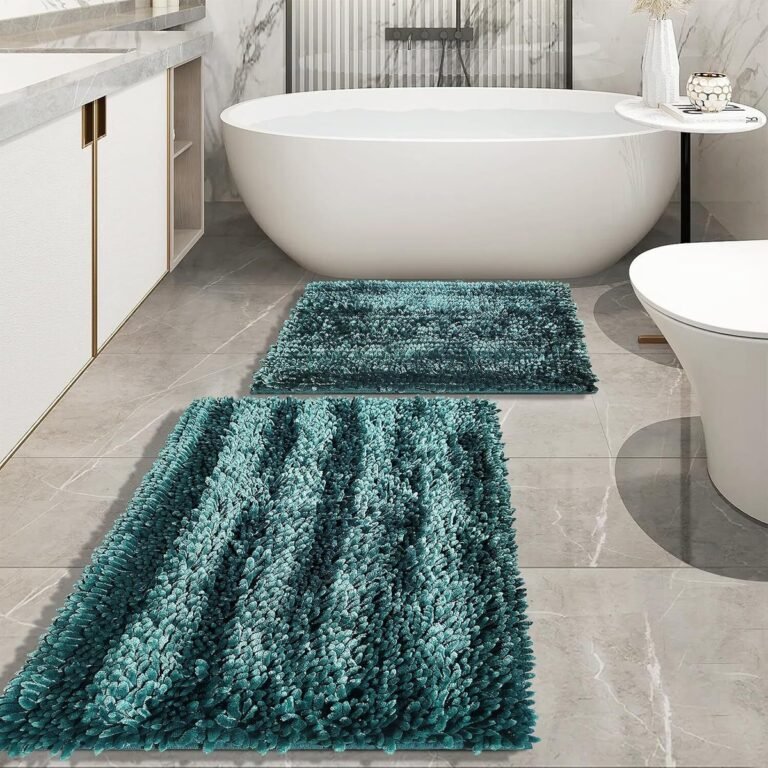
Chenille rugs have raised loops or tufts that feel plush. They can absorb water well, but the thick texture may dry slowly.
Look for a design with a firm edge and a washable construction. Avoid very deep piles if the rug sits near a door, toilet, or cabinet.
Polyester and nylon: durable synthetic options
Synthetic rugs can resist fading and may dry faster than dense natural fibers. Nylon is often valued for wear resistance, while polyester is common in affordable decorative rugs.
The label matters more than the fiber name alone. A thin polyester rug may dry well, while a thick one may not. The backing and construction can change performance.
Bamboo, teak, and wood slats are different from rugs
Wood bath mats let air move under the surface and can suit a modern bathroom. They do not absorb water like a fabric mat, though. They can also feel firm and may be less suitable for people who need a cushioned surface.
Keep wood mats level and dry. Follow the care instructions, and check that the feet or underside do not scratch the floor.
3. Select a Low-Pile Design With a Stable Backing
A low-pile rug is usually easier to clean, less likely to trap moisture, and less likely to interfere with doors. “Pile” means the height and density of the rug fibers.
A good bathroom rug should:
- Lie flat
- Have a firm, finished edge
- Resist sliding under normal foot pressure
- Avoid loose loops that catch toes
- Fit under doors and near cabinets
- Allow enough airflow to dry
Understand non-slip backing
Many bathroom rugs have latex, rubber, PVC, silicone, or foam backing. These materials can improve grip, but they are not automatically safe for every floor.
Some backing can:
- Leave marks on vinyl
- Trap moisture against wood
- Stick to certain finishes
- Break down after repeated washing
- Stain or discolor flooring
Before using a backed rug, check the flooring maker’s care instructions. This matters most for hardwood, luxury vinyl plank, laminate, and recently refinished floors.
Do not treat a non-slip label as a guarantee. A rug can still slide on dust, water, wax, or a smooth floor. The U.S. Consumer Product Safety Commission provides general safety information, but it does not certify every bathroom rug as slip-proof.
Avoid loose rug pads unless they are made for the space
A separate rug pad may improve grip, but a thick pad can create a trip edge. It can also hold water under the rug.
If you use a pad, choose one designed for damp areas and the specific floor type. It should remain flat, resist moisture, and fit fully under the rug without showing at the edges.
For a home with older adults or anyone with balance concerns, a firmly secured low-profile mat is often safer than a thick, loose, or curled rug. If falls are a concern, review the bathroom as a whole rather than relying on a rug alone.
4. Check Water Absorption and Drying Time
A bathroom rug must manage water without staying wet all day. Absorption and drying are related but not identical.
A dense rug may absorb a large amount of water, yet dry slowly. A thinner synthetic rug may absorb less but dry sooner. The better choice depends on whether the rug is used after every shower or only near a sink.
Look for these useful features:
- A surface that feels absorbent rather than slick
- A backing that does not seal in moisture
- A thickness that allows air to reach the underside
- A washable design
- A hanging loop or flexible shape for drying
After a shower, lift the rug and check the underside. If the floor or backing feels wet for hours, improve ventilation or switch to a faster-drying rug.
Use the bathroom exhaust fan during and after a shower, when possible. The U.S. Environmental Protection Agency explains that moisture control helps reduce indoor air problems linked with damp conditions. A rug cannot solve poor ventilation by itself.
A simple drying test
If you already own the rug, try this test:
- Place it in its normal position after a typical shower.
- Lift one corner after one hour.
- Check whether the underside and floor are damp.
- Check again after several hours.
- Notice any odor, curling, or dampness that returns each day.
If the rug remains wet overnight, wash it more often, hang it after use, improve airflow, or replace it with a thinner design.
5. Match the Rug to Your Floor Type
The floor beneath the rug changes what backing and care method you need.
Tile
Tile is common in bathrooms and usually handles moisture well, but smooth tile can make a rug slide. Choose a rug with a stable underside and keep both the tile and backing clean.
Grout lines can make a rug feel uneven. A flexible mat may sit better than a rigid design.
Vinyl and luxury vinyl plank
Some rubber or latex backings can react with vinyl finishes and leave discoloration. Follow the flooring manufacturer’s guidance before using a backed mat.
Move the rug from time to time so the floor can air out and so you can inspect for marks.
Laminate
Laminate can swell when moisture reaches seams or edges. Use a rug that dries quickly, and do not allow water to remain under it.
Wipe spills rather than placing a wet rug back on the floor.
Hardwood
Wood floors need extra care. A wet, non-breathable backing can hold moisture against the finish. Choose a rug system approved for the floor and lift it often for cleaning and drying.
If the bathroom has wood flooring, waterproofing and ventilation are more important than the rug alone.
Natural stone
Stone can react to some cleaners and may show marks from trapped moisture or backing. Use a cleaning product approved for that stone type, and avoid assuming that a general bathroom cleaner is safe.
6. Compare Bathroom Rugs With a Practical Decision Table
Use the table below to narrow the choice before you shop.
| Your main need | Better starting choice | Main trade-off |
|---|---|---|
| Soft feel | Cotton or chenille | May dry slowly |
| Fast drying | Thin microfiber or synthetic weave | May feel less plush |
| Frequent washing | Machine-washable cotton or synthetic rug | Check shrinkage and backing |
| Small bathroom | Low-pile 20-by-30-inch mat | Less coverage |
| Double vanity | Long runner or two mats | Runner may be harder to lift |
| Older adult in the home | Flat, stable, low-profile mat | Less cushioning |
| Hardwood or vinyl | Floor-compatible backing | May limit style choices |
| High humidity | Thin, breathable rug | May absorb less water |
| Decorative use | Patterned woven rug | May need more care |
This table is a starting point, not a ranking. A washable rug that fits your floor and dries well is usually more useful than a thicker rug with a better color.
7. Read the Care Label Before Buying
Care instructions reveal how much work the rug will require. Look for clear information about washing, drying, water temperature, bleach, and backing care.
The Federal Trade Commission requires care information for many textile products sold in the United States. Read the label, but also check the seller’s full instructions for the specific product.
Before buying, ask:
- Is the rug machine washable?
- Can it go in a dryer?
- Does it need low heat or air drying?
- Will the backing crack, peel, or flake?
- Is bleach allowed?
- Does it shrink?
- Can it be washed with other items?
- Is the care label permanently attached?
A rug that must be hand-washed and laid flat may not be practical for a high-use family bathroom.
Washing and maintenance basics
Follow the product label first. In general:
- Shake out dust before washing.
- Wash the rug when it becomes soiled or stays damp.
- Do not use more detergent than needed.
- Avoid fabric softener when the care label warns against it.
- Dry the rug fully before returning it to the floor.
- Clean the floor under the rug.
- Replace the rug if the backing cracks, peels, or becomes slick.
Never put a wet rug back on a wood or laminate floor. That can trap moisture where it is harder to see.
8. Avoid These Common Bathroom Rug Mistakes
Buying by color alone
Color affects the look of the room, but it does not tell you whether the rug will dry, stay flat, or survive washing. Check construction and care first.
Choosing the thickest rug
A thick rug may feel comfortable, but it can block a door, create a trip edge, and dry slowly. More padding is not always better.
Covering every inch of floor
Several rugs can make a bathroom look crowded and create more edges to catch a foot. Place mats only where water and foot traffic make them useful.
Ignoring the underside
The backing may cause more problems than the top. Look for peeling, cracking, sticky spots, and color transfer.
Leaving the rug in one place forever
Even a good rug needs air and cleaning underneath. Lift it regularly and inspect the floor.
Assuming “washable” means maintenance-free
Washable rugs still need to dry fully. A rug that stays damp can smell and may damage some flooring.
Using a bath mat as a fall-prevention system
A rug can reduce wet footprints, but it cannot make an unsafe bathroom safe. Use grab bars, adequate lighting, clear walkways, and other safety measures when needed. For a serious mobility or fall risk, an occupational therapist or qualified home-safety professional can assess the full room.
9. A Simple Bathroom Rug Buying Process
Use this five-step process when comparing options.
- Measure the floor. Record the open area, door clearance, and splash zone.
- Identify the floor material. Check the flooring maker’s advice about rubber, latex, and moisture.
- Choose the pile and fiber. Favor low pile and faster drying if the bathroom is humid or heavily used.
- Read the care label. Confirm that washing and drying fit your routine.
- Inspect the underside. Look for a stable, intact backing that lies flat.
Signs you chose well
A suitable bathroom rug should:
- Stay flat after washing
- Remain in place during normal use
- Dry between uses
- Fit without blocking doors
- Feel comfortable without creating a trip edge
- Show no damage to the floor
- Be easy enough to clean regularly
If it fails one of these tests, change the placement, improve drying, or choose a different rug.
Key Takeaways
- Measure the bathroom before choosing a size.
- Select a low-pile rug that lies flat and fits under the door.
- Balance absorbency with drying speed.
- Check whether the backing is suitable for tile, vinyl, laminate, hardwood, or stone.
- Read washing and drying instructions before buying.
- Lift and clean the rug and the floor beneath it.
- Do not rely on a bathroom rug alone to prevent falls.
Frequently Asked Questions
What is the best material for a bathroom rug?
There is no single best material for every bathroom. Cotton feels soft and absorbs water well, while microfiber and other thin synthetics may dry faster. Choose based on humidity, washing access, floor type, and how often the rug gets wet.
Should a bathroom rug have rubber backing?
Rubber backing can help a rug stay in place, but it may not suit every floor. Some backings can mark vinyl, trap moisture on wood, or break down over time. Check the flooring manufacturer’s instructions and inspect the backing often.
How often should you wash a bathroom rug?
Wash it when it becomes visibly dirty, develops an odor, or stays damp. A heavily used rug may need washing more often than one placed in a low-use powder room. Dry it fully before putting it back.
Are thick bathroom rugs safer?
Not always. Thick rugs can feel soft, but they may create a trip edge, block doors, and dry slowly. A flat, stable, low-profile rug is often easier to use safely.
Is a bathroom runner better than two small mats?
A runner can give a double vanity a clean look, but two mats may be easier to lift, wash, and dry. Choose the layout that leaves doors, drawers, and walking paths clear.
What should you put under a bathroom rug?
Use only a pad that is made for damp areas and approved for your floor type. It should fit fully under the rug, remain flat, and not hold water. In many bathrooms, a rug with a suitable built-in backing is simpler.
Conclusion
To find a good bathroom rug, begin with measurements and floor type rather than style. Choose a flat, washable rug with a stable backing, suitable absorbency, and a drying time that matches your bathroom.
Before you buy, check the door clearance, care label, backing material, and floor compatibility. After you buy, keep the rug clean and dry, lift it often, and replace it when the backing becomes damaged.