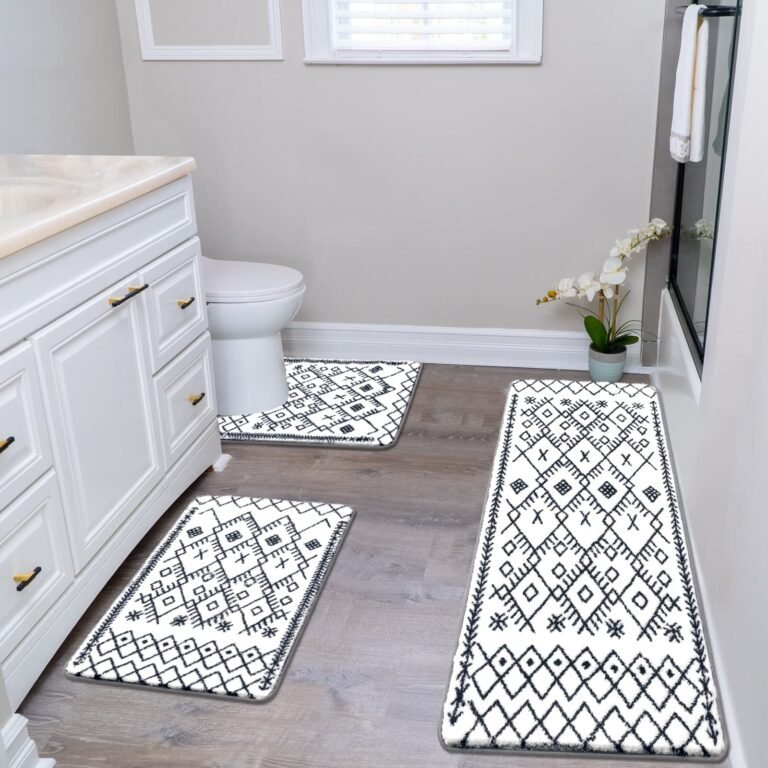
What Are The Best Bathroom Rugs For A Small Bathroom: Guide
The best bathroom rug for a small bathroom is usually a low-profile, quick-drying rug with a secure nonslip backing. A washable microfiber or cotton rug often works better than a thick, oversized mat because it fits tight spaces, dries faster, and is less likely to block a door.
For most U.S. bathrooms, choose a rug that:
- Fits the clear floor area without touching the toilet base or blocking the door
- Has a low pile, preferably under about ½ inch
- Absorbs water without staying damp for hours
- Has a stable backing that is suitable for your floor type
- Can be washed or cleaned with little effort
- Does not cover floor vents or create a raised trip edge
The right choice depends on the bathroom’s layout, floor surface, ventilation, and how much water reaches the floor.

Quick answer: Which bathroom rug is best for a small space?
A small, low-profile microfiber bath rug is the best all-around choice for many small bathrooms. Microfiber tends to dry quickly and comes in compact sizes. A washable cotton rug is another good option if you prefer a natural fiber and can launder it often.
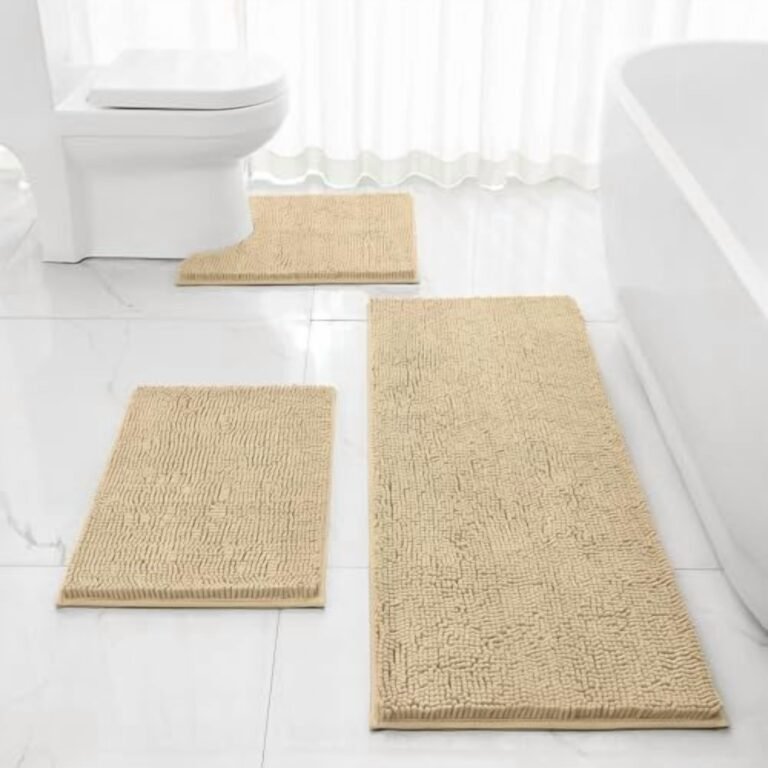
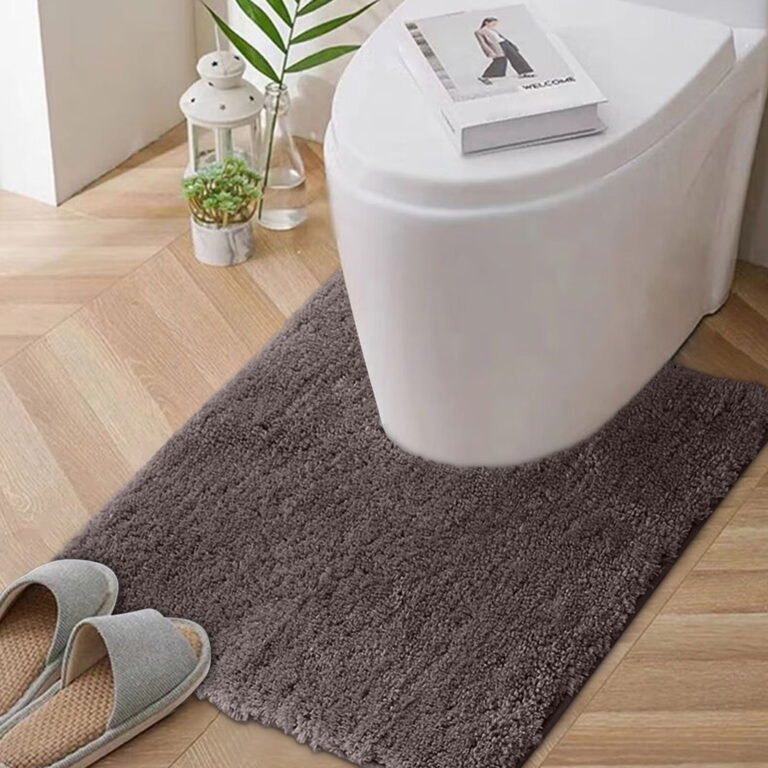
Use a contoured toilet mat only when the toilet base leaves enough clearance. These mats can save space, but their cutout may trap moisture around the toilet. A thick memory-foam mat can feel soft, but it may dry slowly and create more door-clearance problems.
Best options by need
| Bathroom need | Best rug type | Main benefit | Main trade-off |
|---|---|---|---|
| Smallest floor area | Low-profile microfiber | Compact and quick to dry | May feel less plush |
| Natural material | Washable cotton | Comfortable and easy to launder | Can stay wet longer |
| Soft feel | Thin memory foam | Cushioned underfoot | Often thicker and slower to dry |
| Toilet-side coverage | Contoured toilet mat | Uses a narrow floor area | Harder to clean around the cutout |
| Very fast drying | Thin woven or microfiber rug | Less moisture retention | Usually less cushioned |
| Temporary rental use | Lightweight washable rug | Easy to move and replace | Backing may wear faster |
The best rug is not the thickest one. In a small bathroom, drying speed, floor grip, and fit matter more than plushness.
How to choose the right size for a small bathroom
Measure the open floor area before buying a bathroom rug. A rug that looks small online can still block a door, cover a vent, or crowd the toilet.
Measure these areas
- Door swing: Open and close the door fully. Leave enough clearance for the rug to stay flat.
- Toilet base: Measure from the front of the toilet to nearby walls or fixtures.
- Sink area: Check the space in front of the vanity or pedestal sink.
- Shower or tub edge: Measure the safe standing area where water is most likely to land.
- Floor vents: Keep heating or cooling vents uncovered unless the manufacturer says otherwise.
Common small bathroom rug sizes include:
- 17 by 24 inches: Best for a narrow area in front of a sink or shower
- 20 by 30 inches: A flexible size for many apartment bathrooms
- 24 by 36 inches: Useful when the room has a wider clear floor area
- Contoured toilet mat: Only when the shape and cutout fit the toilet base
These sizes are examples, not universal rules. A 20-by-30-inch rug may fit one bathroom and block the door in another.
Use a simple clearance check
Place painter’s tape on the floor to mark the rug’s expected outline. Walk across the room and open the door. If your foot catches the tape or the door pushes into the marked area, choose a smaller rug or a thinner design.
A small rug should create a dry landing area without covering the entire floor. Leaving some exposed floor around the edges also makes cleaning easier.

What material is best for a small bathroom rug?
Microfiber: best for quick drying
Microfiber rugs are often the most practical choice for a small bathroom. Their thin construction can absorb water while drying sooner than a dense, thick mat. They are also commonly available in small sizes and machine-washable designs.
Look for:
- A flat or low-pile surface
- A washable design
- A backing that does not crumble or peel
- Care instructions that match your laundry setup
Microfiber is not automatically better. A very dense microfiber mat can still hold moisture if it is placed on a damp floor with poor ventilation.
Cotton: best for comfort and easy washing
Cotton bathroom rugs feel soft and familiar. Many can be machine washed, which helps when the rug receives frequent splashes.
The main limitation is drying time. Cotton can hold more water than a thin woven rug. Hang it or dry it fully between uses when possible. Do not return a damp rug to the floor, since persistent moisture can contribute to odor and surface problems.
Memory foam: best only when softness is the priority
Memory-foam bath mats provide cushioning, which can feel comfortable in front of a sink. However, they are often thicker than microfiber or woven rugs. That thickness may interfere with a bathroom door or create a raised edge.
Foam also may dry slowly if the outer fabric becomes soaked. Choose one only if:
- The door clears the mat
- The mat has a stable, suitable backing
- You can lift and dry it often
- The care label permits regular washing
Woven polyester or nylon: best for a thin profile
A thin woven synthetic rug can work well when clearance is very limited. It is less bulky and may dry quickly. However, some woven rugs absorb less water than microfiber or cotton, so they may need a separate absorbent mat near the shower.
Diatomaceous earth and hard drying mats
Hard mineral drying mats are sometimes marketed for fast moisture removal. They can dry quickly, but they are less forgiving than fabric rugs. They may crack, feel hard underfoot, or slide if used on an unsuitable surface.
Check the product instructions carefully. Do not assume a hard mat is safe on every tile, vinyl, laminate, or wood floor.

Why backing and slip resistance matter
A bathroom rug should stay in place when you step on it. Water, smooth flooring, and a lightweight rug can increase the chance of movement.
Look for product instructions that identify the backing material and floor compatibility. A latex, rubber, or PVC backing may work differently on ceramic tile, natural stone, vinyl, laminate, or finished wood.
Important safety limits
A nonslip backing does not make a rug permanently slip-proof. Its grip can weaken because of:
- Water or soap under the rug
- Dust and hair on the floor
- Worn or cracked backing
- Floor wax or cleaning residue
- Incompatible floor finishes
- Repeated washing
The U.S. Consumer Product Safety Commission advises consumers to reduce household slip and trip hazards, including unsecured rugs. Follow the rug maker’s care and placement directions, and remove a rug that curls, slides, or develops damaged backing.
Do not use double-sided tape or adhesive pads unless they are approved for both the rug and your floor. Some adhesives can leave residue or damage vinyl, laminate, or finished wood.
How to test a rug after placement
After placing the rug:
- Make sure the floor beneath it is clean and dry.
- Step on the rug from several directions.
- Check whether the edges curl upward.
- Open the bathroom door several times.
- Recheck the rug after the first wash.
If it moves under normal use, replace it or use a floor-safe grip product recommended for that surface.
What pile height works best in a small bathroom?
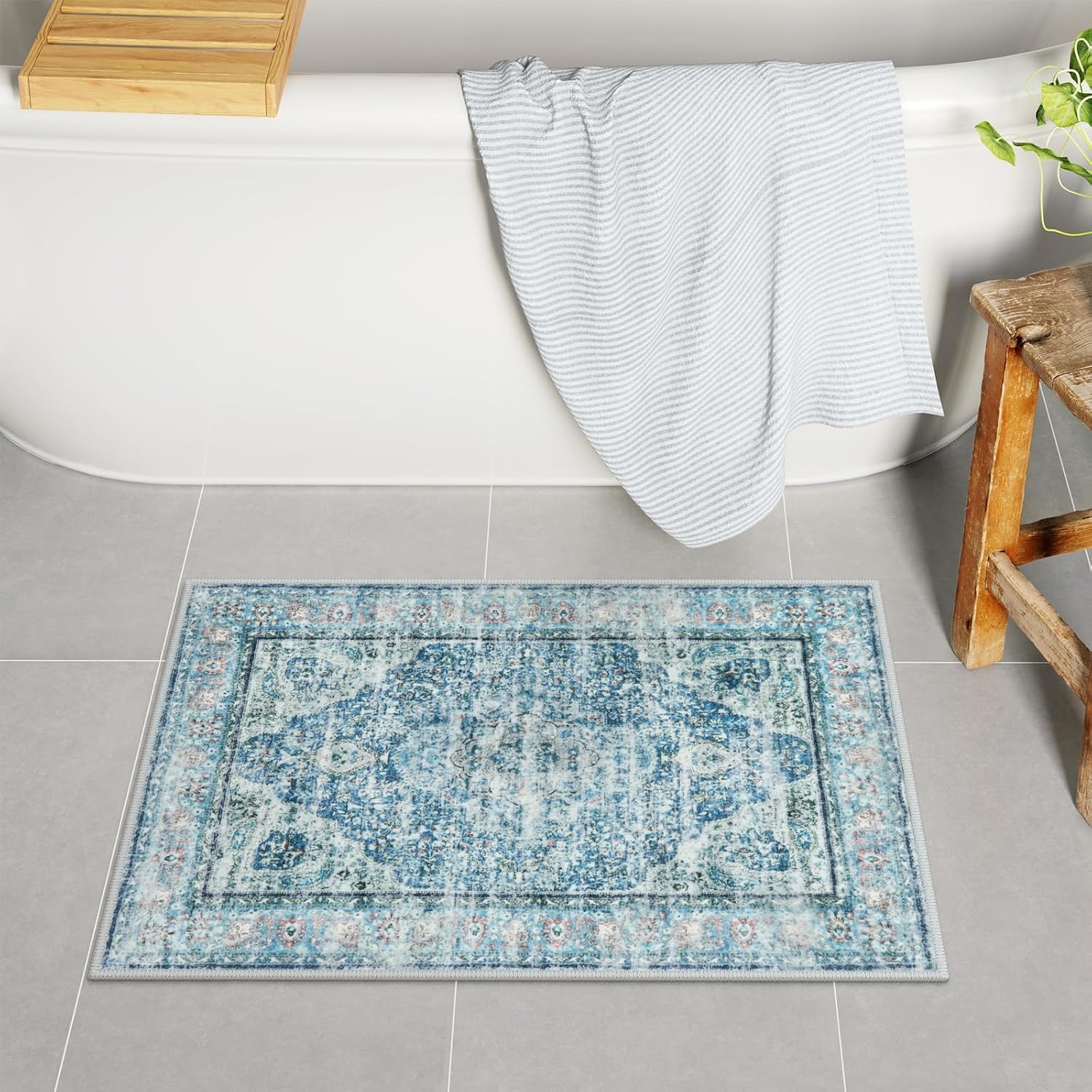
A low-pile or flat rug usually works best. Pile is the height and density of the rug fibers. Low pile helps with door clearance, reduces raised edges, and makes the rug easier to vacuum or wash.
Choose a thicker rug only when you have confirmed:
- The door clears it in both directions
- The rug does not cover a floor vent
- The edges lie flat
- The rug does not make the toilet area cramped
- You can lift it to clean below
Avoid shag-style rugs in a small bathroom unless you are willing to wash and dry them often. Long fibers can trap hair, lint, and moisture. They may also make the rug harder to clean around the toilet.
A thin rug is not always more absorbent. Judge the full product, including its fiber, backing, wash instructions, and drying needs.
The best rug shape for each small-bathroom layout
Rectangular rug
A rectangular rug is the most flexible choice. It works in front of a sink, shower, or tub when the floor area is narrow but straight.
A 17-by-24-inch rug may fit in front of a compact vanity. A 20-by-30-inch rug may cover a larger landing zone, but measure first.
Contoured toilet mat
A contoured mat wraps around the front of a toilet. It can use floor space efficiently in a bathroom with a narrow walkway.
The cutout must fit the toilet base. If it is too tight, it may bunch up. If it is too loose, it may leave exposed floor where water collects. The shape can also make the mat harder to wash thoroughly.
Runner
A short runner can work in a long, narrow bathroom. It may connect the sink and shower zones, but it should not create a path that blocks the door or toilet.
Avoid a runner that extends into a wet zone unless it dries quickly and has a secure backing.
Round or oval rug
Round and oval rugs can soften a small room, but they may waste useful floor space. They are best when the bathroom has a clear central area and no door-clearance problem.

How to keep a small bathroom rug clean and dry
A rug that stays damp can develop odor and may contribute to a persistently moist environment. The U.S. Environmental Protection Agency recommends controlling moisture to help prevent mold growth. The Centers for Disease Control and Prevention also advises keeping indoor spaces dry and addressing water problems promptly.
Use this care routine:
- Lift the rug after a shower. Hang it over a shower bar or drying rack if the care label allows.
- Let the floor dry. Wipe up standing water beneath the rug.
- Wash on the label schedule. A frequently used bathroom rug may need more washing than a decorative accent rug.
- Dry it fully. Do not put a damp rug back on the floor.
- Clean beneath it. Dust, hair, and soap film can reduce grip.
- Inspect the backing. Replace the rug if it cracks, flakes, curls, or stops staying flat.
Improve ventilation with an operating bathroom exhaust fan or an open door when appropriate. If the bathroom remains damp for long periods, a rug change alone will not solve the moisture problem.
Do not mix bleach with ammonia, acids, or other household cleaners. Follow the cleaner’s label and the rug manufacturer’s instructions.

Small-bathroom rug comparison
The table below compares common rug categories by practical features. These are general material tendencies, not a guarantee for every product.
| Rug category | Absorption | Drying potential | Door clearance | Cleaning effort | Best use |
|---|---|---|---|---|---|
| Thin microfiber | High to moderate | Good | Excellent | Low to moderate | Most small bathrooms |
| Washable cotton | High | Moderate | Good | Moderate | Soft feel and regular washing |
| Thin woven synthetic | Moderate | Good | Excellent | Low | Very tight spaces |
| Memory foam | Moderate to high | Low to moderate | Fair to poor | Moderate | Comfort where clearance allows |
| Shag or deep pile | High | Low | Poor | High | Large, well-ventilated rooms |
| Hard mineral mat | Variable | High | Good | Surface care needed | Users who prefer fast surface drying |
The best balance for most small bathrooms is a thin microfiber rug with a tested, floor-compatible backing. Choose cotton when washability and natural fiber matter more than drying speed. Choose memory foam only when softness justifies its extra height.

Common mistakes to avoid
Buying by color before measuring
A rug can match the room and still block the door. Measure the clear floor area first.
Choosing the thickest mat
Thickness can feel comfortable, but it can also create a trip edge, slow drying, and interfere with the door.
Covering the entire bathroom floor
A wall-to-wall rug is harder to lift, clean, and dry. It can also hide water leaks or damp flooring.
Ignoring the backing
A beautiful rug with a weak or damaged backing may slide more than a plain rug with stable construction.
Leaving the rug in place all day
A rug that never dries can smell musty and keep the floor damp. Lift it often, especially after heavy use.
Using a bath mat as a general area rug
Some decorative rugs are not designed for wet areas. Confirm that the product is intended for bathroom use and check its care instructions.
Keeping a damaged rug
Replace a rug when the backing flakes, the corners curl, the fabric tears, or it moves during normal use. Repair is not always reliable for worn nonslip backing.

Frequently asked questions
Should a small bathroom have one rug or two?
One rug is usually enough. Use two only if both can lie flat without narrowing the walking path. A small rug by the shower and another by the sink may work in a longer bathroom, but two rugs create more edges to clean and more places to slip.
Are bathroom rugs with rubber backing safe for vinyl floors?
They may be compatible, but the answer depends on the specific vinyl floor and backing. Some materials can stain, discolor, or react with floor finishes over time. Check both manufacturers’ instructions, test in an hidden area, and lift the rug regularly.
How often should I wash a bathroom rug?
Wash it when it becomes damp, smells stale, shows visible soil, or no longer feels clean. High-use bathrooms may need more frequent washing than guest bathrooms. The product care label is the controlling instruction.
Is memory foam better than microfiber?
No single material is better for every bathroom. Memory foam offers more cushioning but is usually thicker and may dry more slowly. Microfiber is often the more practical choice when space, door clearance, and drying time matter.
Can I use a towel instead of a bathroom rug?
A towel can absorb water, but it may bunch, slide, and create a trip hazard. If you use one temporarily, place it flat and remove it as soon as it becomes wet. A purpose-made bathroom rug with a suitable backing is usually more stable.
Final recommendation
For most small bathrooms in the United States, choose a machine-washable, low-profile microfiber rug in a size that leaves the door, toilet, and floor vents clear. Pick cotton if you want a softer natural fiber and can dry it fully. Choose memory foam only when the extra height does not affect safety or door clearance.
Before buying, use painter’s tape to mark the rug’s size on the floor. Test the door, walk path, and toilet clearance. Then select the thinnest washable rug that absorbs water, stays flat, and can dry between uses.