What To Look For In A Bathroom Rug: Buying Guide
A good bathroom rug should absorb water, dry fast, stay flat, and resist sliding on your floor. It should also fit the space, match your cleaning routine, and work with the surface under it.
For most U.S. homes and apartments, the best choice is a washable rug with a low pile, a stable backing, and enough absorbency for the sink, tub, or shower area. The right material depends on how much water the rug will face and how often you can wash it.

1. Start With the Main Job of the Rug
Choose a bathroom rug based on where it will sit and what it must do. A rug beside a sink has different needs from a mat outside a shower.
Ask these questions before you shop:
- Will the rug catch water from a shower or bath?
- Will it sit near a sink or vanity?
- Does the room have high humidity?
- Will children, older adults, or pets walk across it?
- Can you wash and dry it often?
- What type of floor is underneath?
A bath mat is made for wet areas. It often has a high-absorbency top and a backing that helps it stay in place.
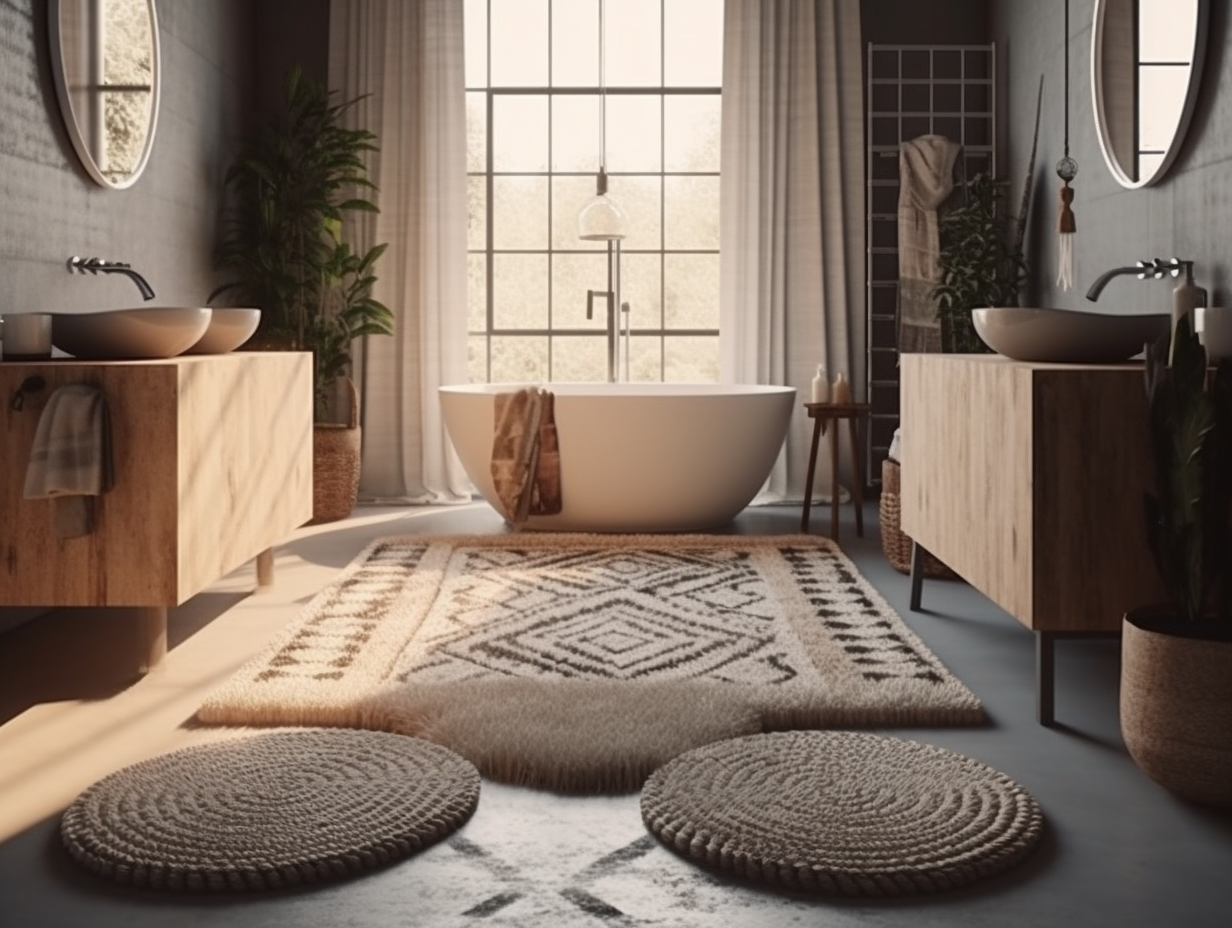
A bathroom rug is often larger and more decorative. It may sit in front of a vanity, toilet, or double sink. Some bathroom rugs are designed more for comfort and style than for heavy water absorption.
Do not assume that every rug labeled “bathroom” is safe beside a tub or shower. Check the material, backing, care instructions, and floor compatibility.
Match the rug to the location
| Bathroom location | Main need | Useful features |
|---|---|---|
| Outside a shower | Absorb water and reduce wet footprints | Cotton or microfiber, washable, fast drying |
| Beside a bathtub | Absorb splashes and feel soft | Low or medium pile, stable backing |
| In front of a sink | Catch drips and add comfort | Low pile, easy cleaning |
| In front of a double vanity | Cover more floor without bunching | Long runner or matched rug set |
| Around a toilet | Fit around the base without creating a trip edge | Contoured design or small flat mat |
| Half bath or powder room | Add comfort and style | Decorative rug with easy care |
The best bathroom rug solves a specific problem. A thick, soft rug may feel comfortable, but it can stay damp longer. A thin rug may dry faster, but it may offer less cushioning.
2. Choose a Material That Fits Your Routine
Material affects absorbency, drying time, softness, durability, and care. No single fiber is best for every bathroom.
Cotton
Cotton is a common choice for bath mats and bathroom rugs. It feels soft and absorbs water well. Many cotton rugs can go into a washing machine.
Cotton can also hold moisture for longer than a thin synthetic rug. If the rug stays wet, hang it up after use. Wash it often enough to prevent odor and soil buildup.
Look for:
- Dense but not overly thick loops
- Reinforced edges
- Machine-washable care
- A design that can dry fully between uses
microfiber
microfiber rugs often dry faster than thick cotton rugs. The fine fibers can pick up water from feet and small splashes. This can make microfiber useful in a busy family bathroom.
The trade-off is feel. Some microfiber rugs feel less natural than cotton. Their backing can also require special care, so read the label before using hot water or high dryer heat.
Polyester and nylon
Synthetic fibers can resist stains and may keep their color well. They are often used in low-pile bathroom rugs and decorative mats.
Synthetic fiber does not automatically mean fast drying. The pile, weave, and backing also matter. A dense rug with a sealed backing can still trap moisture.
Bamboo and wood slat mats
Bamboo mats and wood slat mats allow air to move below the surface. They can dry quickly when placed on a level floor.
They do not absorb water like cotton or microfiber. Water can also collect under the slats. Keep the floor beneath the mat clean and dry, and follow the maker’s care instructions.
These mats may not suit people who want a soft surface. They can also be less comfortable for children or anyone who needs a cushioned step.
Memory foam and thick foam
Memory foam rugs feel soft underfoot. They can help cushion the feet while standing at a sink.
The main concern is drying. Thick foam may hold water inside, even when the surface feels dry. Check whether the rug is machine washable, whether it can go in a dryer, and how long it needs to dry.
For a damp bathroom, a low-profile cotton or microfiber rug may be easier to maintain.

3. Check Absorbency and Drying Time Together
Absorbency matters, but it is only half of the decision. A rug that absorbs a large amount of water may take longer to dry.
A damp rug can develop a musty smell. Moisture can also create a better setting for mold growth on nearby surfaces. The U.S. Environmental Protection Agency recommends keeping indoor relative humidity below 60%, ideally between 30% and 50%, when practical. A rug cannot control room humidity, but a rug that dries fully can reduce one source of lingering moisture.
Look for a balance:
- Light water use: thin cotton, microfiber, or a low-pile synthetic rug
- Heavy water use: washable cotton or a fast-drying microfiber mat
- Poor ventilation: avoid very thick rugs unless you can remove and dry them often
- Shared bathroom: choose a rug that can be washed and dried with little effort
A useful routine is simple:
- Hang the rug after a soaking shower if it feels damp.
- Let air reach both the top and bottom.
- Do not place a wet rug over a closed floor vent.
- Wash it according to the care label.
- Replace it if it stays damp, smells musty, or shows lasting damage.
A bathroom fan can help remove moisture from the room. The U.S. Department of Energy advises using exhaust fans that vent outdoors where possible. Follow local building rules for any fan installation or duct change.
How to judge a rug in the store or online
Product photos cannot show real drying speed. Instead, check:
- Fiber type
- Pile height
- Backing material
- Care label
- User instructions for hanging or drying
- Whether the rug can be washed without damaging the backing
Treat phrases such as “ultra-absorbent” or “quick-dry” as product claims, not universal test results. Look for a stated test method if a seller makes a precise performance claim.

4. Make Slip Resistance a Safety Priority
A bathroom rug should stay in place when a person steps on it. This matters most near a tub, shower, or toilet.
A non-slip backing can reduce movement, but it does not make a rug slip-proof. Water, dust, soap residue, uneven floors, and worn backing can all reduce grip.
The U.S. Consumer Product Safety Commission warns that falls are a major source of injury in the home. A bathroom rug is only one part of fall prevention. Clear walking paths, good lighting, grab bars where appropriate, and a dry floor also matter.
Check the rug for:
- A flat, stable shape
- No curled corners
- No loose edge binding
- A backing that covers enough of the rug
- A size that does not force the rug into a doorway
- A surface that does not bunch underfoot
Avoid loose rug pads unless they are made for the floor
A separate rug pad may help a decorative bathroom rug stay in place. Use one made for the exact floor type.
Some rubber, latex, PVC, or plastic backings can stain, discolor, trap moisture, or affect certain floors. The risk depends on the backing, floor finish, heat, moisture, and how long the materials remain in contact.
If you have luxury vinyl plank, laminate, hardwood, or a recently sealed floor:
- Read the flooring maker’s care guide.
- Check the rug maker’s backing information.
- Test the rug in a hidden area.
- Lift the rug often to inspect the floor.
- Stop using it if you see discoloration, residue, or trapped moisture.
Do not use adhesive tape as a permanent fix unless both product makers approve it. Tape can leave residue or damage a finish.

5. Measure the Bathroom Before Buying
Measure the open floor, not just the wall or vanity. Bathroom fixtures can make a rug look smaller once it is in place.
Use a tape measure to record:
- The open width in front of the tub or shower
- The distance between the vanity and opposite wall
- Door swing space
- Toilet clearance
- Floor vents and other obstacles
- The distance between separate rugs
Leave enough bare floor for doors to open and close. A rug should not touch a toilet base, block a cabinet, or catch under a door.
Common rug size guidelines
These are starting points, not strict rules:
| Bathroom area | Common starting size |
|---|---|
| Small sink area | About 20 × 30 inches |
| Shower or tub area | About 20 × 30 or 24 × 36 inches |
| Single vanity | About 20 × 30 to 24 × 36 inches |
| Double vanity | About 20 × 48 to 24 × 60 inches |
| Long vanity or narrow room | A runner sized to the clear floor |
| Toilet area | A small flat mat, if it does not create an edge hazard |
Measure the actual space before relying on these sizes. A 24 × 36-inch rug may fit one bathroom well and block a door in another.
A rug should look intentional. For a vanity, align the rug with the cabinet when possible. For a shower, center it on the shower opening rather than choosing a size that leaves one side exposed.

6. Pick the Right Pile Height and Edge Design
Pile height is the thickness of the rug fibers above the floor. Low-pile rugs are often easier to clean and less likely to catch under a door.
A low pile can be a good choice when:
- The bathroom has a narrow door gap
- A wheelchair or walker needs to cross the rug
- The rug sits near a toilet
- You want faster drying
- The floor has a floor vent
A thicker pile can feel warmer and softer. It may also hold more water and take longer to dry.
Inspect the edges. Bound edges should lie flat. Avoid loose threads, curled corners, and thick raised borders that can catch a toe.
Contoured toilet mats can fit around the toilet base. They may look tidy, but the cutout can collect soil and make cleaning harder. A flat rectangular mat is often simpler to wash.
If someone in the home uses a cane, walker, or wheelchair, reduce changes in height and avoid loose mats. For accessibility needs, follow the person’s care plan or ask an occupational therapist for advice. A general rug guide cannot replace an assessment of the room and the person using it.

7. Review the Care Label Before You Buy
The easiest bathroom rug to own is one you can clean without special tools or risky shortcuts.
Check whether the rug is:
- Machine washable
- Safe for your washer size
- Dryer safe
- Washable in cold or warm water
- Safe with nonchlorine bleach, if needed
- Suitable for air drying
- Designed for frequent washing
Backing is often the limiting part. Rubber or latex may crack, peel, or break down under high heat. Some rugs must be air-dried. A rug that cannot be dried fully may not suit a high-use bathroom.
Follow the care label rather than using a general laundry rule. Do not assume that a washable rug can handle hot water, high heat, fabric softener, or chlorine bleach.
A practical cleaning plan
- Shake out loose dust before washing.
- Wash the rug alone or with similar items if the label allows.
- Do not overload the washer.
- Inspect the backing after each wash.
- Dry the rug completely before putting it back.
- Clean the floor below the rug at the same time.
Replace the rug when the backing flakes, the edges curl, the fabric stays damp, or the rug no longer stays flat. A worn rug can become a trip hazard even if the top still looks attractive.
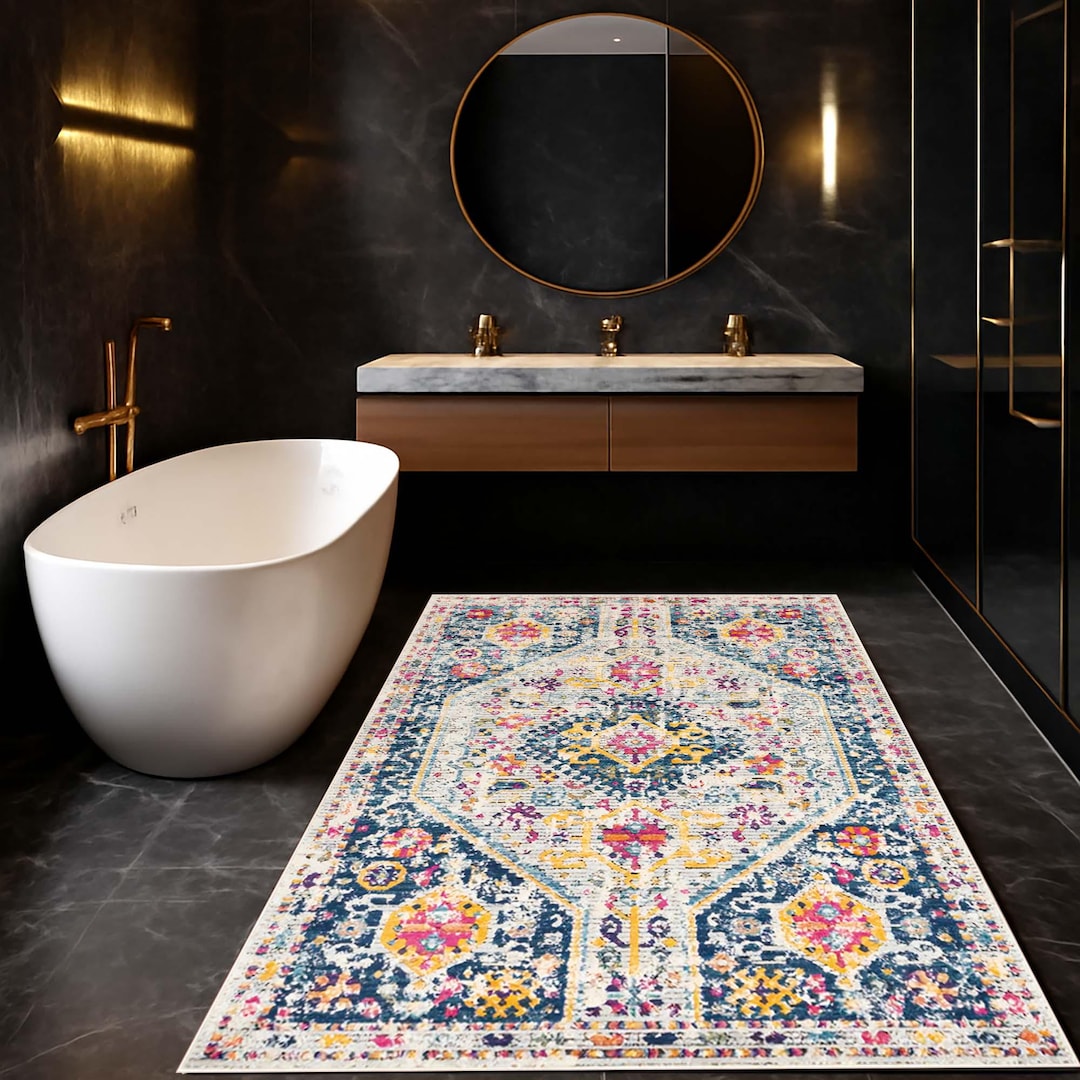
8. Consider Color, Pattern, and Bathroom Style
Appearance matters, but it should follow function. A rug that looks good but is hard to clean may become frustrating.
Light colors can show makeup, hair, and dirt quickly. Dark colors may hide stains but can show lint or mineral marks. Patterns can conceal small spots between washes.
For a calm look, choose a solid rug that matches the wall, tile, or vanity. For a small powder room, a simple pattern can add interest without taking much space.
Avoid very smooth surfaces in a wet zone. A decorative rug can be appropriate in a half bath, but a shower-side rug should still have a stable shape and useful absorbency.
Also check colorfastness if the rug will sit on light flooring. Moisture and cleaning products can increase the chance of color transfer. Test a hidden area when the floor or rug has a sensitive finish.

9. Use This Bathroom Rug Buying Checklist
Before you buy, confirm the following:
- The rug fits the measured floor area.
- The door can open without catching the rug.
- The rug has a low or moderate pile for the location.
- The material matches the amount of water it will face.
- The backing is suitable for your floor.
- The rug lies flat.
- The edges are secure.
- The care label matches your washer and dryer.
- The rug can dry fully between uses.
- The color and pattern suit the room.
- The seller provides clear material and care information.
- The return policy covers a size or material mismatch.
Do not choose by softness alone. A soft rug that stays wet or slides across the floor may be a poor bathroom rug.
Quick decision guide
| If your priority is… | Consider… | Main trade-off |
|---|---|---|
| Fast drying | Thin microfiber or low-pile synthetic | May feel less plush |
| Natural softness | Cotton | Can hold more water |
| Easy cleaning | Machine-washable low-pile rug | May offer less cushion |
| Cushion underfoot | Foam or thick pile | Often dries more slowly |
| Airflow below the mat | Slatted bamboo or wood | Does not absorb water |
| Heavy daily use | Durable, washable, low-pile rug | May look less luxurious |
| A small powder room | Decorative low-pile rug | Less suited to soaking water |

Key Takeaways
- Choose the bathroom rug’s material based on water exposure and drying conditions.
- Measure the open floor and check the door swing before buying.
- Prefer a flat, washable rug with secure edges.
- Treat non-slip backing as a helpful feature, not a guarantee.
- Confirm that the backing is safe for your flooring.
- Avoid thick rugs that stay damp in poorly ventilated bathrooms.
- Clean and dry the rug and the floor below it on a regular schedule.
- Replace any rug that curls, slips, smells musty, or has damaged backing.
Frequently Asked Questions
What is the best material for a bathroom rug?
Cotton and microfiber are practical choices for many U.S. bathrooms. Cotton feels soft and absorbs water well. Microfiber may dry faster. The better option depends on how wet the rug becomes and how often you can wash it.
Should a bathroom rug have rubber backing?
Rubber backing can help reduce movement, but it is not right for every floor. Some backing materials may leave residue, trap moisture, or discolor certain finished surfaces. Check both the rug instructions and the flooring manufacturer’s guidance.
How often should you wash a bathroom rug?
Wash it when it becomes visibly dirty, smells damp, or no longer feels fresh. A rug used beside a shower may need more frequent washing than one in a lightly used powder room. Dry it fully after washing and between heavy uses.
Are memory foam bath mats a good choice?
Memory foam mats can feel comfortable, but thick foam may dry slowly. They are a better fit when the room has good ventilation and the care label permits regular cleaning and complete drying.
How do I stop a bathroom rug from sliding?
Start with a rug that has a suitable non-slip backing and lies flat. Keep both the floor and backing clean and dry. If you add a rug pad, use one approved for the specific floor. Replace the rug if it continues to move or its backing has worn out.
Conclusion
The best bathroom rug is not simply the thickest or softest option. It is the one that fits the space, handles the water, dries within your routine, and stays stable on your floor.
Measure first. Then compare material, pile, backing, care instructions, and edge design. For most wet areas, a washable low-pile cotton or microfiber rug is a practical starting point. For a decorative powder room, appearance can carry more weight, but the rug should still lie flat and remain easy to clean.