What Kind Of Rug For Bathroom: Best Choices For Safety
Introduction
The best bathroom rug for a U.S. home is usually a quick-drying, washable rug with a secure, floor-safe backing. Cotton works well for a soft, absorbent feel. Microfiber dries faster and suits damp bathrooms. A low-pile synthetic rug can work near a vanity, where it adds comfort but may not need to absorb much water.
The right choice depends on where the rug will sit. A mat beside a shower needs strong water absorption and fast drying. A rug in front of a sink needs comfort, stain resistance, and stable footing. In any U.S. bathroom, avoid a rug that stays wet, slides on the floor, or traps moisture beneath it.

Quick Answer: What Kind of Rug Should You Use in a Bathroom?
Choose a bathroom rug that has these features:
- Washable construction
- Low or medium pile
- Fast drying
- A non-slip design that suits your floor
- A size that leaves space around the toilet, tub, and door
- A backing that will not stain or damage the floor
For most homes, these are the best options:
| Bathroom area | Best rug type | Main reason |
|---|---|---|
| Outside the shower | Cotton or microfiber bath mat | Absorbs water and feels soft |
| In front of a bathtub | Cotton, microfiber, or washable synthetic mat | Handles splashes and wet feet |
| In front of a vanity | Low-pile washable rug | Adds comfort without holding much water |
| High-use family bathroom | Machine-washable microfiber or cotton | Easy to clean often |
| Bathroom with pets | Low-pile synthetic rug | Resists hair and dries quickly |
| Small half-bath | Small washable flat-weave rug | Adds style with less moisture risk |
A bathroom rug should not be chosen by appearance alone. Water, soap, body oils, cleaning products, and floor type all affect how well it performs.

Bathroom Rug vs. Bath Mat: What Is the Difference?
A bath mat is made for wet areas. It usually sits outside a shower or tub and is designed to absorb water from your feet. A bathroom rug is often more decorative. It may sit near a vanity, toilet, or open floor area.
The two terms often overlap. Many products sold as bathroom rugs are really bath mats, while some decorative rugs are not suitable for heavy moisture.
Use a bath mat when:
- You step onto it with wet feet.
- It will sit beside a shower or tub.
- The floor often receives water.
- You need high absorbency and quick drying.
Use a bathroom rug when:
- You want warmth or comfort near a sink.
- The rug will stay away from direct splashes.
- Style matters as much as water absorption.
- You can remove and wash it with ease.
Do not use a thick decorative rug beside a shower unless the maker states that it is suitable for wet areas. A rug can look dry on top while staying damp underneath. That trapped moisture can lead to odor, mildew growth, or damage to some floors.

Best Bathroom Rug Materials
The material affects absorbency, drying time, softness, cleaning, and durability. No single fiber is best for every bathroom.
Cotton: Best for softness and absorption
Cotton is a common choice for bath mats because it absorbs water well and feels comfortable under bare feet. Many cotton mats can go in a washing machine.
Its main weakness is drying time. A thick cotton mat can remain damp after several showers. Hang it over a towel bar or drying rack after use when possible.
Choose cotton if you want:
- A soft natural fiber
- Good water absorption
- A classic bath mat feel
- Easy washing
Avoid very thick cotton if:
- Your bathroom has poor airflow.
- Several people use the bathroom each day.
- The mat cannot dry between uses.
Microfiber: Best for fast drying
Microfiber is made from very fine synthetic fibers. It can absorb water while drying faster than many thick cotton mats. It is often a good fit for busy households, children, and bathrooms with frequent use.
Microfiber may flatten or collect hair over time. Some products also have a foam core that can hold water. Check the care label and construction before buying.
Choose microfiber if you want:
- Fast drying
- A light, soft mat
- Easy routine cleaning
- A practical choice for a busy bathroom
Polyester and other synthetic fibers: Best for stain resistance
Synthetic rugs can resist stains and may dry faster than dense natural-fiber rugs. They are useful near a sink or in a bathroom where spills are common.
Not all synthetic rugs absorb water well. Some are better as decorative floor coverings than as shower mats. Check whether the product is intended for wet feet.
Wool: Comfortable but harder to manage
Wool can feel warm and durable, but it is not usually the easiest choice for a wet bathroom. It may need special care and can take longer to dry when saturated.
A low-pile wool rug may work in a large, well-ventilated bathroom away from the shower. It is less practical for a small bathroom where the rug receives daily splashes.
Bamboo and wood slats: Fast surface drainage
Bamboo bath mats and wood slat mats allow water to pass between the slats. They do not absorb water like cotton or microfiber. They can dry quickly if air reaches the underside.
These mats need a stable, level floor. Clean and dry beneath them on a regular basis. Moisture trapped below the mat can still affect some flooring.
Jute, sisal, and other plant-fiber rugs: Usually a poor fit
Jute and sisal rugs have a natural look, but they are not ideal beside a shower or tub. Water can cause swelling, staining, odor, or fiber damage.
They may work in a dry half-bath if the rug stays away from splashes. Use a washable synthetic alternative if the room has frequent moisture.

What Backing Is Safest for Bathroom Floors?
The backing should help keep the rug in place without trapping water or marking the floor. The safest choice depends on the floor material and the product instructions.
Rubber and latex backing
Rubber or latex can improve grip, but some backings may leave marks, discolor vinyl, or react with finishes. This risk depends on the backing compound, the floor surface, heat, moisture, and how long the mat stays in one place.
If you have vinyl flooring, finished wood, laminate, or luxury vinyl plank, check both the rug label and the flooring maker’s care instructions. Do not assume that every “non-slip” backing is safe for every floor.
PVC backing
PVC can resist water and add grip. However, it may also trap moisture beneath the rug. Some PVC-backed rugs can leave residue or marks on certain floors.
Lift the rug often enough to clean and dry the floor. Stop using it if you see discoloration, tackiness, dampness, or a change in the floor finish.
Silicone backing
Silicone can provide grip and may be less likely to leave oily residue than some rubber products. It still requires care. Dust, soap, and moisture can reduce traction.
No backing
A rug without backing is easy to wash and may dry quickly. It can also slide more easily, especially on smooth tile or polished stone.
If you choose an unbacked rug, use a floor-safe rug pad only when the pad maker confirms compatibility with your flooring and wet-room use. A loose pad can create another slipping hazard.
How to reduce slipping
- Choose a rug that lies flat.
- Keep the edges away from the door swing.
- Replace curled or worn mats.
- Clean soap and hair from the floor.
- Do not place a mat over a wet floor.
- Test the rug with dry feet before regular use.
- Inspect the backing after every wash cycle.
A non-slip label is not a guarantee of safety. Grip can change with water, dust, soap, floor texture, and wear.

How to Choose the Right Bathroom Rug Size
The rug should fit the space without blocking doors, cabinets, drawers, or plumbing access. Measure the open floor area before you shop.
For a shower or tub
A mat should cover the main step-out area without touching the wall on every side. Leave enough clearance for the bathroom door and nearby drawers.
A common small bath mat may work in front of a standard tub, but the correct size depends on the tub length and room layout. A long runner can provide more coverage but may be harder to wash and slower to dry.
For a vanity
A narrow runner can work along a double vanity. For a single sink, a small rectangular mat is often easier to place and clean.
Keep the rug far enough from the vanity toe-kick that cabinet doors and drawers open fully. The rug should not bunch under the cabinet.
For a toilet
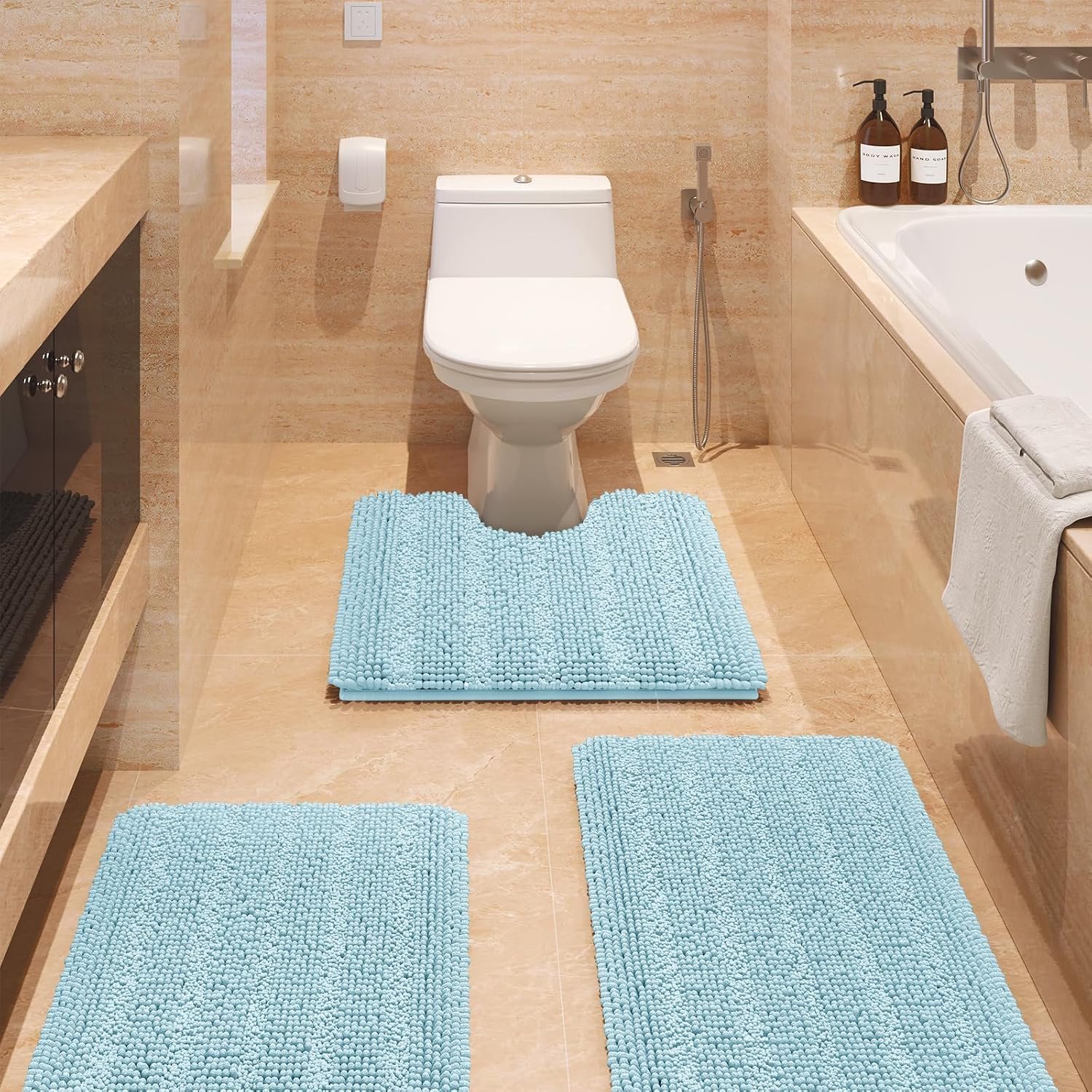
Toilet-shaped rugs with a cutout can fit around the base, but they may be harder to clean. They also create more edges that can curl or shift.
A simple rectangular mat is often easier to wash and may provide a cleaner look. Keep it away from the toilet base if leaks or cleaning access are concerns.
For a small bathroom
Use one small mat rather than several crowded rugs. Too many mats can block the door, cover floor vents, or create more edges to trip over.
Before buying, measure:
- The distance between the tub and vanity.
- The door’s full swing.
- The space in front of the toilet.
- The distance from the shower to the nearest wall.
- Any floor vents or access panels.

What Rug Works Best for Different Bathroom Floors?
The floor surface changes the best backing and care routine.
Ceramic or porcelain tile
Tile is common in U.S. bathrooms and can become slippery when wet. Choose a flat, stable mat with a backing made for hard floors.
Deep grout lines may make some thin mats feel uneven. A mat with a stable base can help, but it should not bridge large gaps or rock underfoot.
Natural stone
Stone floors may have a sealer that reacts poorly to moisture, dyes, or certain backings. Use a rug that will not shed color and follow the stone maker’s care guidance.
Lift the rug often. This lets you check for trapped water, grit, and changes in the stone surface.
Vinyl and luxury vinyl plank
Some vinyl floors can react with rubber or latex backing. Look for a product specifically marked as safe for vinyl, then confirm the flooring manufacturer’s instructions.
Do not leave a damp rug in the same place for long periods. Move it during cleaning so the floor can dry.
Laminate
Laminate can swell if water reaches seams or edges. A rug will not protect the floor from a major leak. Use a mat that dries quickly and remove it if water collects beneath it.
Finished wood
Wood floors need careful moisture control. Use a small, washable mat in areas where water commonly lands, but do not allow water to sit under it.
Check the flooring warranty or care guide before using a rubber-backed product. Dry the floor whenever the mat becomes soaked.

How to Keep a Bathroom Rug Clean and Dry
A clean rug is safer and lasts longer. Wash it based on use, not only when it smells.
Follow these steps:
- Shake or vacuum the rug. Remove hair, dust, and loose grit.
- Check the care label. Confirm the wash temperature, dryer setting, and bleach rules.
- Wash it when damp or soiled. Do not wait for odor to develop.
- Dry it fully. Hang it or use the dryer setting allowed by the maker.
- Clean the floor beneath it. Remove soap film and dust.
- Inspect the backing. Look for cracks, peeling, stickiness, or curling.
- Return it only after the floor is dry.
Do not use fabric softener unless the product instructions allow it. It may change how fibers absorb water. Do not use chlorine bleach on colored rugs unless the label clearly permits it.
If a rug smells musty after washing, it may not have dried fully. Wash it again according to the care label and dry it completely. If the odor returns, replace it. Repeated odor can signal that the fibers or backing hold moisture.

Bathroom Rug Safety: Common Mistakes to Avoid
The most common mistake is choosing a rug for its look without checking how it handles water. A thick, plush rug may feel good but stay damp for hours.
Avoid these problems:
- Using a regular bedroom rug beside the shower. It may lack safe backing and fast drying.
- Leaving a wet mat flat on the floor. Moisture needs a path to evaporate.
- Covering a floor vent. This can reduce airflow and may affect heating or cooling.
- Placing a rug under a door. The door may catch the edge.
- Using a curled or damaged mat. The edge can create a trip point.
- Ignoring a floor reaction. Discoloration or tackiness means the rug should be removed.
- Keeping a soaking-wet mat in a small bathroom. Poor airflow increases drying time.
- Using several tiny mats. More edges can mean more movement and tripping risk.
- Assuming “waterproof” means dry. A waterproof backing may still trap water below the rug.
- Putting a rug over an active leak. Fix the leak first and dry the floor.
Older adults, young children, and people with balance problems may need extra care. A flat, stable mat with little edge lift is often safer than a thick, soft rug. For a serious fall risk, consider a professional home safety assessment rather than relying on a product label.

Best Bathroom Rug Choices by Need
Use this guide when several materials seem suitable.
Best overall for most bathrooms
Choose a washable cotton or microfiber bath mat with a floor-compatible backing. Cotton offers a soft feel and strong absorption. Microfiber often dries faster.
Best for a busy family bathroom
Choose quick-drying microfiber or a thin cotton mat. Wash it often and keep a second mat available while the first one dries.
Best for a small bathroom
Choose a small, low-pile rectangular mat. It takes less time to dry and is less likely to block the door or fixtures.
Best for a bathroom with pets
Choose a low-pile synthetic rug that does not trap hair. Avoid long shag fibers, which can hold moisture and make cleaning harder.
Best for a decorative vanity area
Choose a low-pile washable rug with a backing approved for your floor. It does not need the same absorbency as a shower mat.
Best for a damp or poorly ventilated bathroom
Choose a thin, fast-drying mat. Avoid thick memory foam, dense wool, and oversized rugs that stay wet.

Is Memory Foam a Good Bathroom Rug?
Memory foam can feel soft underfoot, but it is not always the best choice for a wet bathroom. The foam core may absorb or hold water, especially when the mat receives repeated splashes.
A memory-foam mat can work near a dry vanity if it dries fully between uses. It is less suitable beside a shower in a bathroom with poor airflow.
Check the care label before washing. Some foam-backed mats cannot tolerate high heat, harsh cleaners, or aggressive spin cycles. Replace the mat if the foam breaks down, the backing peels, or the rug no longer lies flat.

How Much Should You Spend on a Bathroom Rug?
Price should reflect use, construction, and cleaning needs. A higher price does not automatically mean better performance.
Before buying, compare:
- Fiber type
- Rug thickness
- Wash instructions
- Drying time
- Backing material
- Floor compatibility
- Edge quality
- Replacement cost
A washable mat that lasts through frequent cleaning may offer better value than a decorative rug that cannot be washed. For a rental, a simple, removable mat may be more practical than a heavy rug that could mark the floor.
Treat claims such as “luxury,” “spa,” or “non-slip” as descriptions, not proof. Look for clear care instructions and material details.

Key Takeaways
- The best bathroom rug is washable, quick-drying, stable, and suited to the floor.
- Cotton is soft and absorbent; microfiber usually dries faster.
- Low-pile synthetic rugs work well near vanities and in pet-friendly bathrooms.
- Avoid jute, sisal, and thick decorative rugs in areas that receive regular water.
- Check rubber, latex, and PVC backing before using a rug on vinyl, wood, laminate, or stone.
- Lift and dry the rug and the floor beneath it on a regular basis.
- Replace any rug that smells musty, curls, slides, sheds backing, or changes the floor surface.
Frequently Asked Questions
Should a bathroom rug have a rubber backing?
It can, but the backing must be compatible with your floor. Rubber or latex may mark some vinyl, wood, laminate, or finished surfaces. Read the rug instructions and your flooring care guide before use.
Can you use a regular area rug in a bathroom?
You can use one in a dry half-bath if it is stable and easy to clean. A regular area rug is usually a poor choice beside a shower because it may dry slowly and lack suitable backing.
Are cotton or microfiber bathroom rugs better?
Cotton is often better for softness and water absorption. Microfiber is often better for faster drying and frequent use. The better choice depends on airflow, washing habits, and how much water reaches the rug.
How often should you wash a bathroom rug?
Wash it whenever it becomes damp for long periods, visibly dirty, or odorous. A frequently used bath mat may need washing at least weekly, but the correct schedule depends on household use and how quickly it dries.
How do you stop a bathroom rug from sliding?
Use a rug with a suitable non-slip backing, keep the floor clean and dry, and replace worn backing. If you add a rug pad, confirm that it is made for your floor and bathroom conditions.
Conclusion
For most U.S. bathrooms, choose a low- or medium-pile cotton or microfiber mat that you can wash and dry with ease. Use a low-pile synthetic rug near a vanity when you want more style and stain resistance. The final check is simple: the rug should stay flat, dry between uses, and leave no mark on the floor.
Measure the open space, check the backing, and read the care label before buying. A practical bathroom rug should make the room more comfortable without creating a moisture, slip, or maintenance problem.