Are Bathroom Rugs Outdated: Modern Style Guide
Introduction
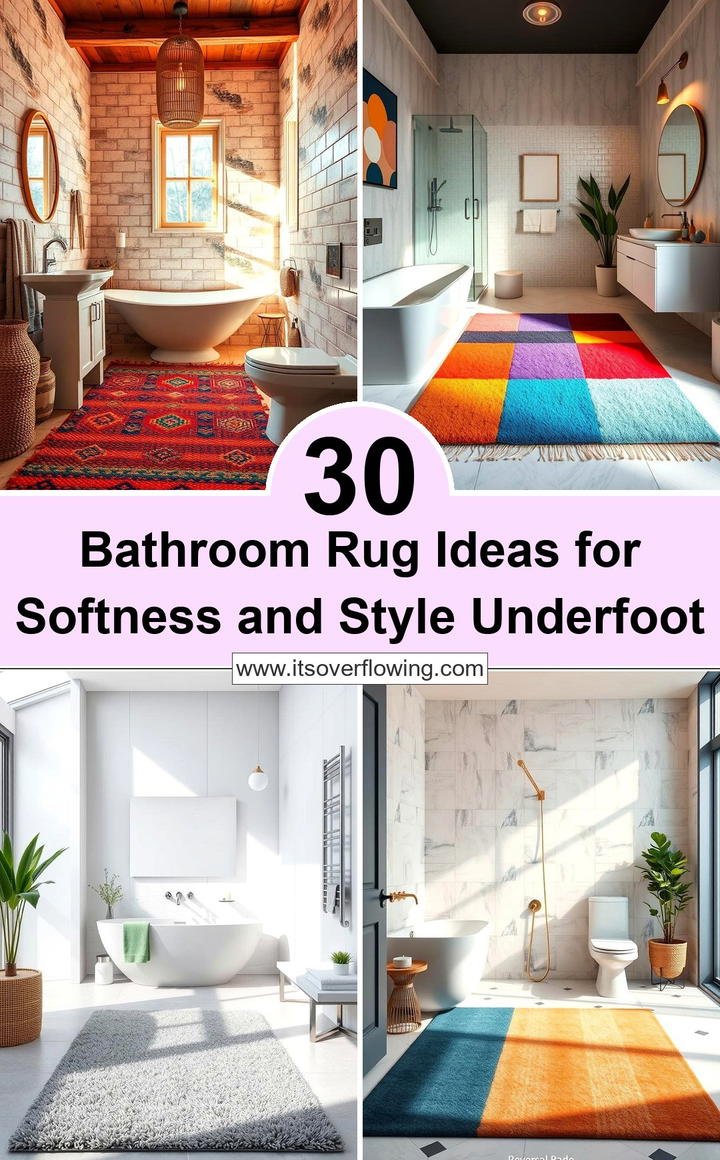
Bathroom rugs are not outdated in the United States. The old matching set—with a fluffy mat around the toilet, a thick rug in front of the vanity, and another mat by the tub—does look dated in many modern bathrooms. But a well-placed, washable bath mat can still add comfort, warmth, color, and better footing.
The current look favors fewer rugs, simple shapes, low profiles, and materials that dry fast. The best choice depends on your bathroom size, floor type, moisture level, cleaning habits, and design style. In most homes, one attractive bath mat near the tub or shower works better than a full matching set.
Why Bathroom Rugs Started to Look Dated
Bathroom rugs did not become unpopular because rugs stopped being useful. They began to look dated when certain styles became linked with older bathroom design.
The most dated examples often include:
- Contoured rugs made to fit around the toilet base
- Matching rugs placed around every fixture
- Very thick shag or chenille piles
- Busy floral, shell, or faux-stone patterns
- Toilet-lid covers
- Rugs that cover most of the bathroom floor
- Colors that match the shower curtain, towels, and toilet accessories exactly
These choices can make the room feel crowded. They also create more fabric near water, which can make cleaning and drying harder.
Modern bathroom design usually gives the floor more open space. This helps small rooms feel larger and creates a cleaner visual line around the vanity, toilet, tub, and shower.
The difference between a bath mat and a bathroom rug
A bath mat is usually a small, functional mat placed where you step out of a tub or shower. It is designed to absorb water and provide a more stable surface.
A bathroom rug is more decorative. It may sit near a vanity or run across part of a larger bathroom. It may not be designed for heavy water exposure.
The terms overlap, but the difference matters. A decorative rug may look attractive but perform poorly when soaked each day. A bath mat may offer better moisture control but have a simpler appearance.

What Bathroom Rugs Look Current in 2025
The most current bathroom rug styles are simple, useful, and scaled to the room. They do not need to follow one strict trend. A good rug should look intentional rather than added as an afterthought.
1. One main bath mat
Using one mat near the shower or tub is often the safest style choice. It gives your feet a soft place to land without filling the room with fabric.
For a double vanity, you may use a longer runner instead of two small mats. The runner should fit the space without blocking cabinet doors or creating a trip point.
2. Low-pile designs
Low-pile rugs have short fibers and a flatter surface. They usually look less bulky than deep shag mats. They can also be easier to vacuum and wash.
A low profile works well in bathrooms with:
- Floating vanities
- Large-format tile
- Natural stone
- Minimalist fixtures
- Narrow walkways
- Doors that swing close to the floor
Check the rug height before placing it near a door. A thick mat can prevent the door from opening fully.
3. Simple borders and subtle patterns
small stripes, narrow borders, checks, geometric shapes, and muted patterns can add interest without taking over the room.
Neutral colors such as ivory, sand, gray, charcoal, navy, and muted green work well in many American homes. A darker mat can hide light marks, while a lighter mat can make a small bathroom feel brighter. Neither color eliminates the need for regular washing.
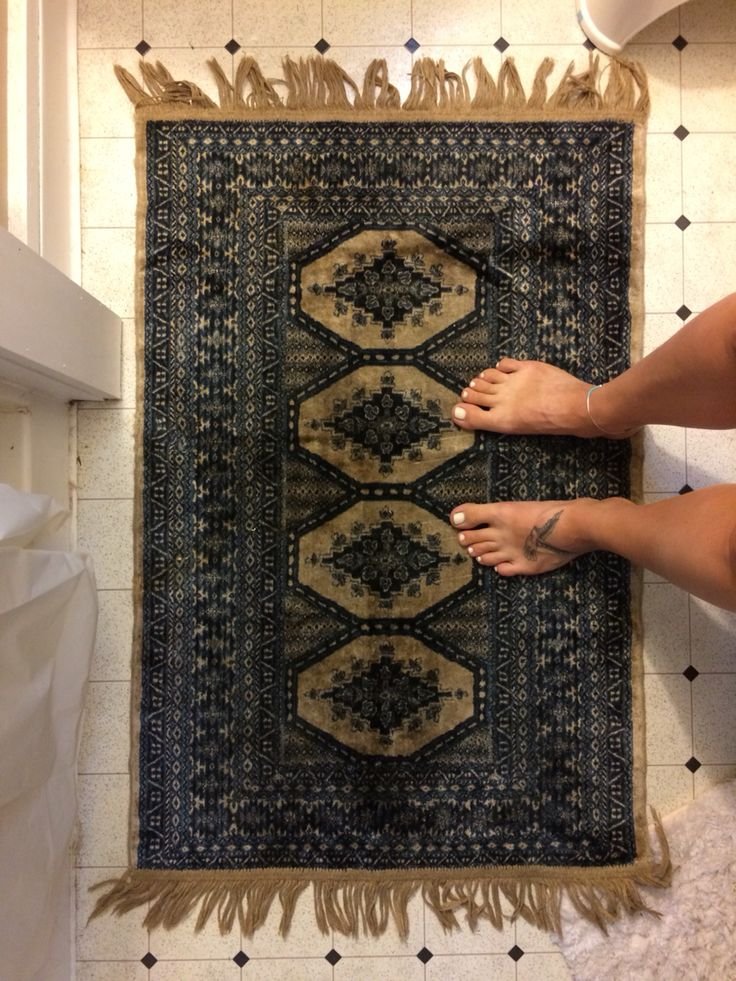
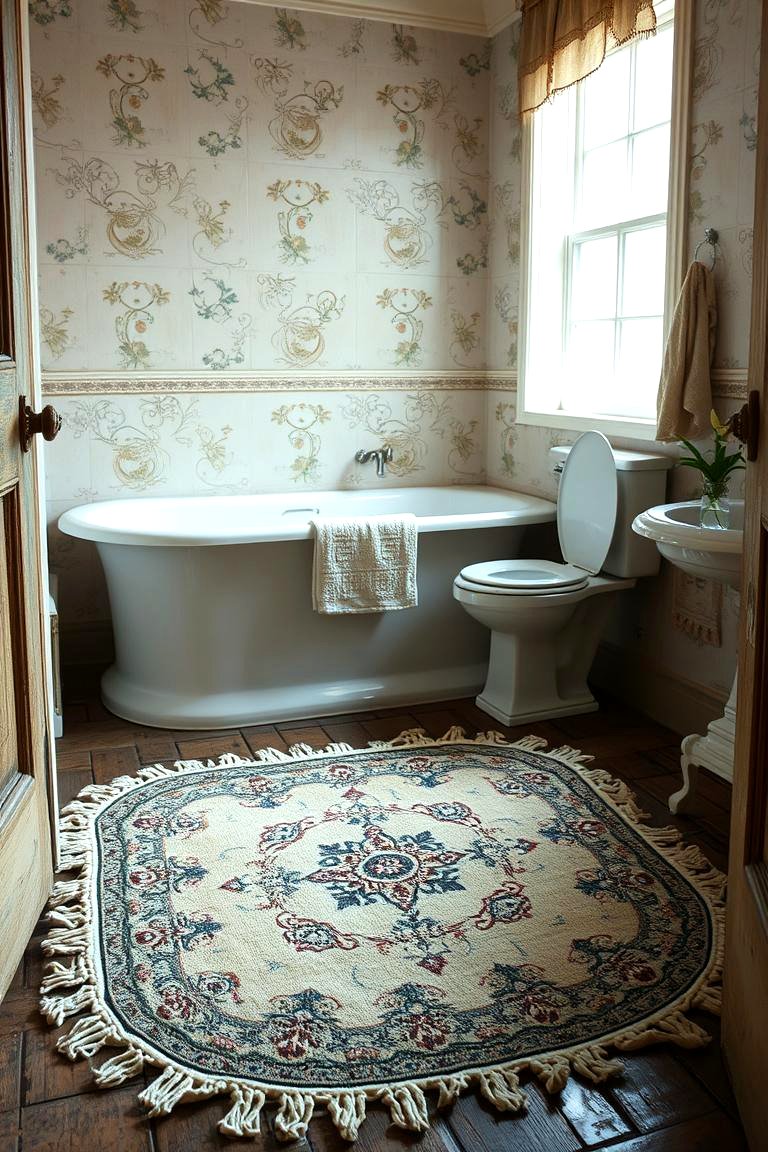
4. Vintage and Persian-style rugs
A small vintage-style rug can work in a bathroom when it is kept away from direct spray. It can add warmth to a room with white tile, wood cabinets, or brass fixtures.
However, many decorative vintage rugs are not made for repeated soaking. Use one only in a dry area, such as beside a vanity, and confirm that the material and backing suit the space.
5. Natural-looking materials
Cotton, wool, bamboo, and stone can all create a calm, natural look. Their performance differs:
- Cotton: Soft, common, and often machine washable; it may take longer to dry.
- Wool: Durable and attractive; it can be harder to clean and should not remain damp.
- Bamboo: Flat and quick to dry; it may feel firm underfoot and can become slippery.
- Stone: Strong and spa-like; it needs careful placement and may feel cold or hard.
- Synthetic fibers: Often quick to dry and easy to clean; quality varies by product.
Material matters more than the trend label. A fashionable rug that stays wet is a poor bathroom choice.
When a Bathroom Rug Is a Good Idea
A bathroom rug is useful when it solves a real problem without creating a larger one. The best reasons to use one are comfort, water control, warmth, and visual balance.
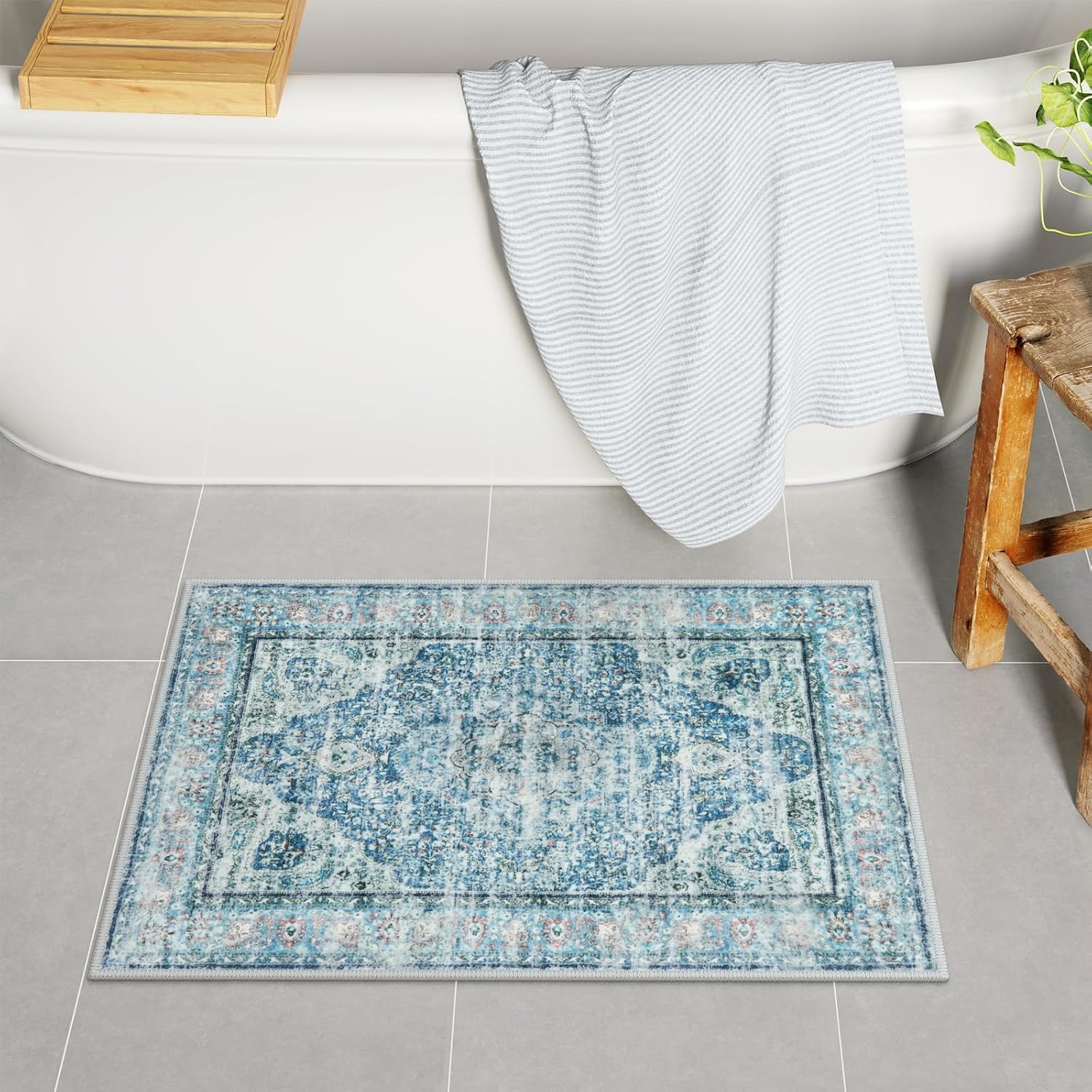
Use a bath mat near a tub or shower
A mat can catch water as you step out of the tub or shower. That may help keep the floor drier and reduce the chance of slipping on a wet surface.
A bath mat does not replace safe flooring or careful movement. It can also slide if it has a poor grip or if its backing has worn down. Check the mat after washing and replace it if it curls, slides, or loses its grip.
Add warmth to cold floors
Tile and stone floors can feel cold in winter, especially in older homes or homes with limited insulation. A washable mat adds some comfort without changing the floor.
If the room has radiant floor heat, check the flooring and rug maker’s care instructions. Some rug backings or materials may not suit heated floors.
Define a vanity area
A narrow runner can make a long bathroom feel more finished. It can also visually connect a double vanity with nearby cabinets or wood tones.
Leave enough space for the vanity doors and drawers to open. A rug that bunches under a cabinet will look untidy and may become a trip hazard.
Reduce echo in a hard-surface room
Bathrooms often contain tile, glass, porcelain, and stone. These hard surfaces reflect sound. A small textile can soften the room’s sound and make it feel less stark.
This is a comfort benefit, not a reason to cover the whole floor. More fabric also means more moisture to manage.

When Bathroom Rugs Look Dated or Create Problems
Bathroom rugs are more likely to look dated when they are used as a complete matching set. They can also cause practical problems when they stay damp or block normal movement.
Avoid toilet-shaped rugs
Contoured toilet rugs are one of the clearest signs of an older bathroom style. They wrap around the toilet base and create a broken visual line.
A small rectangular mat placed elsewhere is usually a cleaner choice. In many bathrooms, no rug around the toilet looks best.
Skip toilet-lid covers
Toilet-lid covers add fabric to a place that needs frequent cleaning. They can also make the toilet look bulky and visually dated.
If the goal is comfort or warmth, place a suitable mat near the shower or vanity instead.
Do not cover every open area
A rug should have a clear purpose. Several small mats scattered around the room can make the space feel smaller and harder to clean.
Use the smallest number of rugs that meets your needs. For many bathrooms, that means one mat. Larger bathrooms may support a runner or a small decorative rug in a dry zone.
Be cautious with thick memory-foam mats
Thick memory-foam mats can feel soft, but they may hold moisture longer than thin, quick-drying mats. Their height can also interfere with doors and create an uneven transition.
This does not mean every thick mat is unsuitable. Check how quickly it dries, whether it has a stable backing, and whether it fits beneath nearby doors.
Watch for worn or sticky backing
Rubber and latex backings can break down over time. Some backings may leave residue or discolor certain floors, especially when exposed to heat, moisture, or cleaning products.
Follow the rug and flooring maker’s care instructions. If the backing becomes cracked, sticky, curled, or slippery, replace the mat.

How to Choose a Modern Bathroom Rug
Choose a bathroom rug by function first and appearance second. A simple decision process can prevent most style and safety mistakes.
Step 1: Measure the space
Measure the area where the rug will sit. Check:
- Width between walls or cabinets
- Distance from the tub or shower
- Door swing clearance
- Vanity drawer and cabinet clearance
- Walking space around the toilet
- Space between the rug and other fixtures
For a small bathroom, a mat around 20 by 30 inches may fit near a shower, but the correct size depends on the room. A longer runner may work better in front of a double vanity. Do not select a size by habit alone.
Step 2: Decide whether the rug will get wet
Use a true bath mat in a wet zone. Use a decorative rug only where it can stay mostly dry.
A useful rule is:
- Direct water exposure: Choose a washable, quick-drying bath mat.
- Occasional splashes: Choose a durable washable rug with a stable backing.
- Mostly dry vanity area: A decorative rug may work if the material can handle bathroom humidity.
- High-humidity bathroom with poor ventilation: Use less fabric and prioritize quick drying.
Step 3: Select a safe backing
The mat should stay in place on your floor. Look for a backing that suits the floor material and does not leave residue.
Do not assume a rubber backing is safe for every floor. Some floors have care limits for rubber, latex, plastic, or adhesive products. When unsure, check the flooring manufacturer’s guidance or use a compatible rug pad.
Never place a loose rug over a floor that is already wet.
Step 4: Match the room without making a set
Choose one link between the rug and the bathroom. That link may be:
- A shared color
- A similar texture
- A repeated line or shape
- A connection to the vanity wood
- A tone found in the tile or wall color
The rug does not need to match the towels exactly. A coordinated look often feels more current than a perfect matching set.
Step 5: Check care requirements
Before buying, confirm:
- Whether the rug is machine washable
- Whether it can go in a dryer
- How long it typically needs to dry
- Whether the backing can be washed
- Whether the maker advises against bleach
- Whether the rug requires a separate pad
A rug that cannot dry between uses may not suit a busy family bathroom.

Bathroom Rug Ideas by Design Style
The best rug depends on the room’s larger design language. Use these ideas as starting points rather than strict rules.
| Bathroom style | Rug choice that usually works | What to avoid |
|---|---|---|
| Modern | Low-pile solid or narrow geometric mat | Heavy fringe and ornate borders |
| Traditional | Small bordered rug or classic runner | A full matching toilet set |
| Farmhouse | Cotton stripe, simple check, or muted pattern | Too many signs, slogans, or themed prints |
| Minimalist | One neutral mat with a clean edge | Multiple small rugs |
| Coastal | Soft blue, sand, white, or woven texture | Literal seashell and beach graphics |
| Bohemian | Small patterned rug in a dry area | Delicate fabric near direct spray |
| Industrial | Dark low-pile mat or flat woven runner | Plush mats that hide the floor |
| Spa-inspired | Natural tones, stone, bamboo, or simple cotton | Busy color mixes |
The room’s scale should guide the pattern. A large pattern can overwhelm a small powder room. A tiny pattern may disappear in a large primary bathroom.

Cleaning and Moisture Control
A bathroom rug looks better and lasts longer when it dries fully between uses. Moisture is the main reason a useful bath mat can become unpleasant.
The U.S. Environmental Protection Agency explains that controlling moisture is a key part of limiting indoor mold growth. A bathroom rug is not usually the main source of a moisture problem, but a damp rug can add to the problem if the room has poor airflow.
Use these habits:
- Hang the mat so air can reach both sides.
- Run the bathroom exhaust fan during showers and for a period after showering.
- Spread the mat flat instead of leaving it folded.
- Wash it according to the care label.
- Clean the floor beneath it.
- Replace it when it stays damp, smells musty, or loses its backing.
Do not place a wet rug directly on wood flooring and leave it there. Moisture trapped beneath a rug can damage some floors or cause discoloration.
If you see widespread mold, persistent dampness, damaged flooring, or a ceiling stain, address the building moisture source. A rug alone will not solve a leak or ventilation problem.

Are Bathroom Rugs Safe?
Bathroom rugs can be safe when they stay flat, dry, and secure. They become a concern when they slide, curl, bunch, or block a walkway.
Check the mat often for:
- Curling corners
- Folded edges
- A loose backing
- Water trapped beneath the mat
- A slick surface
- Mildew or a musty smell
- Damage caused by repeated washing
Older adults, young children, and people with mobility limits may need extra care. A rug that feels stable to one person may still move under another person’s foot.
For the safest setup, keep the walking path clear, use a properly fitted non-slip solution, and remove the mat if the floor beneath it is wet. Follow the product instructions and flooring manufacturer’s guidance. If a mat continues to slide, do not keep using it simply because it matches the room.

Common Questions About Bathroom Rugs
Are bathroom rugs out of style in 2025?
No. Bathroom rugs are still useful and can look current. The dated look usually comes from too many rugs, toilet-shaped designs, thick shag textures, or exact matching sets. A simple, washable mat in the right place remains a practical choice.
Should you put a rug in front of the toilet?
Usually, no. A rug in front of the toilet can make the room look crowded and may be harder to keep clean. If you want fabric in the room, place a bath mat near the shower or a decorative rug near a dry vanity area instead.
Do people still use toilet rugs?
Some people do, but toilet rugs are less common in current bathroom design. They are not necessary for comfort or moisture control, and many homeowners prefer the cleaner look of an uncovered toilet base.
What is the best material for a bathroom rug?
There is no single best material for every bathroom. Machine-washable cotton works well for many homes. Quick-drying synthetic fibers may suit busy bathrooms. Bamboo and stone can work in dry, spa-style spaces but may feel firm or become slippery if wet.
How often should you wash a bathroom rug?
Wash it when the care label allows and whenever it becomes damp, soiled, or musty. Bathrooms with frequent use, children, pets, or poor ventilation may require more frequent washing. Always let the rug dry fully before returning it to the floor.
Can you use a regular area rug in a bathroom?
You can use a regular area rug in a mostly dry area if its material, backing, and care needs suit the room. Do not use a delicate rug where it will receive daily spray. Avoid placing any rug where it can stay wet or create a slipping hazard.
The Bottom Line
Bathroom rugs are not outdated. The outdated approach is covering the entire bathroom with matching, bulky, contoured mats.
For most American homes, the best modern setup is one well-sized, low-profile, washable mat near the shower or tub. Add a runner or decorative rug only when the room has enough space, the rug can stay mostly dry, and the backing is safe for the floor.
Choose function first, keep the design simple, and remove any rug that slides or stays damp. That balance gives you the comfort of a bathroom rug without the cluttered look that made the trend feel old.
Sources and further reading
- U.S. Environmental Protection Agency: A Brief Guide to Mold, Moisture, and Your Home
- U.S. Consumer Product Safety Commission: Home Safety Information
- Flooring and rug-care instructions from the relevant manufacturers should be checked before using a backing, pad, or cleaning product.