What Is Trending In Bathroom Throw Rugs: 2026 Style Trends
Introduction
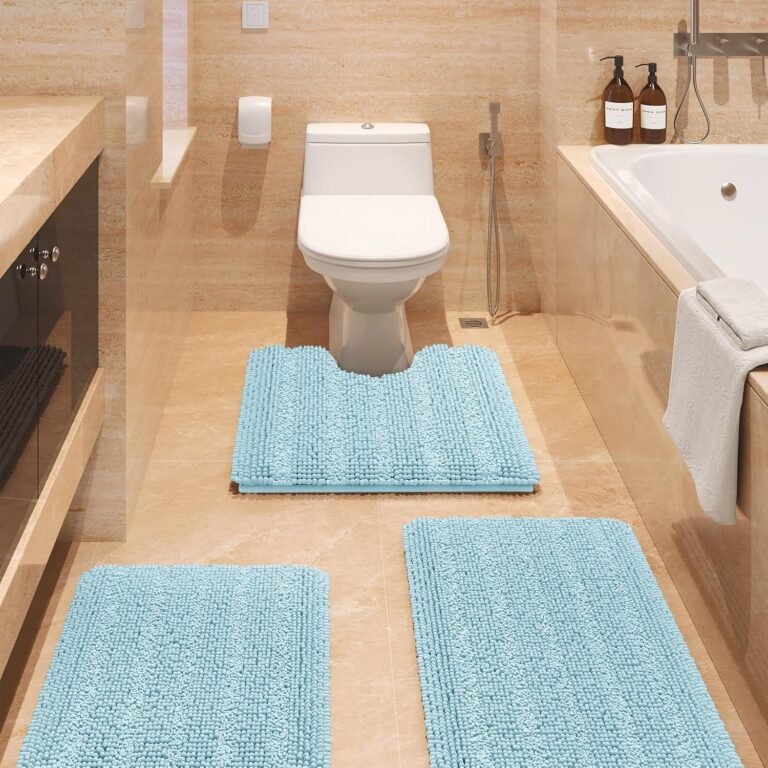
For bathrooms in the United States, the biggest bathroom throw rug trends focus on washable fabrics, low-profile designs, earthy colors, simple patterns, and safer non-slip backing. Shoppers are choosing rugs that look like part of the room rather than a separate bath accessory.
The best trend is not always the most stylish one. A rug must also dry well, stay flat, fit the floor, and handle frequent washing. This guide explains what is popular in U.S. homes, how to choose the right style, and which features matter more than appearance.

Key Takeaways
- Machine-washable bathroom rugs remain a strong choice for busy U.S. households.
- Low-pile and quick-dry designs work well in small bathrooms and damp spaces.
- Earth tones, warm neutrals, blue-green shades, stripes, checks, and vintage patterns are widely used in current bathroom décor.
- Organic shapes and narrow runner rugs help soften hard tile and fit unusual layouts.
- Cotton feels soft and absorbs water well, while synthetic fibers often dry faster and resist stains.
- A rug should have a stable, suitable backing and must not block doors or create a trip hazard.
- The most useful trend is a balance of style, hygiene, drying speed, and safe placement.
The Biggest Bathroom Throw Rug Trends in the U.S.
Bathroom throw rugs are moving toward a more relaxed, room-like look. Many U.S. homeowners now use rugs to connect the bathroom with the colors and textures used in nearby bedrooms, hallways, or laundry rooms.
1. Washable bathroom rugs
Washable rugs are among the most practical choices for bathrooms. They can be cleaned more often than large decorative rugs, which matters in a room exposed to water, soap, hair, and skin oils.
Look for clear care instructions. “Washable” can mean different things. Some rugs fit in a home washing machine, while others need a commercial-size machine or spot cleaning.
A washable rug is most useful when:
- More than one person uses the bathroom.
- Children or pets use the space.
- The rug sits near a shower or tub.
- The room has poor airflow.
- You want to reduce odor and visible buildup.
2. Low-pile and quick-dry rugs
Low-pile rugs have shorter fibers. They tend to dry faster than thick, plush rugs and are less likely to catch under a door.
This style works well in compact U.S. bathrooms, especially apartments and older homes with narrow clearances. A low profile also makes it easier to place the rug near a vanity or toilet without making the floor feel crowded.
Thick rugs still have a place. They can feel warm and soft on cold tile. However, they need more time to dry and may hold more moisture if they stay on the floor after use.
3. Warm neutrals and nature-based colors
Color trends are shifting away from only bright white and cool gray. Popular bathroom rug colors now include:
- Sand
- Cream
- Taupe
- Oatmeal
- Terracotta
- Olive
- Sage
- Dusty blue
- Deep navy
- Soft brown
These colors create a calmer look and pair well with white, beige, wood, brass, matte black, and brushed nickel fixtures.
Warm colors also help a bathroom feel less clinical. If the room already has strong tile or wallpaper, a solid neutral rug can provide visual balance.
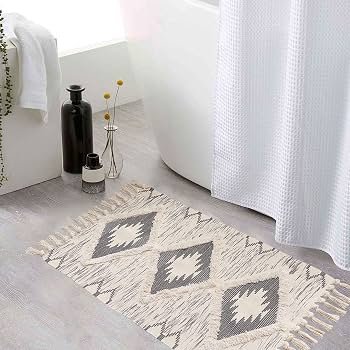
4. Stripes, checks, and small-scale patterns
Simple patterns add interest without making a small bathroom look busy. Stripes can make a narrow room appear longer, while checks and small geometric designs can give the space a classic or cottage feel.
Current pattern choices often include:
- Thin horizontal stripes
- Grid and checkerboard designs
- Small diamonds
- Woven lines
- Faded vintage motifs
- Simple border patterns
Large, high-contrast patterns can work in a spacious bathroom. In a small room, however, they may compete with tile, shower curtains, wall art, or patterned wallpaper.
5. Vintage and Persian-style designs
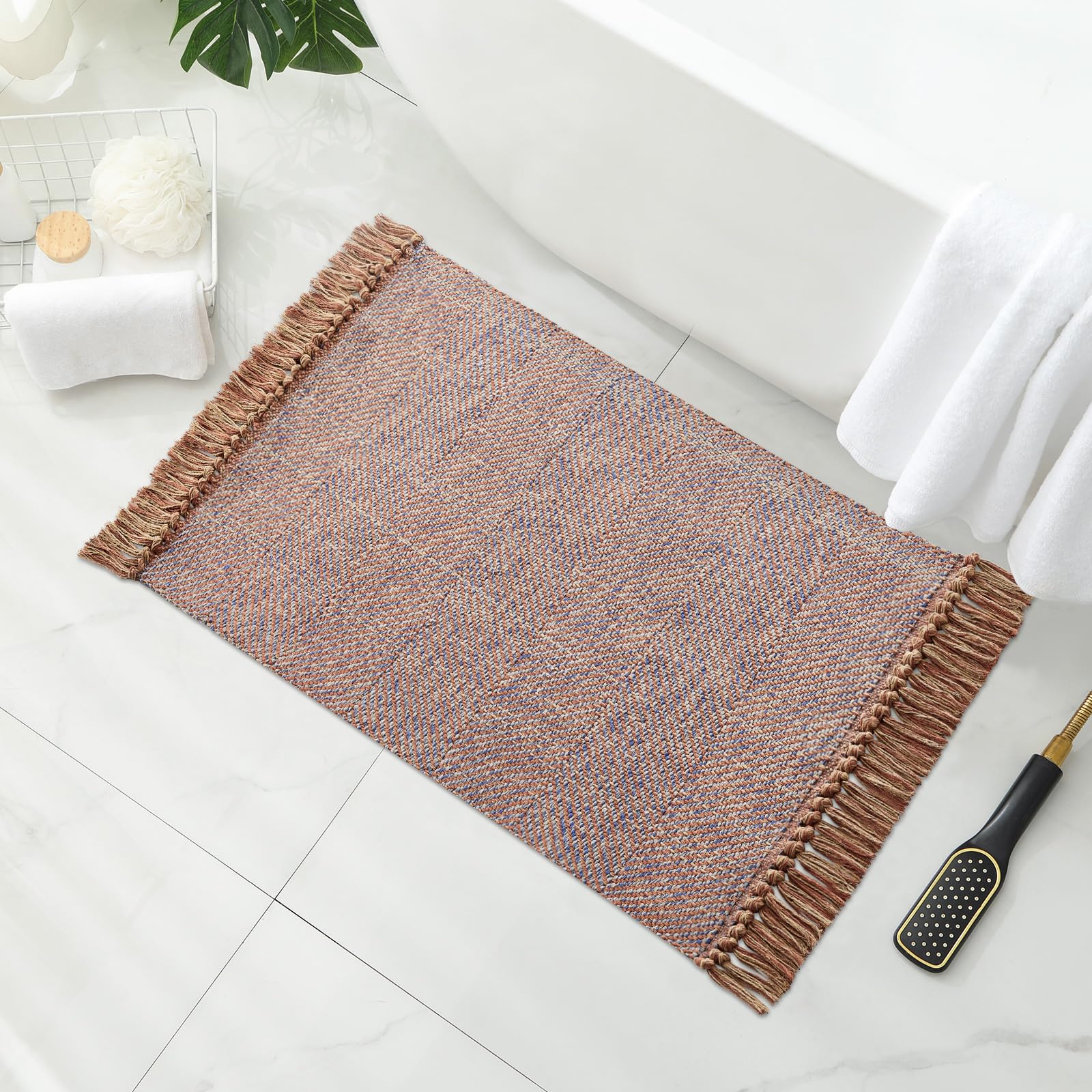
Vintage-look rugs bring a softer, lived-in feel to bathrooms. Their faded colors can hide light marks better than a solid white rug.
These designs are often chosen for traditional, farmhouse, transitional, and vintage-inspired interiors. They can also make a modern bathroom feel warmer.
Check the construction before buying. A decorative vintage-style rug may not be designed for constant moisture. If the listing does not clearly state that it is suitable for bathroom use, place it in a dry area away from direct splashes.
6. Organic shapes and curved edges
Round, oval, scalloped, and irregularly shaped rugs are gaining attention because they break up the straight lines found in tile, cabinets, mirrors, and vanities.
A curved rug can work well:
- In front of a freestanding vanity
- Beside a pedestal sink
- In a powder room
- At the side of a soaking tub
- In a large primary bathroom
The trade-off is coverage. An unusual shape may look attractive but leave less usable standing space than a rectangular rug.
7. Natural textures and woven surfaces
Cotton, chenille, jute-look, and woven textures add depth to a bathroom. They can make a room feel less flat, especially when the walls and floor use smooth ceramic or porcelain tile.
Natural fibers can absorb water well, but not all natural-fiber rugs are ideal for damp rooms. Some dry slowly, shed, shrink, or develop odor if they remain wet.
Use a natural-texture rug in a well-ventilated bathroom. For a frequently wet area, a quick-drying synthetic blend may be easier to maintain.

Which Bathroom Rug Materials Are Trending?
Material affects comfort, drying time, cleaning, and long-term appearance. The most attractive rug may not be the easiest one to live with.
| Material | Main benefit | Main limitation | Best use |
|---|---|---|---|
| Cotton | Soft, absorbent, often washable | Can stay damp and may shrink | In front of a vanity or low-splash area |
| Microfiber | Dries quickly and feels soft | May flatten over time | Busy bathrooms and daily use |
| Polyester | Resists stains and offers many designs | May feel less natural | Patterned or decorative rugs |
| Nylon | Durable and resilient | May cost more than basic fibers | High-use bathrooms |
| Chenille | Plush and comfortable | Can hold moisture | Dry vanity areas |
| Bamboo or wood slats | Drains water and dries quickly | Less soft and may be slippery | Well-ventilated bathrooms |
| Jute or sisal | Adds natural texture | Often unsuitable for regular wetting | Dry powder rooms or decorative zones |
A useful rule is simple: choose absorbency near the sink and faster drying near the tub or shower. If one rug must serve both areas, select a washable, quick-dry design rather than a very thick style.
Cotton versus synthetic fibers
Cotton is a strong choice when softness and absorbency matter most. It often feels comfortable under bare feet and can suit classic bathroom décor.
Synthetic fibers often make more sense when the rug receives daily water. Polyester, microfiber, and nylon generally offer more consistent shape retention and may dry faster, though performance varies by weave and thickness.
Read the care label instead of judging by fiber name alone. A thick microfiber rug can dry more slowly than a thin cotton mat, and a tightly woven synthetic rug may absorb less water than expected.
What Colors and Patterns Work Best in a Bathroom?
The best color depends on the room’s size, lighting, tile, and maintenance needs. A rug should support the bathroom instead of fighting with its strongest feature.
Best rug colors for small bathrooms
Small bathrooms often benefit from light or medium colors that keep the room open. Consider:
- Cream
- Pale beige
- Light gray
- Soft sage
- Dusty blue
- Muted tan
A light rug can show dirt faster. Choose a washable fabric if you want a pale color near a sink or toilet.
Best rug colors for large bathrooms
Larger bathrooms can support deeper tones and stronger contrast. Navy, charcoal, olive, rust, and brown can anchor a room with white walls or pale tile.
Dark rugs may hide some marks, but they can show lint, hair, and mineral residue. Regular shaking and washing may still be needed.
Matching a rug to existing fixtures
Use the 60-30-10 color idea as a loose guide, not a strict rule:
- Let the main floor, wall, or cabinet color dominate.
- Use the rug to support a secondary color.
- Add a small accent color through a pattern or border.
For example, a bathroom with white tile, oak cabinets, and black fixtures could use a cream rug with thin black lines. A beige bathroom with brass fixtures could use a muted terracotta or olive design.
Avoid matching every item exactly. A rug that repeats the shower curtain, towels, art, and accessories in the same color can make the room feel staged.

How to Choose the Right Size and Shape
The correct size depends on where the rug will sit and how much floor should remain visible. Measure the space before shopping.
Common bathroom throw rug placements
In front of a vanity:
A narrow rectangular rug or runner can provide comfort where you stand most. Leave enough clearance for cabinet doors and drawers.
Beside a tub:
Use a rug wide enough for a stable step, but keep it away from areas where it can bunch against the tub base.
Outside a shower:
Choose a quick-drying and absorbent design. Make sure the rug does not extend into the path of a swinging door.
In a powder room:
A decorative vintage, patterned, or curved rug may work well because the room usually receives less water.
A simple measurement method
- Measure the available floor length and width.
- Open every nearby door and cabinet.
- Mark the proposed rug area with painter’s tape.
- Walk around the room.
- Check that the rug does not touch a toilet base in a way that prevents cleaning.
- Confirm that the rug lies flat on the floor.
Leave a visible border of flooring when possible. The exact border is a design choice, but a rug that fills nearly the entire room can make the space look crowded.
Runner rugs versus small mats
A runner can connect a long vanity or double-sink area. It gives more continuous coverage but may be harder to wash and more likely to interfere with doors.
A small mat is easier to move, clean, and replace. It is often the better choice for a compact bathroom or a home where the rug needs frequent laundering.

Are Bathroom Throw Rugs Safe?
A bathroom rug is safer when it lies flat, stays in place, and dries between uses. Style should never take priority over stable footing.
Check the backing
Look for a backing made for the floor type in your bathroom. A rubber or latex backing may grip well on some surfaces, but it can react poorly with certain finishes or trap moisture underneath.
Always follow the manufacturer’s instructions. Some backing materials should not be used on heated floors, hardwood, vinyl, or newly finished surfaces.
Use a rug pad only when suitable
A separate rug pad can add grip and airflow, but it is not automatically safer. The pad must match the rug size and the floor surface.
Do not stack multiple loose mats. Layers can slide, curl, or create a raised edge.
Keep the rug away from hazards
Avoid placing a rug where it:
- Blocks a bathroom door
- Covers a floor vent
- Touches a portable heater
- Prevents access to a shutoff valve
- Folds near a toilet or cabinet
- Sits over a damp or damaged floor
The U.S. Consumer Product Safety Commission provides product recall and safety information through SaferProducts.gov. Check the product listing and manufacturer instructions if a rug has unusual backing, electrical features, or special cleaning requirements.
Replace a rug when it stops lying flat
Curling edges, cracked backing, strong odor, mildew, and permanent dampness are signs that a rug may no longer be suitable. Washing cannot fix every backing problem.

How to Care for Trending Bathroom Rugs
Care determines whether a bathroom rug stays fresh and attractive. Even a washable rug needs the right routine.
Wash according to the label
The care label is the best source for water temperature, detergent, drying method, and bleach restrictions. Do not assume that every washable rug can go in a hot dryer.
Hot water and high heat can shrink cotton, damage backing, or set stains. When instructions are unclear, use a gentle cycle and air-dry the rug if the manufacturer permits it.
Let the floor and rug dry
Lift the rug regularly so air can reach the floor. This is especially important when the rug has a solid backing.
If the underside feels damp, hang the rug or place it in a ventilated area. Do not return it to the floor until both sides are dry.
Clean more often in wet bathrooms
A rug near a shower usually needs more frequent cleaning than one in a dry powder room. The right schedule depends on household traffic, ventilation, and how wet the rug becomes.
Remove hair and loose dirt often. Wash the rug when it develops odor, visible soil, or a damp feel.
Do not use a damaged rug
A rug with peeling backing can leave residue on the floor. It can also create uneven edges. Replace it rather than trying to repair a backing that continues to crack or shed.
Common Mistakes When Buying Bathroom Throw Rugs
Many disappointing purchases result from choosing by appearance alone. These mistakes are easy to avoid.
Buying a thick rug for a damp, poorly ventilated room
A deep pile can feel comfortable but may remain wet for too long. Choose a thin or quick-dry design when the bathroom has limited airflow.
Ignoring the floor type
A backing that grips tile may behave differently on vinyl, sealed wood, laminate, or stone. Confirm compatibility before placing the rug.
Choosing a rug that is too large
A large rug can block a door, cover a vent, or make cleaning difficult. Tape the floor first to test the size.
Treating “non-slip” as a guarantee
Non-slip claims depend on the floor, moisture, dust, rug weight, and backing condition. A rug can still move. Keep the floor clean and remove the rug if it slides.
Using a decorative indoor rug in a wet zone
Some home décor rugs look attractive but are not built for repeated moisture. Use them in a dry powder room or away from direct splashes.
Forgetting the underside
The top of a rug may look clean while the bottom stays damp or collects residue. Inspect and clean both sides as the care label allows.
How to Pick a Bathroom Throw Rug by Room Type
Different bathrooms need different rug features. Use the room’s moisture level and traffic as your starting point.
| Bathroom type | Useful rug features | Styles that often work |
|---|---|---|
| Small apartment bathroom | Low pile, washable, compact size | Light neutrals, thin stripes |
| Primary bathroom | Larger coverage, soft texture, coordinated colors | Runners, vintage patterns, earthy tones |
| Family bathroom | Durable, washable, fast drying | Checks, simple patterns, microfiber |
| Kids’ bathroom | Stable backing, easy cleaning, bright but practical colors | Low-pile prints and playful patterns |
| Powder room | Decorative texture and color | Vintage, curved, woven, or patterned rugs |
| Bathroom with poor ventilation | Thin, quick-dry construction | Microfiber, polyester, or slatted designs |
The room type is only a starting point. A primary bathroom with a daily shower may need a more practical rug than a rarely used guest bath.
What Should You Look for in a Bathroom Throw Rug?
Before buying, compare the rug against these practical points:
- Dimensions: Will it fit without blocking doors or cabinets?
- Pile height: Is it low enough for safe movement and door clearance?
- Drying speed: Does the material suit the room’s ventilation?
- Wash care: Can you clean it at home?
- Backing: Is it suitable for your floor type?
- Absorbency: Will it catch water near the sink or shower?
- Color: Does it hide normal marks without making the room dark?
- Shape: Does it improve the layout or waste standing space?
- Odor control: Can the rug dry fully between uses?
- Replacement value: Is the rug affordable enough to replace when the backing wears out?
The best bathroom throw rug is usually not the thickest or most decorative option. It is the one that fits the space, dries properly, stays stable, and matches the way the bathroom is used.
Frequently Asked Questions
What is the most popular bathroom rug style right now?
Washable, low-pile rugs in warm neutrals, earthy colors, simple stripes, checks, and faded vintage patterns are among the most useful current styles for U.S. bathrooms. Popularity can vary by retailer, region, and interior design style.
Are shag rugs good for bathrooms?
Shag rugs can feel soft, but they often dry slowly and hold more water. They are better suited to a dry vanity area than directly outside a frequently used shower.
Should a bathroom rug match the towels?
It does not need to match exactly. Coordinating one color or repeating a small accent can create a connected look without making every item identical.
How often should a bathroom rug be washed?
Wash it when it becomes damp-smelling, visibly dirty, or frequently wet. Rugs near a shower usually need more care than rugs in a low-use powder room. Follow the care label for the safest method.
Can I use a regular area rug in the bathroom?
You can use a regular rug in a dry powder room if it lies flat and does not create a trip risk. For a wet bathroom, choose a rug labeled for bathroom use or one with suitable washable, quick-dry construction.
Conclusion
The strongest bathroom throw rug trends in the U.S. combine calm design with easy care. Washable fabrics, low profiles, earthy colors, simple patterns, vintage details, and organic shapes can all work well when the rug suits the room.
Choose based on moisture, floor type, traffic, and available space before choosing color. A rug that dries fully, stays flat, and remains easy to clean will serve the bathroom better than one selected for appearance alone.