What Are Bathroom Rugs Made Of: Materials Explained
Bathroom rugs in U.S. homes are usually made of cotton, microfiber polyester, nylon, chenille, bamboo-derived rayon, or synthetic foam. Many also have a separate backing made from rubber, latex, thermoplastic rubber (TPR), or PVC to help limit slipping.
The best material depends on where the rug will sit. A cotton rug feels soft and absorbs water well. Microfiber dries faster. Memory foam adds cushion but may need more care. The backing matters just as much as the top fabric because a wet, loose rug can slide on tile or vinyl floors.

What materials are bathroom rugs made of?
Bathroom rugs have two main parts:
- The face or pile: The soft, visible surface that touches your feet.
- The backing: The underside that adds grip, shape, or protection from floor moisture.
These parts often use different materials. For example, a rug may have a cotton top and a latex backing. Another may use polyester microfiber on top and TPR underneath.
Cotton
Cotton is one of the most common materials for bathroom rugs and bath mats. It is a natural fiber that feels soft and absorbs water well.
Cotton rugs may be:
- Woven
- Tufted
- Looped
- Terry cloth
- Chenille-style
- Made from recycled cotton fibers
Cotton is a good fit for homes where comfort and washability matter. Many cotton rugs can go in a washing machine, but care depends on the label. High heat can shrink cotton or damage its shape.
Advantages:
- Soft underfoot
- Absorbent
- Often machine washable
- Made from a natural fiber
- Available in many weights and designs
Limitations:
- It can stay damp longer than microfiber.
- It may shrink if washed or dried at high heat.
- A cotton rug without a firm backing may move on smooth floors.
- Repeated dampness can lead to odor or mildew if the rug cannot dry fully.
Microfiber polyester
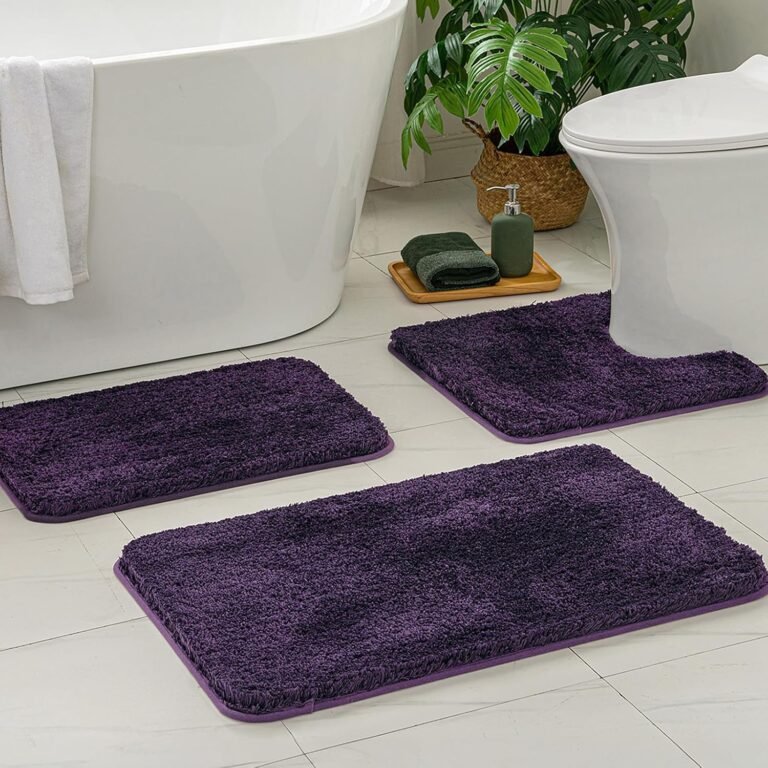
Microfiber is usually made from very fine polyester fibers. Some microfiber rugs also contain polyamide, a type of nylon.
The thin fibers create a large surface area. This helps the rug pick up water from wet feet and dry more quickly than many thick cotton rugs. Microfiber is common in quick-dry bath mats and low-pile bathroom rugs.
Advantages:
- Dries quickly
- Feels soft and plush
- Lightweight
- Often resists stains
- Usually easy to wash
Limitations:
- It is a synthetic material.
- Heat can damage or flatten the fibers.
- Fabric softener may reduce absorbency.
- Some microfiber rugs shed small fibers during washing.
Microfiber works well near a shower or tub when the rug must dry between uses. It still needs enough airflow. “Quick-dry” does not mean the rug will dry quickly when placed on a wet floor with no ventilation.
Polyester
Polyester is a strong synthetic fiber used in many bathroom rugs. Microfiber is a fine form of polyester, but not every polyester rug is microfiber.
Polyester is often chosen for its color retention and resistance to shrinking. It can also be blended with cotton or nylon.
Advantages:
- Holds color well
- Resists shrinking
- Often dries faster than thick cotton
- Available in many textures
- Usually costs less than some natural-fiber options
Limitations:
- It may feel less natural than cotton.
- Thick polyester piles can trap water.
- It can melt or deform under high heat.
- It does not absorb water as readily as cotton unless it uses a special fiber design.
nylon
nylon is a durable synthetic fiber. It is common in low-pile rugs, bath mats, and rugs made for frequent use.
Nylon fibers resist wear and can keep their shape well. Some nylon rugs use a water-resistant treatment or a non-slip backing.
Advantages:
- Durable
- Good resistance to abrasion
- Holds its shape
- Often easy to clean
- Useful in busy bathrooms
Limitations:
- It may not feel as soft as cotton or chenille.
- It can be more expensive than basic polyester.
- It may hold less water than cotton.
- The backing may still degrade even when the nylon face remains in good condition.
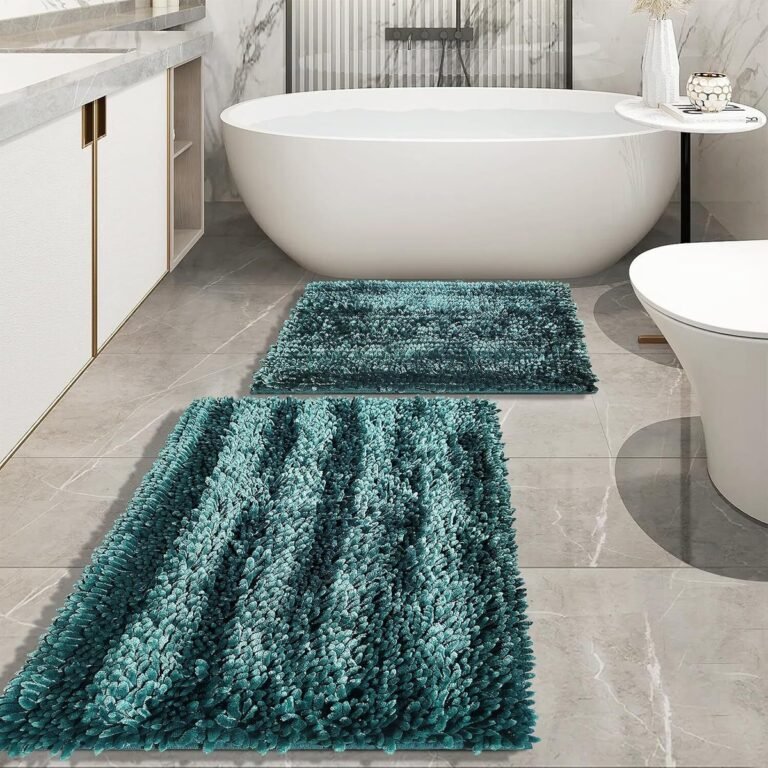
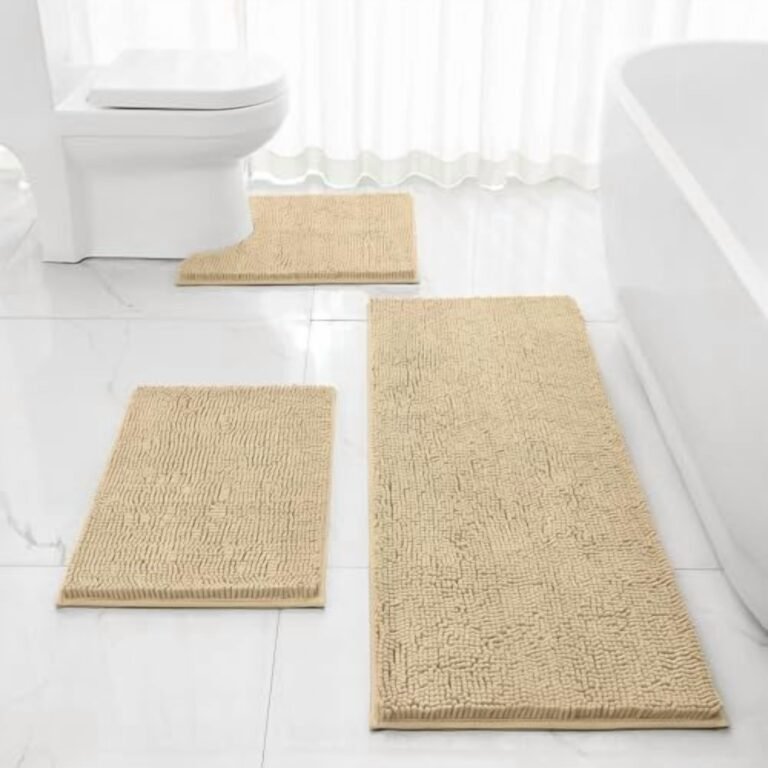
Chenille
Chenille describes a yarn or surface style, not always one single fiber. Bathroom chenille rugs may use cotton, polyester, microfiber, or a blend.
The yarn forms soft tufts or loops. These tufts feel plush and can help trap water from feet.
Advantages:
- Soft and cushioned
- Comfortable for bare feet
- Available in thick, textured designs
- Can absorb water well
Limitations:
- Deep tufts can take longer to dry.
- Loose loops may snag.
- Some chenille rugs need gentle washing.
- A thick pile may hide dirt and hair.
Check the fiber content instead of relying on the word “chenille.” A cotton chenille rug and a polyester chenille rug may feel and perform differently.
Bamboo-derived rayon
Some bathroom rugs use rayon made from bamboo pulp. Product labels may call this bamboo rayon or bamboo viscose.
The finished fiber is rayon, even though bamboo is the original plant source. It can feel smooth and soft, but its care needs depend on the weave and the manufacturer’s instructions.
Advantages:
- Soft feel
- Smooth surface
- Often used in decorative rugs
- May provide a cool, light texture
Limitations:
- It may be less durable when wet than some synthetic fibers.
- It may need gentle washing.
- The term “bamboo” does not mean the rug is made from solid bamboo.
- Claims about natural antimicrobial performance should not be assumed without test data.
Memory foam and polyurethane foam
Memory foam bath mats use a polyurethane foam layer, often with a fabric cover. Some use a solid foam core, while others use small foam pieces or a thin padded layer.
Memory foam provides cushioning. It can feel comfortable on hard tile, especially for people who stand at a sink for long periods.
Advantages:
- Cushioned feel
- Helps reduce pressure on feet
- Often lightweight
- Can fit well in front of a vanity
Limitations:
- Foam can hold water inside the mat.
- It may dry slowly if the rug is thick.
- Some foam can break down with age, heat, or repeated washing.
- A foam mat may not be the best choice beside a shower unless it can dry fully.
Rubber, latex, TPR, and PVC backings
The backing helps keep the rug in place and separates the main fabric from the floor. Common backing materials include:
- Natural rubber: Made from rubber latex. It can provide grip but may not suit every floor finish.
- Latex: A rubber-like coating used on the underside of some rugs.
- TPR: Thermoplastic rubber. It is flexible and often used for non-slip backing.
- PVC: A plastic material that can create a firm, water-resistant backing.
- Silicone: Used on some specialty mats for added grip and heat resistance.
A non-slip backing is not a permanent safety guarantee. Dust, soap, water, floor wax, and worn backing can reduce traction. Always follow the floor and rug maker’s care directions.

Which bathroom rug material absorbs the most water?
Cotton generally absorbs more water by weight than polyester, nylon, or most plastic-based fibers. However, absorbency is only one part of drying performance.
A thick cotton rug may absorb a lot of water but remain damp for hours. A thin microfiber rug may absorb less total water but dry sooner because the fibers are fine and the rug is lighter.
The actual result depends on:
- Fiber type
- Pile height
- Rug thickness
- Weave or tuft design
- Backing material
- Room ventilation
- Number of users
- How often the rug is washed
Absorbency compared with drying speed
| Material | Water absorption | Typical drying tendency | Best use |
|---|---|---|---|
| Cotton | High | Moderate to slow when thick | Soft, washable bath mats |
| Microfiber polyester | Moderate to high | Fast when thin | Shower and tub areas |
| Standard polyester | Low to moderate | Moderate | Decorative or light-use rugs |
| Nylon | Low to moderate | Fast to moderate | High-wear areas |
| Chenille | Moderate to high | Slow if deep | Plush comfort |
| Memory foam | Varies by cover | Slow inside thick mats | Cushioned vanity areas |
| Bamboo-derived rayon | Moderate | Varies | Soft decorative styles |
This table gives general material behavior, not a guarantee for every product. Construction can change performance more than the fiber name alone.
What to look for in a fast-drying bathroom rug
Choose a rug with:
- A low or medium pile
- A breathable construction
- A thin or moderate thickness
- No dense foam core
- A washable design
- A size that can hang over a towel bar or drying rack
A rug that dries fully between uses is usually easier to keep fresh than one that absorbs a large amount of water but stays wet.

Are bathroom rugs made of natural or synthetic materials?
Bathroom rugs can be made from either natural or synthetic fibers. Cotton is the most common natural fiber, while polyester, microfiber, nylon, and foam are common synthetic choices.
Natural-fiber bathroom rugs
Natural-fiber options may include:
- Cotton
- Wool
- Jute
- Hemp
- Bamboo-derived rayon, which is a manufactured rayon fiber rather than solid bamboo
Cotton is the most practical natural fiber for many wet bathroom areas. Wool and jute can be attractive, but they may not suit a spot that receives frequent splashes. Jute can absorb moisture and may become rough or misshapen when repeatedly wet.
Synthetic bathroom rugs
Synthetic options include:
- Polyester
- Microfiber
- Nylon
- Polypropylene
- Polyurethane foam
- PVC-backed materials
- TPR-backed materials
Synthetic fibers often offer good color stability and faster drying. However, they are not automatically better. A thick synthetic rug can still trap moisture, and a low-quality backing can peel or become brittle.
Blended materials
Blends combine two or more fibers. Examples include cotton-polyester and polyester-nylon rugs.
Blends may balance softness, durability, drying speed, and cost. Read the fiber percentage when it is listed. A rug described as “cotton rich” may still contain a large share of synthetic fiber.
In the United States, textile labels generally provide fiber content and other required information under rules enforced by the Federal Trade Commission. The care label remains the best guide for washing and drying.

What is the best material for a bathroom rug?
There is no single best material for every U.S. bathroom. The right choice depends on the floor, moisture level, foot traffic, and how often you can wash or dry the rug.
Choose cotton for softness and absorbency
Cotton is a strong choice when:
- You want a natural fiber.
- The rug will be washed often.
- Softness matters most.
- The room has enough airflow.
- You can hang the rug to dry.
Use extra care with thick cotton mats in small bathrooms with poor ventilation. They may stay wet longer than expected.
Choose microfiber for quick drying
Microfiber is useful when:
- The rug sits beside a shower or tub.
- Several people use the bathroom each day.
- You want a light mat that is easy to move.
- The room has a moisture problem.
- You prefer a soft synthetic texture.
A microfiber rug still needs regular washing. Quick drying does not prevent dirt, skin oils, or soap residue from building up.
Choose nylon for wear resistance
Nylon may suit:
- A busy family bathroom
- A bathroom used by children
- A rug exposed to frequent foot traffic
- A low-pile design near a vanity
Nylon is often less plush than cotton or chenille, but it can resist wear well.
Choose memory foam for cushion
Memory foam can work well in front of a sink or vanity. It is less suitable when the rug gets soaked often.
If you choose a foam mat, check whether the entire mat is washable. Some foam cores should not go in a washer or dryer. A removable, washable cover may be easier to maintain.
Choose a low-pile synthetic rug for easier care
A low-pile polyester or nylon rug is often practical for a powder room or half bath. It usually holds less water than a thick bath mat and may dry faster.
Look for a backing that is compatible with your floor. Some rubber or latex backings can stain, stick to, or react with certain flooring finishes. When unsure, ask the floor manufacturer or test the rug in a hidden area.

What are the safest bathroom rug materials?
Safety depends on more than the fiber. A safe bathroom rug should have suitable traction, stable edges, and a backing that works with the floor.
A rug may become a trip or slip hazard when:
- The backing is worn or peeling.
- The rug bunches at the edges.
- Water collects underneath.
- The floor has soap or oil residue.
- The rug is too small for the area.
- The mat moves when stepped on.
Check the backing
A non-slip label does not replace inspection. Replace a rug when the backing becomes cracked, sticky, powdery, or detached.
Do not place a loose rug over a floor that is already wet. Dry the floor first, then lay the rug flat.
Consider the floor type
Different floors may react differently to rubber, latex, PVC, and dyes. This matters for:
- Vinyl flooring
- Natural stone
- Finished wood
- Laminate
- Ceramic tile
- Porcelain tile
Some manufacturers warn against rubber-backed mats on vinyl or finished floors because the backing may discolor or leave marks. Use the flooring maker’s instructions as the controlling guidance.
Avoid rugs that create a trip edge
Thick foam and high-pile mats can create a raised edge near a doorway or toilet. A thin, flat rug may be safer in a narrow space.
For older adults, children, and anyone with balance problems, stable placement is especially important. A professional may help assess the room if falls are a concern.

How should you wash and care for bathroom rugs?
Care depends on the material and backing. The sewn-in care label should guide the wash temperature, cycle, detergent, and drying method.
General care steps
- Shake out loose dirt. Do this outdoors if possible.
- Check the backing. Do not wash a mat that is already peeling or cracking.
- Wash like materials together. Avoid mixing a heavily linting cotton rug with microfiber.
- Use the label’s water temperature. Hot water may shrink cotton or damage backing.
- Skip harsh bleach unless the label allows it. Bleach can weaken fibers and alter colors.
- Avoid fabric softener on microfiber. It may coat the fibers and reduce absorbency.
- Dry the rug fully. Use the label’s dryer setting or hang it in a well-ventilated area.
- Clean the floor below the rug. Dirt and moisture trapped underneath can damage some floors.
- Return the rug only when both surfaces are dry.
How often should bathroom rugs be washed?
Wash frequency depends on use and moisture. A rug used by many people or placed beside a shower may need more frequent washing than a decorative rug in a powder room.
Wash it sooner if it:
- Smells musty
- Feels damp for long periods
- Shows visible soil
- Has mildew spots
- Sits on a wet floor
- Has been used during an illness
Washing does not fix every problem. If the backing is damaged or odor remains after proper cleaning and drying, replacement may be more practical.

Common mistakes when buying bathroom rugs
The most common mistake is choosing by softness alone. A very plush rug can feel good at first but may dry slowly and create a damp layer on the floor.
Avoid these errors:
- Buying a rug that is too large for the room
- Ignoring the backing material
- Assuming every non-slip mat works on every floor
- Using a thick foam mat beside a frequently used shower
- Leaving a damp rug flat on the floor
- Washing a rug without checking its care label
- Using high heat on rubber-backed products
- Keeping a rug after the backing starts to fail
- Choosing a deep pile that makes the door hard to open
- Treating “bamboo” as proof of a specific environmental or antimicrobial benefit
A product label can describe the material, but it cannot predict how the rug will perform in every bathroom. Room airflow, floor type, and cleaning habits matter too.

Quick decision guide
Use this simple guide when comparing bathroom rug materials:
- Most absorbent feel: Cotton
- Fast-drying daily mat: Microfiber polyester
- Best for heavy foot traffic: Nylon
- Softest plush feel: Chenille
- Most cushioning: Memory foam
- Easy-care powder room rug: Low-pile polyester or nylon
- Natural-fiber preference: Cotton
- Best for a damp room: Thin, breathable microfiber or low-pile synthetic material
- Main safety check: A stable, intact backing that fits the floor
The best bathroom rug is not always the thickest or softest. It is the one that stays stable, dries between uses, and can be cleaned without damage.

Frequently asked questions
Are bathroom rugs machine washable?
Many cotton, microfiber, polyester, and nylon rugs are machine washable. Foam mats and rugs with rubber or latex backing may have special limits. Check the care label before washing, and do not machine-dry a rug unless the manufacturer permits it.
Are rubber-backed bathroom rugs safe for vinyl floors?
Not always. Some rubber, latex, or PVC backings can stain or react with vinyl flooring. Check both the rug instructions and the flooring manufacturer’s care guidance before use.
Which bathroom rugs dry the fastest?
Thin microfiber and low-pile synthetic rugs often dry faster than thick cotton, chenille, or memory foam mats. Airflow and hanging the rug after use also have a major effect.
Is cotton or microfiber better for a bathroom?
Cotton is often better for natural softness and high absorbency. Microfiber is often better when quick drying matters. Choose based on how wet the rug becomes and how easily you can wash and dry it.
Can bathroom rugs grow mold?
Any rug that stays damp can develop mildew or support mold growth. Reduce the risk by drying the rug fully, cleaning it as directed, improving ventilation, and replacing it if persistent odor or visible growth remains.
Final answer: What are bathroom rugs made of?
Bathroom rugs are mainly made of cotton, microfiber polyester, polyester, nylon, chenille, bamboo-derived rayon, or polyurethane foam. Their undersides often use rubber, latex, TPR, PVC, or silicone for grip.
For most U.S. bathrooms, choose based on three factors: how much water the rug receives, how fast it can dry, and whether the backing is safe for the floor. Cotton offers soft, absorbent comfort. Microfiber usually dries faster. Nylon handles wear. Memory foam adds cushion but may hold moisture.
Before buying, check the fiber content, backing material, care label, rug thickness, and flooring compatibility. Then keep the rug dry, wash it as directed, and replace it when the backing or fabric begins to fail.