What Type Of Rug Is Best For Bathroom: Best Materials
The best bathroom rug for most homes in the United States is a low-pile, quick-dry bath mat made from microfiber or synthetic polyester, with a secure non-slip backing. It should absorb water, dry between uses, and stay flat on the floor.
Choose a washable mat for daily use. Avoid thick shag, loose-weave, or moisture-holding rugs unless you can dry and clean them often. The right choice also depends on your floor type, bathroom traffic, pets, children, and how much water reaches the floor.

What Makes a Bathroom Rug a Good Choice?
A good bathroom rug must manage three problems: water, slipping, and cleaning. It should soak up small splashes without staying wet for hours.
Look for these traits:
- Low pile: Short fibers dry faster and are less likely to trap dirt.
- Fast drying: Quick drying helps limit musty smells and mildew growth.
- Washable construction: A rug that can go in the washing machine is easier to keep clean.
- Firm, flat edges: Flat edges reduce trips and curled corners.
- Stable backing: A backing can help the rug stay in place, but it does not make any rug completely slip-proof.
- Colorfast material: The dye should resist bleeding when exposed to water and cleaning products.
- Proper size: The rug should cover the area where water lands without blocking doors or cabinets.
The U.S. Consumer Product Safety Commission warns that loose rugs and mats can create fall hazards. A non-slip backing may lower movement, but it cannot replace good placement and regular checks. If the rug slides when you step on it, replace it or add a floor-safe rug pad approved for your flooring.
Bath mat versus bathroom rug
A bath mat is made for wet areas, such as beside a bathtub or shower. A bathroom rug is often a decorative floor covering placed near a vanity, toilet, or open area.
These terms often overlap. Still, a bath mat usually has better water absorption and faster drying. A decorative rug may look better but may not handle daily water exposure.
For the wettest part of the room, choose a bath mat. Use a decorative rug only in a dry area and only if its backing and material suit your floor.

Best Bathroom Rug Materials
The best material depends on whether you value fast drying, softness, absorbency, or a natural look. No material performs best in every bathroom.
Microfiber: best for quick drying
Microfiber is a strong choice for most bathrooms. Its fine fibers can pick up water from feet and small splashes. Many microfiber mats are light, machine washable, and easy to hang over a shower bar or drying rack.
Microfiber works well for:
- Busy family bathrooms
- Small bathrooms with poor air flow
- Homes that wash rugs often
- Bathrooms used by children or pets
- People who want a soft mat that dries quickly
Check the care label. Some microfiber mats need gentle washing and low heat. High heat may damage synthetic fibers or the backing.
Polyester: best for low-cost, easy care
Polyester bathroom rugs are common because they resist many stains, hold color well, and usually cost less than natural fibers. Polyester can dry fairly quickly when the rug has a short pile and a light build.
A polyester mat is a practical choice for a guest bath or a bathroom that gets light use. It may feel less absorbent than microfiber, depending on the weave and thickness.
Cotton: best for comfort and absorbency
Cotton bath mats feel soft and absorb water well. They are also widely available and often easy to wash.
The trade-off is drying time. Thick cotton can stay damp after use, especially in a cool bathroom with little air movement. A wet cotton rug can develop a stale odor if it stays on the floor.
Choose a thin or medium-weight cotton mat if you can hang it to dry. Avoid leaving a heavy cotton rug in place after a large spill.
Nylon: best for durability
Nylon is strong and resists wear. It can suit a high-traffic bathroom, especially near a vanity or entry point.
Nylon is not always as absorbent as cotton or microfiber. Its performance depends on the pile, weave, and backing. Choose a washable, low-pile nylon mat rather than a dense decorative rug.
Wool: attractive but not ideal for wet areas
Wool can look refined and feel warm underfoot. However, it absorbs moisture and may dry slowly. It also needs more careful cleaning than many synthetic mats.
A wool rug may work in a mostly dry powder room. It is usually not the best option beside a shower or bathtub.
Bamboo and wood slat mats: best for airflow
Bamboo mats allow air to move under the feet and may dry faster than a thick textile mat. They can also create a clean, spa-like look.
They do not absorb water like microfiber or cotton. Water may drip onto the floor beneath them. A bamboo mat can also become slippery if its surface is wet or if the feet are soapy.
Use one only when it sits firmly and the floor beneath it stays dry. Check the finish and care instructions, since standing water may cause swelling, stains, or surface wear.

Which Bathroom Rug Backing Is Safest?
A stable, floor-compatible backing is the best choice. The backing should reduce sliding without harming the floor below.
Common backing types include:
- Natural rubber: Often provides good grip, but some rubber products can discolor or mark certain floors.
- Latex: Can grip well but may cause staining or damage on some vinyl and finished surfaces.
- PVC or plastic: May resist water, but it can become brittle, crack, or leave marks over time.
- TPR or synthetic rubber: Often used for flexible, non-slip backings. Performance depends on the product and floor.
- No backing: A flat woven mat may be suitable in a dry area, but it can move more easily on smooth floors.
Always check the rug label and your flooring warranty before placing a backed mat on the floor. This matters most with vinyl, luxury vinyl plank, hardwood, bamboo, and some laminate floors.
Do not place a rubber-backed rug on a damp floor. Clean and dry the floor first. Moisture trapped below the backing can damage some finishes and create an odor.
A non-slip rug pad may help, but choose one made for the exact floor type. Do not use adhesive tape or a pad that leaves residue unless the flooring maker allows it.

Best Rug for Different Bathroom Floors
The best bathroom rug changes with the flooring. A mat that works on ceramic tile may not work well on vinyl or hardwood.
| Bathroom floor | Suitable rug features | Main caution |
|---|---|---|
| Ceramic or porcelain tile | Low-pile microfiber, cotton, or synthetic mat with stable backing | Grout lines can collect dirt and moisture |
| Natural stone | Colorfast, floor-safe backing and a washable top | Acidic cleaners and trapped moisture can harm some stone |
| Vinyl or luxury vinyl plank | Lightweight, breathable mat with a backing approved for vinyl | Rubber or latex may stain some surfaces |
| Laminate | Thin, quick-dry mat with a floor-safe pad | Standing water can enter seams |
| Hardwood | Small, breathable mat used only in controlled wet areas | Water and trapped moisture can damage the finish |
| Concrete | Washable synthetic mat with a stable backing | Concrete can stay damp below the rug |
For wood, laminate, and some vinyl floors, inspect below the mat often. Lift it after bathing and allow both the rug and floor to dry.

How to Choose the Right Bathroom Rug Size
Choose a rug that covers the splash zone without touching swinging doors or blocking drawers. A larger rug is not always safer or more useful.
Use these general guidelines:
- In front of a shower: Measure the space where you step out. Leave enough clearance for the door or curtain.
- In front of a bathtub: A long runner can cover the main exit area, but it should not bunch at the tub base.
- In front of a vanity: Measure the cabinet width and leave a small border at each side.
- In a narrow bathroom: Use a slim runner rather than several small mats.
- Near a toilet: Keep the rug clear of the toilet base if it makes cleaning difficult.
- For a pedestal sink: A small round or rectangular mat may fit better than a long runner.
Before buying, open doors and drawers fully. Mark the proposed rug area with painter’s tape. Walk around it and check that no edge catches your toes.
A rug that is too small may move more easily. A rug that is too large may fold, trap moisture, or interfere with doors.

What Bathroom Rugs Should You Avoid?
Avoid rugs that hold water, move easily, or make cleaning difficult. The following styles often cause problems in wet bathrooms.
Thick shag rugs
Long fibers trap water, hair, and dust. They can take a long time to dry and may hide a damp floor underneath.
Dense memory foam mats
Memory foam feels soft, but thick foam can hold water inside. Some foam mats also lose their shape or break down after repeated washing.
A thin foam mat may work for light use if the care label allows machine washing. It is not the best choice for a bathroom that stays humid.
Jute, sisal, and other plant-fiber rugs
Natural plant fibers can absorb moisture and develop stains or odors. They are better suited to dry rooms than to areas beside a shower.
Loose woven rugs
Open or loose weaves can catch toes and may shift on smooth floors. They also allow water to reach the floor quickly.
Rugs with peeling or cracked backing
A damaged backing can create an uneven surface and leave small pieces on the floor. Replace the rug when the backing flakes, curls, or no longer stays flat.
Rugs that cannot be washed
A bathroom rug needs regular cleaning. If the care instructions allow only professional cleaning, it may be impractical for daily use near a shower.

How to Keep a Bathroom Rug Clean and Dry
Good care matters as much as the material. Even the best bath mat can smell if it stays wet on the floor.
Follow this routine:
- Hang the rug after heavy use. Spread it over a rack or shower bar so air reaches both sides.
- Wash it based on use. A busy household may need weekly washing. A lightly used guest bath may need less frequent cleaning.
- Follow the care label. Use the recommended water temperature and detergent.
- Dry it fully. Do not return a damp rug to the floor.
- Lift the rug during floor cleaning. Clean and dry the floor below it.
- Check the backing. Look for cracks, curling, flaking, or discoloration.
- Replace it when it stays damp or smells after washing. Persistent odor can mean moisture is trapped in the fibers or backing.
Do not mix bleach with ammonia or other cleaners. If you use bleach, confirm that the rug label permits it and follow the product label. Some dyes, fibers, and backings can be damaged by bleach.
If the rug or floor develops visible mold, clean the area safely and correct the moisture source. The U.S. Environmental Protection Agency explains that moisture control is central to mold prevention. A rug cannot solve a leak, poor ventilation, or water that pools around a fixture.

Bathroom Rug Safety Tips for Children, Older Adults, and Pets
Choose a thin, stable mat when a fall could cause serious harm. Older adults and people with limited balance may need a more secure setup than a simple non-slip label can provide.
Use these precautions:
- Keep the rug flat and away from door swings.
- Remove mats that slide, bunch, or curl.
- Wipe up water outside the rug.
- Use brighter colors or clear contrast if edges are hard to see.
- Do not place several small mats where one large, stable mat would work better.
- Keep pets from chewing loose backing or rubber pieces.
- Do not assume a suction-cup mat will stay secure on every floor.
- Test the rug with a gentle foot push before regular use.
A bath mat is not a substitute for a grab bar, shower seat, or other accessibility equipment. If someone has a high fall risk, an occupational therapist or qualified home-safety professional can assess the full bathroom.

Quick Decision Guide
Use this guide if you want a simple answer:
- Best overall: Low-pile microfiber with a washable, floor-safe backing.
- Best for a family bathroom: Quick-dry microfiber or polyester.
- Best for softness: Cotton, if you can dry it fully after use.
- Best for heavy traffic: Low-pile nylon or durable polyester.
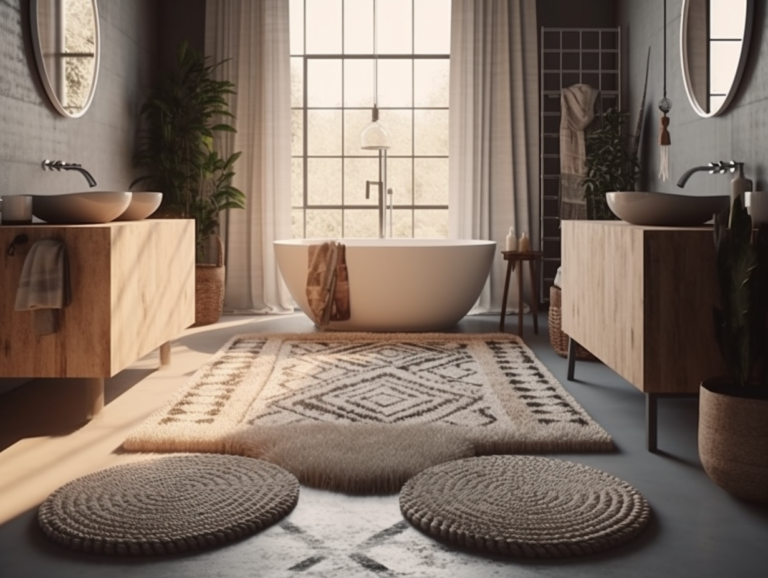
- Best for a dry powder room: A decorative cotton, wool, or flat-weave rug.
- Best for airflow: Bamboo or slat mat, if you do not need strong water absorption.
- Best for older adults: A thin, stable, flat mat with a tested, floor-compatible grip.
- Best for a small bathroom: One washable mat that covers the main wet area without blocking doors.
The safest choice is not always the thickest or softest rug. In most bathrooms, a low profile and fast drying matter more than extra cushioning.

Common Bathroom Rug Mistakes
The most common mistake is choosing a rug for its appearance alone. A beautiful rug may still be a poor fit if it stays wet, slides, or blocks the door.
Other mistakes include:
- Buying a rug without checking its care label
- Assuming “non-slip” means fall-proof
- Leaving the rug in place over a damp floor
- Using a rubber-backed rug on a floor that the manufacturer says may stain
- Choosing a thick pile for a bathroom with poor ventilation
- Placing a mat where it catches a cabinet or door
- Washing the top but ignoring a damp, dirty backing
- Keeping a rug after it begins to curl or shed backing
Before you buy, measure the space, identify the floor material, and decide how often you can wash and dry the mat. These three checks prevent many common problems.

Frequently Asked Questions
Is microfiber or cotton better for a bathroom rug?
Microfiber is usually better for fast drying and daily use. Cotton is soft and absorbent but may take longer to dry. Choose cotton if you can hang it after use and wash it often.
Are rubber-backed bathroom rugs safe for vinyl floors?
Not always. Some rubber and latex backings can discolor or mark vinyl flooring. Check both the rug label and the flooring manufacturer’s care guidance before use.
How often should you wash a bathroom rug?
Wash it when it becomes damp, dirty, or odorous. In a busy household, weekly washing is a reasonable starting point. Dry the rug fully before putting it back.
Can I use a regular area rug in the bathroom?
You can use a regular rug in a dry powder room if it lies flat and has a floor-safe backing. Avoid using rugs made for dry rooms beside a shower or tub unless their care and material suit repeated moisture.
Do bathroom rugs prevent falls?
They may reduce water on the floor, but they do not guarantee fall prevention. A loose or curled rug can increase risk. Use a stable mat, keep the floor dry, and remove any rug that moves underfoot.
Final Recommendation
For most U.S. bathrooms, choose a low-pile microfiber or polyester bath mat that is machine washable, quick to dry, flat at the edges, and compatible with your floor. Place it where water lands, not across a doorway or cabinet swing.
If the room has hardwood, laminate, or vinyl flooring, pay special attention to the backing. Lift the mat often, keep the floor dry, and replace the rug when it slides, curls, smells after washing, or shows backing damage.