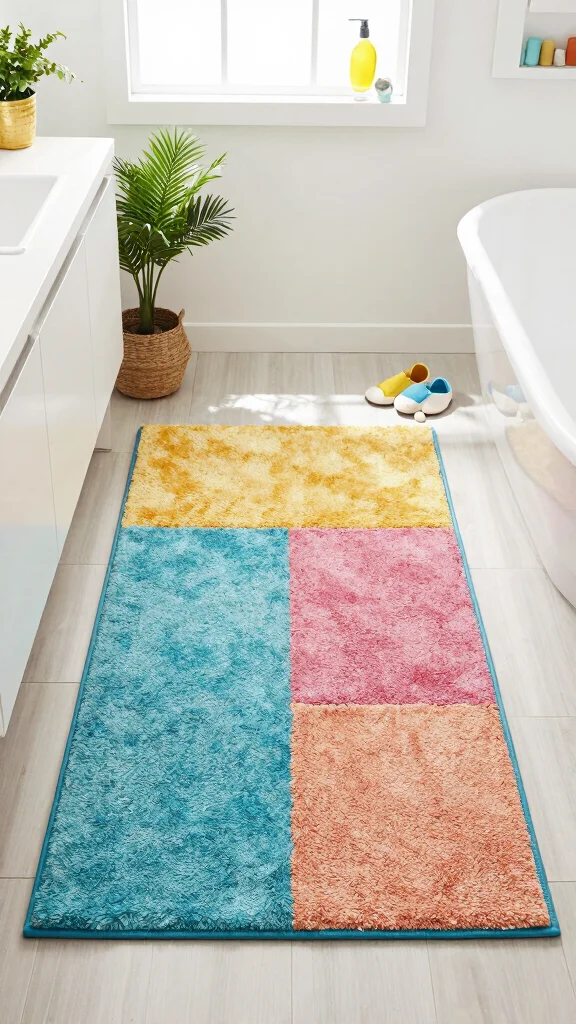
Where To Put Rugs In A Small Bathroom: Smart Placement Tips
In a small bathroom, the best rug locations are usually in front of the shower or tub, beside the sink, and in front of the toilet only when space allows. Keep rugs flat, easy to dry, and clear of the door swing. A small bathroom needs comfort without blocked paths, trapped moisture, or slip hazards.
In U.S. homes, bathroom sizes and layouts vary widely. Measure the open floor area first, then choose one or two small rugs instead of trying to cover every inch. The goal is a dry landing spot, not wall-to-wall fabric.

The Best Places to Put Rugs in a Small Bathroom
Place a rug where water is most likely to land and where your feet need warmth. In most small bathrooms, that means the shower exit and the sink area.
1. In front of the shower or tub
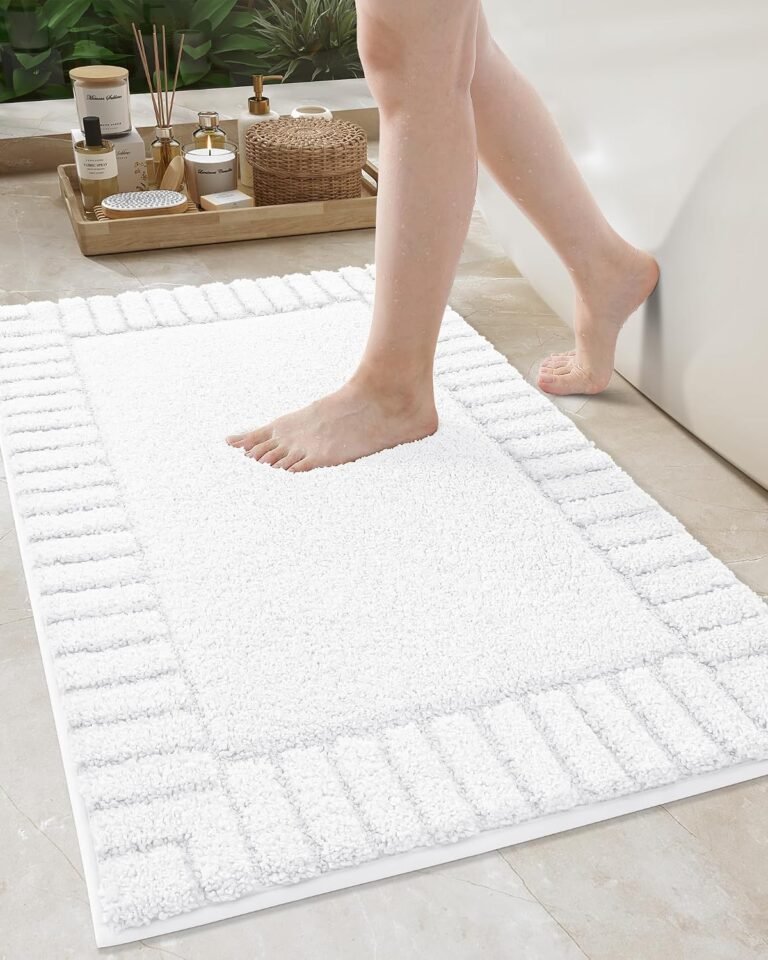
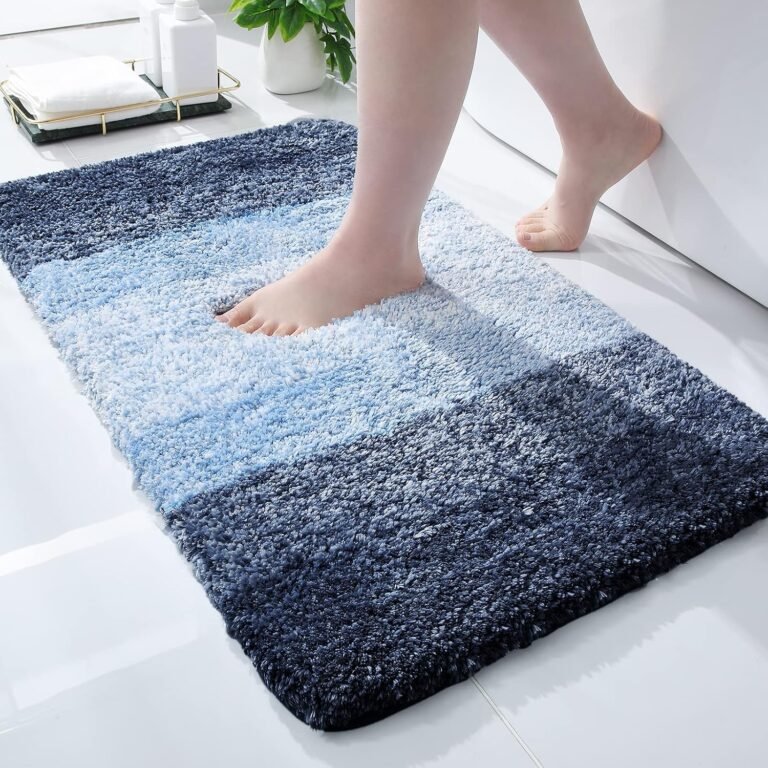
The space just outside the shower or tub is often the most useful rug location. It catches drips when you step out and gives you a dry place to stand.
Choose a mat that:
- Fits fully outside the shower or tub
- Has a low profile
- Has a stable, nonslip base
- Can dry quickly
- Does not block the bathroom door
Leave enough room for the mat to lie flat. A rug that curls against the tub or catches under the door can create a trip point.
2. In front of the sink or vanity
A narrow runner or small rectangular mat can work well in front of a vanity. This location adds comfort during daily tasks such as shaving, brushing teeth, or applying makeup.
For a small bathroom, leave a strip of clear floor between the rug and the vanity if possible. This makes cleaning easier and reduces the chance that the rug will stay wet against the cabinet toe-kick.
A runner may work better than a wide bath mat when the vanity is long and the walkway is narrow. Make sure the runner does not extend into the main walking path.
3. In front of the toilet
A small rug can sit in front of the toilet, but this is often the least necessary location. It works best when the bathroom has enough floor space and the rug does not touch the toilet base.
Avoid toilet-shaped rugs with a cutout around the base. They can collect moisture and make the floor harder to clean. A flat rectangular mat placed in front of the toilet is usually easier to wash and move.
Do not place a rug where it prevents the toilet seat, bathroom door, or cabinet door from opening fully.
4. Between the shower and sink
A single narrow runner can connect the shower and vanity in a longer, narrow bathroom. This can look neat and reduce the number of separate mats.
Use this layout only when the runner does not create a continuous obstacle across the room. A runner should stay flat, leave room around the toilet, and avoid blocking the door.
5. Just outside the bathroom
A washable runner outside the bathroom can catch water before it reaches a hallway or bedroom. This is useful when the bathroom door opens directly onto wood, laminate, or other moisture-sensitive flooring.
Do not use an outdoor mat indoors unless its backing and surface are suitable for the floor below. Some rubber or latex backings can discolor certain finishes. Follow the floor maker’s care guidance.

How to Choose the Right Rug Size
Choose a rug by measuring the usable floor, not by guessing from the bathroom’s total size. A rug should fit inside the open area with a clear path around it.
Use this simple process:
- Measure the distance from the shower or tub to the opposite wall.
- Measure the width of the open floor.
- Mark the door swing with painter’s tape.
- Mark cabinet, toilet, and drawer clearances.
- Measure the remaining space.
- Choose a rug that is smaller than that open area.
Common sizes for small bathrooms include:
| Rug type | Common use | Main benefit |
|---|---|---|
| Small mat, about 20 by 30 inches | In front of a shower or toilet | Fits tight spaces |
| Medium mat, about 24 by 36 inches | Outside a tub or in front of a vanity | Gives more standing room |
| Narrow runner, about 20 to 24 inches wide | Between a shower and vanity | Covers a long, narrow path |
| Small round rug, about 24 to 30 inches | Open area in a powder room | Softens a compact layout |
These are planning examples, not fixed rules. Actual bathroom dimensions, fixtures, and door clearances should control the final size.
A useful rule is to keep at least part of the floor visible around the rug. Visible floor makes a small room feel less crowded and gives moisture a place to evaporate.

The Best Rug Shapes for a Small Bathroom
Rectangular mats are usually the easiest choice because most bathroom fixtures have straight edges. They fit well outside a tub, under a vanity, or in front of a shower.
A runner suits a narrow bathroom with a long open path. It can make the room feel connected, but it should not run under the toilet or cover every walking surface.
Round rugs work best in a powder room or in a bathroom with an open center area. They can soften a boxy layout, but a round rug may waste space near straight walls.
Contoured toilet rugs are often less practical. Their cutout can hold moisture, collect hair, and make laundering harder. A washable rectangle is usually simpler to lift, clean, and replace.
Choose one shape that follows the room’s main lines. Too many shapes can make a small bathroom feel busy.
Should You Use One Rug or Two?
Use one rug when the bathroom has a narrow floor plan or very limited open space. A single mat outside the shower is often enough for a small full bathroom.
Use two rugs when the shower and vanity are separated and both areas need coverage. Matching or coordinating mats can create balance without filling the room.
A simple layout might include:
- One 20-by-30-inch mat outside the shower
- One narrow runner in front of a long vanity
- No rug in front of the toilet if the remaining space is tight
Avoid placing mats edge to edge. Small gaps allow the floor to dry and make sweeping easier. If two rugs touch, their edges may curl or shift as people walk over them.
The best arrangement is the one that covers wet zones while preserving a clear route from the door to the sink, toilet, and shower.

Safety Features That Matter More Than Style
A bathroom rug should stay in place when stepped on. The U.S. Consumer Product Safety Commission identifies falls as a common source of home injury, so a loose bathroom mat deserves attention even in a small space. See the CPSC home safety guidance for general fall-prevention practices.
Look for these features:
Nonslip construction
A nonslip backing can reduce movement, but no backing makes a rug safe on every floor. Dust, water, soap, and wax can affect grip.
Test the rug after placing it:
- Push it with your foot.
- Walk across it slowly.
- Check whether the corners lift.
- Look for movement on tile, vinyl, laminate, or wood.
- Recheck it after washing.
If the rug slides, remove it until you fix the cause. A separate rug pad may help, but choose one made for bathroom use and compatible with the floor finish.
Low pile
A low-pile rug has short fibers and a thinner profile. It is less likely to catch a toe or interfere with a door than a thick shag rug.
Low pile also dries faster and is easier to clean. Thick memory-foam mats can feel soft, but they may hold water longer and may not fit under a door.
Flat edges
Edges should lie flat from the first use. Do not keep a mat that curls, folds, or develops a raised seam after washing.
Water-resistant does not mean waterproof
A water-resistant surface may repel some water, but it can still become damp. Any rug used near a shower needs regular drying and washing.
Avoid using a decorative rug that is meant for a dry bedroom unless the care label supports bathroom use.

How to Prevent Moisture, Mold, and Odor
Keep bathroom rugs dry between uses. A wet rug left on the floor can create odor, damage some flooring, and support mold growth.
Use this care routine:
- Hang the rug or mat after a shower when it is damp.
- Keep the bathroom fan running during and after a shower, based on the fan maker’s instructions.
- Wash the rug as directed on its care label.
- Dry it fully before putting it back.
- Lift the rug during floor cleaning.
- Check the floor and backing for trapped moisture.
- Replace the rug if it stays damp, smells sour, or has visible mold that cannot be safely removed.
The U.S. Environmental Protection Agency advises controlling moisture to help prevent mold. Its mold and moisture guidance explains why wet materials need prompt drying.
Do not place a rug over a floor that is already damp. Dry the floor first, then return the mat only after checking the backing and edges.
Rubber-backed mats need special care. Some may break down, stick to the floor, or leave marks over time. Read the product label and follow the flooring manufacturer’s recommendations.

Where Not to Put a Bathroom Rug
Do not place a rug in a location that blocks movement or traps water. The most common problem areas include:
- Directly under the bathroom door
- Across the door swing
- In front of a drawer or cabinet
- Around the toilet base
- On top of a floor drain
- Where it touches a wet tub or shower curtain
- Over uneven tile or a damaged floor
- On a heated floor unless the rug is approved for that system
Avoid placing a large rug over most of the floor in a small bathroom. It may look cozy at first, but it can make the room feel crowded and harder to clean.
Do not place several small rugs in a path that receives frequent foot traffic. More pieces mean more edges, more washing, and more chances for movement.
If someone in the home has limited balance, reduced vision, or difficulty lifting their feet, use fewer rugs rather than more. A clear, dry floor may be safer than a soft but unstable surface. For a public or assisted-living setting, follow the applicable facility and accessibility requirements. The ADA applies mainly to covered public accommodations and commercial facilities, not every private home; the ADA Standards provide the official scope.

Small Bathroom Rug Layout Examples
Layout 1: Tiny full bathroom
For a bathroom with a shower, toilet, and small vanity close together, use one mat outside the shower. Keep the central path clear.
This layout reduces clutter and gives you one mat to dry and wash.
Layout 2: Narrow bathroom with a long vanity
Use a narrow runner in front of the vanity and a small mat outside the shower if the door can still open freely.
Leave a gap between the two rugs. The gap helps the floor dry and keeps the room from looking like one covered surface.
Layout 3: Small powder room
A small round or rectangular rug can sit in front of the vanity. Since a powder room usually has no shower, moisture exposure is lower, but hand-washing splashes can still occur.
Choose a rug that does not interfere with the door or vanity drawers.
Layout 4: Bathroom with a door that opens inward
Mark the full door swing before buying a rug. If the door touches the rug, use a thinner mat or move the rug closer to the shower or vanity.
Never depend on the door to flatten a thick rug. That can damage the rug and make the door hard to open.

Bathroom Rug Materials: Which One Fits Your Needs?
Material affects comfort, drying time, cleaning, and durability.
| Material | Strength | Limitation |
|---|---|---|
| Cotton | Soft and often washable | May stay damp longer |
| Microfiber | Dries quickly and absorbs water | Can flatten with use |
| Synthetic fiber | Often durable and stain resistant | May feel less soft |
| Bamboo or wood slats | Keeps feet above the wet floor | Can be slippery if wet |
| Memory foam | Cushioned underfoot | Often thicker and slower to dry |
Cotton works well when you can wash and dry it often. Microfiber suits a bathroom that needs quick drying. A slatted mat may help keep feet away from standing water, but it must remain stable and clean underneath.
Choose the material based on your care routine. The softest rug is not the best choice if it cannot dry fully in your bathroom.
Common Mistakes to Avoid
Buying by appearance alone
A rug may match the tile and still slide, shed, or stay wet. Check the backing, pile height, and care label before choosing a style.
Using a thick rug in front of the door
Measure the gap under the door. A thick mat can scrape, fold, or block the door.
Covering the whole floor
More coverage does not always mean more comfort. In a small room, too much fabric can restrict movement and hold moisture.
Leaving the mat in place during cleaning
Lift the rug when mopping. Clean and dry the floor beneath it before replacing the mat.
Ignoring the backing
Inspect the backing every few washes. Replace the mat if it cracks, flakes, becomes sticky, or leaves residue on the floor.
Keeping a rug that moves
A rug that shifts a little may shift more when wet. Treat movement as a problem, not a minor design issue.

Key Takeaways
- Put the main rug outside the shower or tub.
- Add a second mat at the vanity only if space allows.
- Use a small rectangle or narrow runner instead of a large floor-covering rug.
- Keep rugs away from door swings, drawers, drains, and the toilet base.
- Choose a low-pile, flat rug with a stable backing.
- Lift, wash, and dry bathroom rugs often.
- Remove any rug that slides, curls, stays wet, or damages the floor.
Frequently Asked Questions
Should a bathroom rug go inside or outside the shower?
Place a standard bathroom rug outside the shower. Use a mat inside the shower only if it is specifically made for wet, standing use and has a suitable nonslip design. A normal fabric rug can become saturated and unstable.
Should a rug go in front of the toilet?
It can, but it is not required. If you use one, place a flat rectangular mat in front of the toilet rather than a cutout-style rug around the base. Keep the toilet area easy to clean.
How far should a bathroom rug be from the toilet?
Leave enough space to clean around the toilet and avoid contact with the base. The exact distance depends on the room layout, but the rug should not touch the toilet or interfere with the toilet seat, door, or nearby cabinet.
Are rubber-backed rugs safe for bathroom floors?
They may be safe on some floors, but not all. Rubber or latex can leave marks, trap moisture, or react with certain floor finishes. Check both the rug label and the flooring manufacturer’s instructions.
How often should bathroom rugs be washed?
Wash them whenever they become damp, soiled, or odorous. In a frequently used bathroom, inspect them several times a week and follow the care label for washing and drying.
Conclusion
The best place for a rug in a small bathroom is usually outside the shower or tub, followed by the vanity area if there is enough room. Use the smallest mat that gives useful coverage, keeps a clear walking path, and dries fully between uses.
Measure the door swing and open floor first. Then choose a low-profile, washable rug with a stable backing, and remove it if it slides or traps moisture.