Where To Place Bathroom Rugs: Smart Placement Tips
The best places for bathroom rugs are directly outside the tub or shower, in front of the bathroom vanity, and beside the toilet when space allows. Keep rugs flat, dry, and clear of doors, drawers, vents, and walking paths.
A bathroom rug should catch water where it lands without creating a trip or slip hazard. In most U.S. homes, that means using a washable bath mat outside the tub or shower and a small rug near the sink. Avoid covering the entire floor unless the room is large enough to keep every rug away from doors and fixtures.

The Best Places to Put Bathroom Rugs
Place a rug where water is most likely to reach the floor and where you can step onto it safely.
1. Outside the tub or shower
The area just outside the tub or shower is usually the most useful location for a bathroom rug. It catches water from wet feet and gives you a dry surface when you step out.
Position the mat so that:
- It sits directly in front of the tub or shower opening.
- Both feet can land on it when you step out.
- It does not block the bathroom door.
- It does not cover a floor vent.
- Its edges lie flat against the floor.
For a shower with a hinged door, place the mat outside the door’s full swing. Open and close the door several times before finalizing the position.
For a bathtub with a shower, center the mat near the side where you usually exit. If the tub has a curtain, leave enough space for the curtain to open without pushing the rug out of place.
2. In front of the bathroom vanity
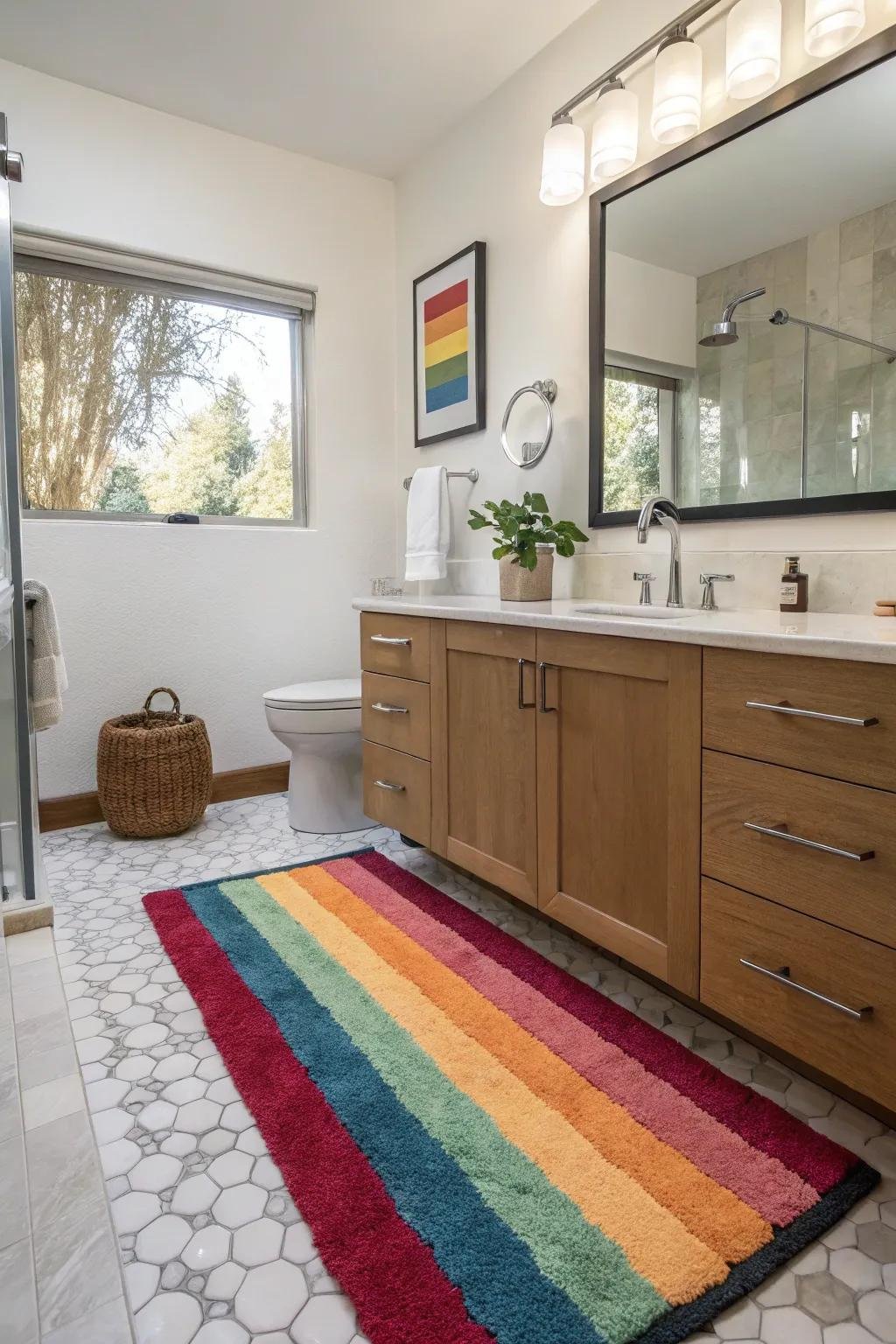
A narrow runner or small rectangular rug works well in front of a vanity. This placement helps catch water from handwashing and protects the floor from small splashes.
Keep the rug far enough from the vanity that cabinet doors and drawers can open fully. A rug that touches the vanity may bunch up when someone opens a drawer. That can create a raised edge and a trip point.
A runner is often practical for a double vanity. For a single sink, a smaller mat usually looks balanced and is easier to wash.
3. Beside the toilet
A small rug can sit beside the toilet, but this location needs more care than the tub or vanity area. The rug should not wrap around the toilet base or extend into a narrow walking path.
A side rug may work when:
- The bathroom has enough open floor space.
- The rug does not touch the toilet base.
- The rug does not interfere with the toilet door.
- The material can be washed often.
- The rug stays dry and does not curl.
Many toilet-shaped “contour rugs” fit around the base of a toilet. They may look tidy, but they can be harder to clean and may create more seams around the fixture. A flat rectangular mat beside the toilet is often simpler to maintain.
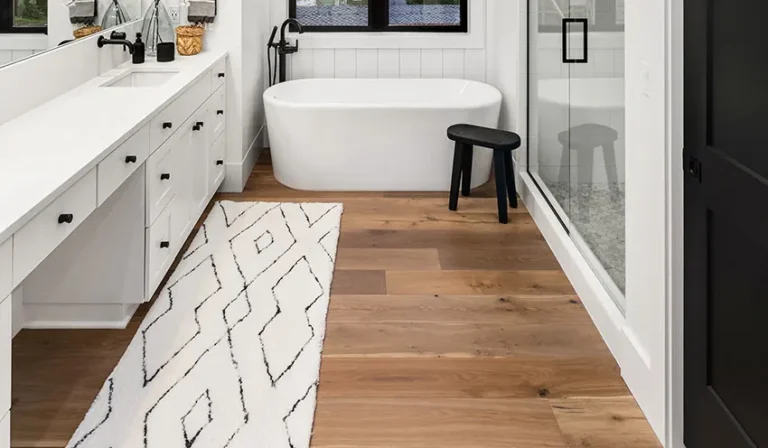
4. In front of a freestanding bathtub
A freestanding tub may need a longer rug or runner along its open side. Do not place a rug under the tub unless the tub manufacturer permits it and the rug cannot trap moisture.
A rug beside a freestanding tub should:
- Stay outside the tub’s splash zone as much as possible.
- Leave access to the tub drain and plumbing.
- Avoid covering any floor outlet or vent.
- Provide a clear path around the tub.
Do not use a large rug to hide water damage, loose flooring, or poor drainage. Fix the moisture problem first.

Where Not to Place Bathroom Rugs
Do not place a bathroom rug where it can move, block a fixture, or stay wet for long periods.
Avoid these locations:
- Under a swinging door: The door may catch the rug or push it into a fold.
- Over a floor vent: The rug can restrict airflow and may move when the system runs.
- Across the main walking path: A loose edge can become a trip hazard.
- In front of drawers or cabinets: The rug may stop them from opening.
- Partly on carpet and partly on hard flooring: The uneven transition can make the rug shift.
- Inside a tub or shower: A bathroom rug is not a substitute for a properly designed shower mat.
- Under a toilet base: Moisture can remain trapped, and the rug may interfere with cleaning.
- Near a space heater: Fabric rugs should be kept away from portable heaters and other heat sources.
Do not place a regular decorative rug inside the shower. Use a product made for wet areas, and follow the product instructions. A shower mat may still need regular cleaning because soap film, body oils, and moisture can make surfaces slippery.
How to Choose the Right Bathroom Rug Location
Choose the location by watching how people move through the room, not only by copying a layout photo.
Step 1: Find the wet zones
Look for the places where water commonly lands:
- Outside the shower or tub
- Below the sink
- Near a bidet attachment or handheld sprayer
- Beside a freestanding tub
- Near the toilet in a compact bathroom
A rug should cover the useful landing area without spreading into the rest of the room.
Step 2: Check the door swing
Close the bathroom door, then open it fully. Check the shower door, cabinet doors, drawers, and linen closet door as well.
The rug should remain flat through the full movement of each door. If a door touches the rug, move the rug or choose a thinner style.
Step 3: Check the walking path
Walk into the bathroom as you normally would. Then walk from the door to the sink, toilet, and shower.
The rug should not force you to step around it or onto a raised edge. In a small bathroom, one well-placed mat may be safer than several small rugs.
Step 4: Test the rug when dry and damp
A rug can behave differently after it absorbs water. Check whether the edges curl, the backing slides, or the fabric bunches underfoot.
If the mat moves, remove it until you can add a suitable non-slip solution or replace it. Do not assume a heavy rug is automatically safe.
Step 5: Leave room for cleaning
You should be able to lift the rug, sweep or mop below it, and dry the floor. If a rug makes it hard to clean around the toilet or vanity, it may be too large for the space.

Bathroom Rug Placement by Room Size
The best layout changes with the size and shape of the bathroom.
| Bathroom type | Practical rug placement | What to avoid |
|---|---|---|
| Small half-bath | Small mat in front of the sink or toilet | Covering the entire floor |
| Small full bath | One bath mat outside the tub or shower | Several overlapping mats |
| Standard full bath | Mat outside the shower plus a small vanity rug | Blocking cabinet doors |
| Large bathroom | Separate rugs for the shower, vanity, and freestanding tub | Leaving large rugs loose in open paths |
| Narrow bathroom | One long, narrow mat in the main wet zone | A rug that reaches wall to wall |
| Accessible bathroom | Flat, stable surface with clear routes | Thick edges or loose backing |
Small bathrooms
Use one primary mat whenever possible. A bath mat outside the shower often provides the greatest benefit because that is where wet feet create the highest slip concern.
A second small mat may fit in front of the sink, but only if it does not overlap the first mat or block the door.
Large bathrooms
Larger rooms can support more than one rug. Use separate rugs for separate tasks rather than one oversized rug.
For example, you might place:
- A bath mat outside the shower
- A runner in front of a double vanity
- A small rug beside a freestanding tub
Keep clear, flat walking routes between each area.
Narrow bathrooms
A long runner can work in a narrow bathroom, but it should not run under the toilet or block the door. Measure the distance between fixtures before buying the rug.
A shorter mat may be safer if the runner would sit close to the toilet, shower door, or entry door.
Bathroom Rugs and Safety
A bathroom rug can improve comfort, but it cannot remove every bathroom hazard. Wet floors, poor lighting, loose flooring, and clutter can still cause falls.
The Centers for Disease Control and Prevention’s fall-prevention guidance recommends reducing common fall risks and improving safety in the home. The U.S. Consumer Product Safety Commission also provides consumer safety information relevant to household hazards.
For safer placement:
- Choose a flat rug with a stable, non-slip backing.
- Keep the floor under the rug clean and dry.
- Replace rugs with curled edges, cracks, or worn backing.
- Do not tape down a rug unless the tape is designed for both the rug and floor surface.
- Check that rug pads are compatible with tile, vinyl, laminate, stone, or finished wood.
- Use extra care if someone in the home has limited balance, poor vision, or difficulty lifting their feet.
A non-slip backing can help, but it is not a guarantee. Water, dust, cleaning residue, and worn materials can reduce grip. Test the rug with your foot before relying on it.
How much rug should cover the floor?
The rug should cover the area where you step out or stand while using the sink. It does not need to cover every inch of floor.
A useful rule is to prioritize stable footing over visual symmetry. A smaller rug that stays flat is safer than a larger rug that reaches a door or curls at the corners.

How to Match Rug Size to Bathroom Fixtures
Measure the available floor area before choosing a rug. Record the distance from the fixture to the nearest door, cabinet, wall, or walkway.
Use these general placement principles:
- A bath mat should fit the shower or tub exit area without extending into the door swing.
- A vanity rug should be shorter than the usable cabinet length if cabinet doors open outward.
- A runner should leave enough exposed floor for a clear path.
- A toilet-side rug should stop before the toilet base and avoid tight contact with the bowl or wall.
- Two rugs should not overlap or leave one edge folded over another.
For a balanced look, center a rug with the vanity or tub only when centering does not create a safety problem. Function comes first in a bathroom.
What Type of Bathroom Rug Works Best?
The best rug depends on the wet area, floor surface, cleaning needs, and people using the room.
For outside a shower or tub
Choose a quick-drying, washable bath mat with a flat profile and stable backing. Cotton can feel soft and absorb water, but it may stay damp longer than a thinner synthetic mat. Follow the care label and allow the mat to dry fully.
For a vanity
A low-pile rug or washable runner is often practical. It should resist bunching and allow cabinet doors to open.
For a powder room
A decorative flat-weave rug may work because the room usually has less water exposure. It still needs a stable backing and should not block the door.
For homes with children or older adults
Favor a flat, easy-to-clean mat with secure footing. Avoid thick shag, loose fringe, curled corners, and lightweight rugs that slide easily.
No material is automatically safe on every floor. Always check the rug manufacturer’s instructions and the flooring manufacturer’s care guidance.

Common Bathroom Rug Placement Mistakes
Using too many rugs
Several small rugs can make a bathroom look crowded and create more edges to trip over. Start with the wettest area and add another rug only if the room has enough space.
Choosing appearance over movement
A rug may look centered in a photo but block a drawer in real use. Open every door and drawer before deciding where it belongs.
Leaving a wet rug in place
A damp rug can hold moisture against the floor and develop odor or mildew. Hang or dry it according to the care instructions.
Ignoring the floor type
Some rug backings can react poorly with certain vinyl, laminate, stone, or finished wood floors. Check product guidance before use, especially with rubber or latex-backed mats.
Putting a mat inside the shower
A regular bathroom rug is not designed for constant water exposure or direct contact with soap. Use a properly rated shower mat if one is needed, and clean it often.
Covering floor damage
A rug should not hide a soft spot, cracked tile, loose plank, or persistent leak. Repair the floor or address the leak before adding a mat.
Key Takeaways
- Place the main bathroom rug outside the tub or shower.
- Add a small rug in front of the vanity only if it does not block drawers or doors.
- Use a toilet-side rug only when there is enough space for a flat, clean surface.
- Keep rugs away from door swings, vents, heaters, and narrow walking paths.
- Choose a washable, flat rug with stable backing.
- Remove and dry wet rugs regularly.
- Replace any rug that curls, slides, or shows worn backing.
FAQs About Bathroom Rug Placement
Should a bathroom rug go in front of or around the toilet?
A rug usually works better beside the toilet or in front of it rather than wrapped around the base. A flat rectangular mat is easier to clean and less likely to trap moisture than a contour rug that fits around the toilet.
Should you put a rug in front of the bathroom door?
Only if the rug does not interfere with the door. Open and close the door fully. If the door catches the rug, choose a thinner mat or move it farther inside the room.
Can you put a bathroom rug on vinyl flooring?
Often, yes, but check both the rug and flooring instructions. Some backings may stain, discolor, or react with certain vinyl floors. Keep the floor and rug clean and dry.
How often should bathroom rugs be washed?
Wash them based on moisture, use, and the care label. A mat that becomes damp each day may need more frequent cleaning than a decorative rug in a lightly used powder room. Dry the rug fully between uses.
Do bathroom rugs need a rug pad?
A bathroom rug may need a compatible non-slip pad if its backing does not stay in place. Use only a pad approved for the rug and floor type. Do not use a pad that creates a thick, unstable edge.
Is it better to use one large bathroom rug or several small rugs?
One or two well-placed rugs are usually easier to keep flat and clean. Several small rugs may work in a large bathroom, but they create more edges and more opportunities for movement.
Conclusion
The best place for a bathroom rug is where wet feet meet the floor: usually outside the tub or shower. Add a vanity rug or toilet-side mat only when it stays flat, leaves doors and drawers clear, and does not interrupt the walking path.
Measure the room, test every door, and choose a washable rug with stable backing. If the rug slides, curls, stays wet, or blocks a fixture, change the placement or replace it.