Which Is Best Humidifier or Air Purifier? Who Wins In 2026
Choosing between a humidifier or an air purifier depends entirely on your specific health needs and home environment. While humidifiers add moisture to prevent dryness, air purifiers scrub your space of pollutants and allergens. Understanding the core difference is the first step to breathing easier in 2026.
If you have ever felt like your home air was “just not right,” you are certainly not alone. As we settle into 2026, more of us are spending time at home than ever before, making indoor air quality a top priority. You might be browsing online stores, looking for a way to stop that scratchy throat or clear out the dust, only to hit a wall: which is best, a humidifier or an air purifier?
It is easy to get them mixed up because both are common home appliances that sit in a corner and run quietly in the background. However, they serve completely different purposes. Think of an air purifier like a vacuum for the air, and a humidifier like a gentle misting system for your skin and throat. Deciding which is best depends on what your home is actually missing.
Key Takeaways
- Identify Your Problem: Humidifiers fix physical dryness, while air purifiers fix invisible contaminants.
- Health Matters: If you have allergies, prioritize an air purifier; if you have nosebleeds or dry skin, choose a humidifier.
- Maintenance Requirements: Both devices require regular cleaning to prevent mold, bacteria, and poor performance.
- Dual-Function Options: Some modern 2026 units offer both, but dedicated devices usually outperform hybrids.
- Environment Matters: Check your indoor humidity levels with a hygrometer before making your final purchase.
Understanding the Role of an Air Purifier
An air purifier is designed to filter the air you breathe. In 2026, technology has advanced significantly, with most quality units using HEPA (High-Efficiency Particulate Air) filters. These machines pull air in, trap microscopic particles inside the filter, and release clean air back into the room.
What Does an Air Purifier Remove?
Air purifiers are the gold standard for removing physical contaminants. This includes pet dander, pollen, smoke, mold spores, and dust mites. If you wake up with a stuffy nose or you sneeze every time the cat walks by, an air purifier is likely your best friend. It removes the “stuff” floating in your air that triggers your immune system.
Is an Air Purifier Right for Your Home?
If you live in a city with high pollution levels or near a busy road, an air purifier is essential. It catches the fine particulate matter that can seep through windows and doors. Furthermore, if you own pets, an air purifier helps mitigate the impact of fur and dander, keeping your living space fresh.
The Function and Benefits of a Humidifier
While purifiers clean, humidifiers add. If you have ever felt your skin tighten during the winter months, you know the feeling of low humidity. A humidifier takes water from a tank and turns it into a fine mist or vapor, which then disperses into the air. This increases the moisture content, which can be a game-changer for your comfort.
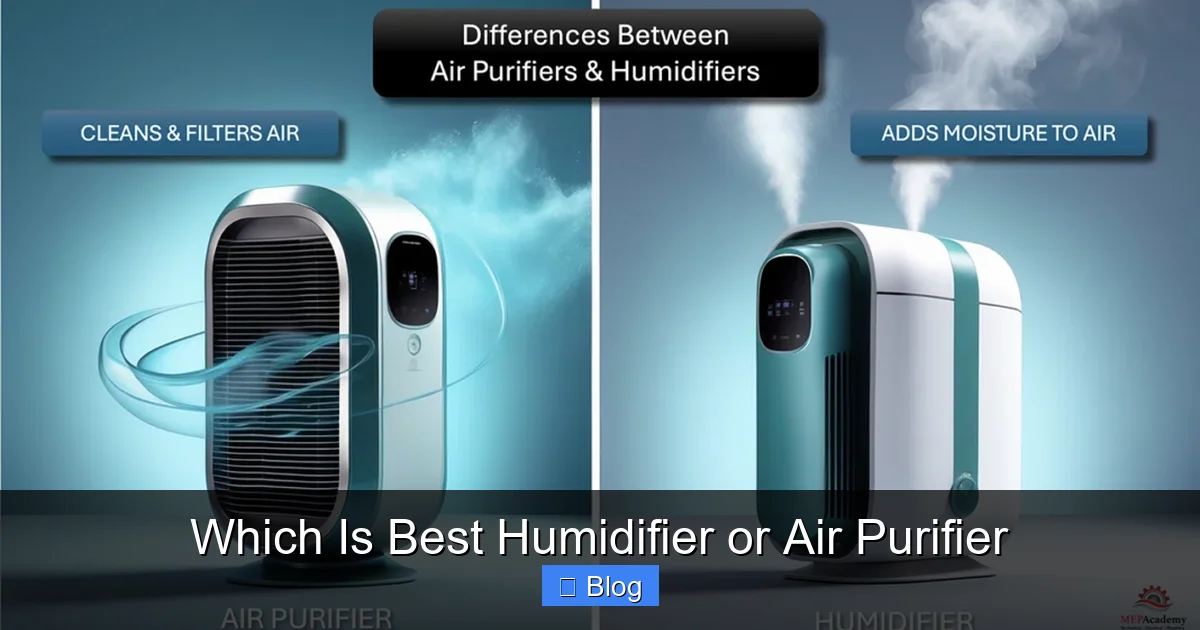
Visual guide about Which Is Best Humidifier or Air Purifier
Image source: mepacademy.com
When Do You Need a Humidifier?
You need a humidifier when the air is simply too dry. This often happens in the winter when heaters are running, stripping moisture from the air. A dry environment can lead to cracked lips, dry nasal passages, and even static electricity shocks. By keeping the air at a healthy 40% to 50% humidity level, you can keep your body feeling hydrated.
Practical Tips for Humidifier Use
Always use distilled water if possible. This prevents mineral buildup, which can create that white dust sometimes seen around cheap humidifiers. Remember to wash the tank out once a week. If you let water sit, it can become a breeding ground for bacteria, and nobody wants to breathe in that!
Comparing the Two: Which Is Best?
Deciding which is best boils down to your specific environment. If you live in a region that is naturally humid but prone to allergens, you do not need a humidifier. Adding more moisture could actually encourage mold growth, which is the last thing you want for your health.
The “Allergies vs. Dryness” Test
If your primary struggle is seasonal allergies or asthma, put your money toward an air purifier first. There is no point in having moist air if that air is still full of dust and pollen. If your struggle is physical discomfort—like dry eyes, throat irritation, or brittle hair—prioritize a humidifier.
Can You Use Both at the Same Time?
Absolutely! In many modern homes, these devices are used in tandem. You can run an air purifier to keep the air clean and a humidifier to keep the environment comfortable. Just make sure they aren’t placed right next to each other. The air purifier might try to suck up the mist from the humidifier, which can cause the filter to get damp and reduce its effectiveness.
Maintenance and Long-Term Costs
Neither of these devices is a “buy it and forget it” tool. They both require ongoing care to keep working correctly. In 2026, we have seen great improvements in self-cleaning technology, but manual maintenance is still the standard rule of thumb.
Filter Replacement for Purifiers
Air purifiers have ongoing costs in the form of replacement filters. A HEPA filter should be changed every 6 to 12 months depending on usage. If you skip this, the motor works harder to push air through a clogged filter, and your air will not be any cleaner.
Cleaning for Humidifiers
Humidifiers require consistent cleaning to ensure safety. Scale buildup is common, especially in areas with hard water. Using a bit of white vinegar to soak the components is a cheap and effective way to keep your unit running for years. If you ignore this, you risk releasing minerals or mold spores into your bedroom.
Choosing the Right Model for Your Space
When you start shopping, pay attention to the square footage ratings. A tiny air purifier meant for a desk will do nothing for a large, open-concept living room. Similarly, a small humidifier won’t do much if you have high ceilings and open doors.
Check for Energy Efficiency
In 2026, most top-rated models are Energy Star certified. This is important because you will likely be running these devices for long periods. Look for “Quiet” or “Sleep” modes if you plan on using them in your bedroom, as some units can be quite loud at full power.
Smart Features to Look For
Many new models now feature built-in sensors. An air purifier with a smart sensor will ramp up the fan speed automatically if it detects poor air quality. A humidifier with a built-in humidistat will shut off once the target humidity is reached, saving you water and electricity.
Final Thoughts on Improving Indoor Air Quality
At the end of the day, there is no single “winner” in the debate of which is best. The humidifier and the air purifier are two different tools for two different jobs. By taking a moment to identify whether you are suffering from airborne contaminants or low humidity, you can make a smart choice that improves your quality of life.
Your home should be your sanctuary. Whether you need the dust-trapping power of an air purifier or the soothing mist of a humidifier, the most important thing is that you take action to create an environment that feels good. Start with the problem you feel most acutely, maintain your device properly, and enjoy the breath of fresh air.
Frequently Asked Questions
Can a humidifier replace an air purifier?
No, a humidifier cannot replace an air purifier. Humidifiers add moisture to the air and have no ability to filter out allergens, dust, or pollutants.
Do air purifiers make the air dry?
Generally, no. Air purifiers simply move air through a filter and do not actively remove water vapor, so they should not change your room’s humidity levels.
Which is better for babies?
It depends on the room. A humidifier is often recommended for nurseries to help with congestion, while an air purifier helps keep the air free of dust and pet dander.
How do I know if I need a humidifier?
Use a simple digital hygrometer to check the humidity. If your indoor levels are consistently below 30-40%, a humidifier will likely help you feel more comfortable.
Do I need to clean both devices?
Yes, both devices require regular maintenance. Neglecting them can lead to mold growth in the water tank of a humidifier or a clogged, ineffective filter in a purifier.
Are there devices that do both?
Yes, there are “2-in-1” units, but they are often more expensive and can be harder to clean. It is usually better to buy high-quality, dedicated units for each task.