Are Bathroom Rugs In Style: Modern Decor Guide
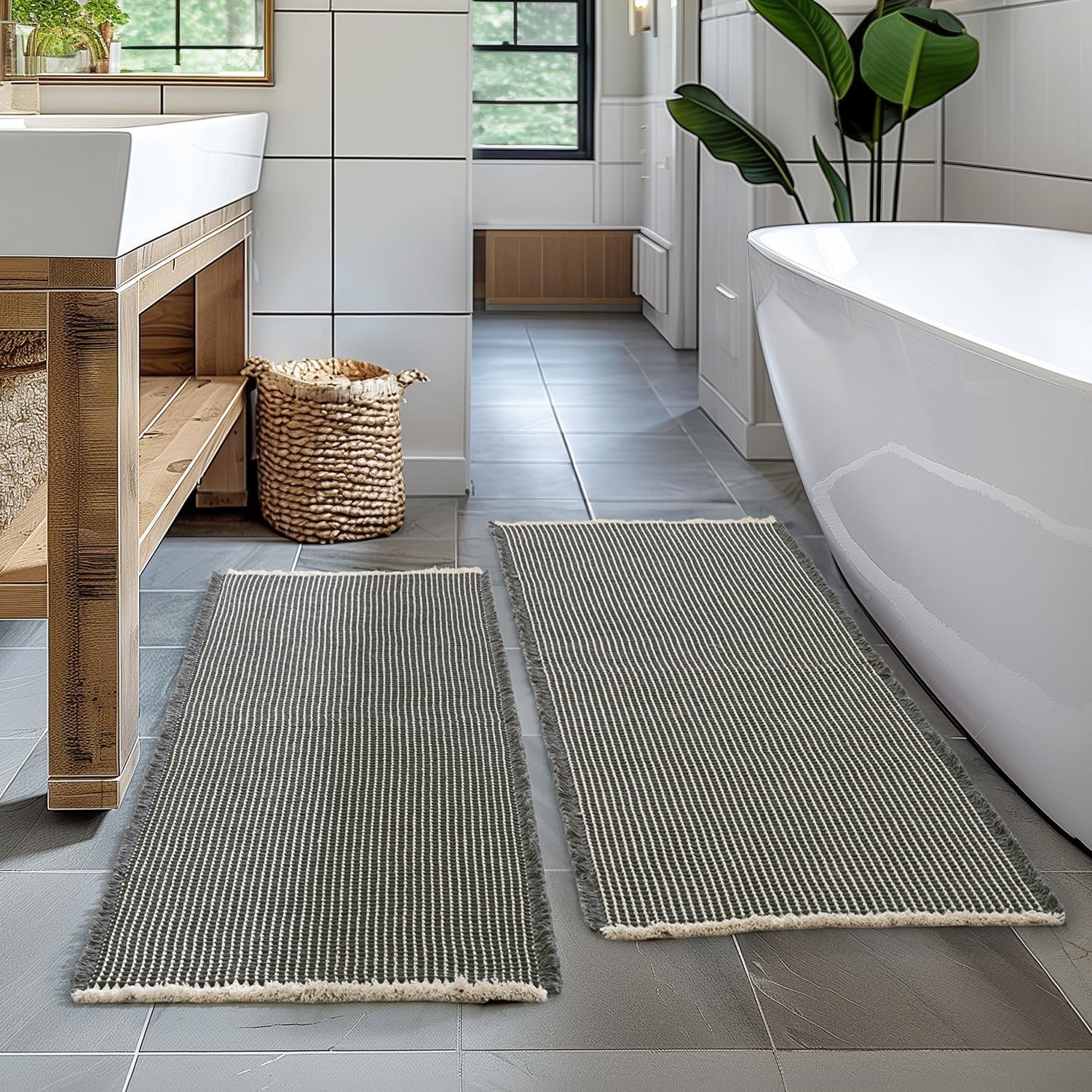
Yes, bathroom rugs are still in style in U.S. homes. The modern look favors simple shapes, low-pile textures, washable fabrics, and colors that connect the bathroom to the rest of the home. A bathroom rug can soften hard floors, add warmth, and make a plain space feel finished.
The best choice depends on more than appearance. Moisture, drying time, rug placement, slip risk, cleaning needs, and bathroom size all affect whether a rug will work well. In most American bathrooms, a low-profile, washable rug or bath mat is a safer and more useful choice than a thick, high-pile carpet.

Why Bathroom Rugs Are Still in Style
Bathroom rugs remain popular because they add comfort and visual balance without requiring a full remodel. Tile, stone, vinyl, and porcelain floors can look cold and hard. A rug adds a soft layer and helps define the area around the vanity, shower, or bathtub.
Current U.S. bathroom design tends to favor rugs that look like home décor rather than purely functional bath mats. Common choices include:
- Flatwoven cotton rugs
- Low-pile washable rugs
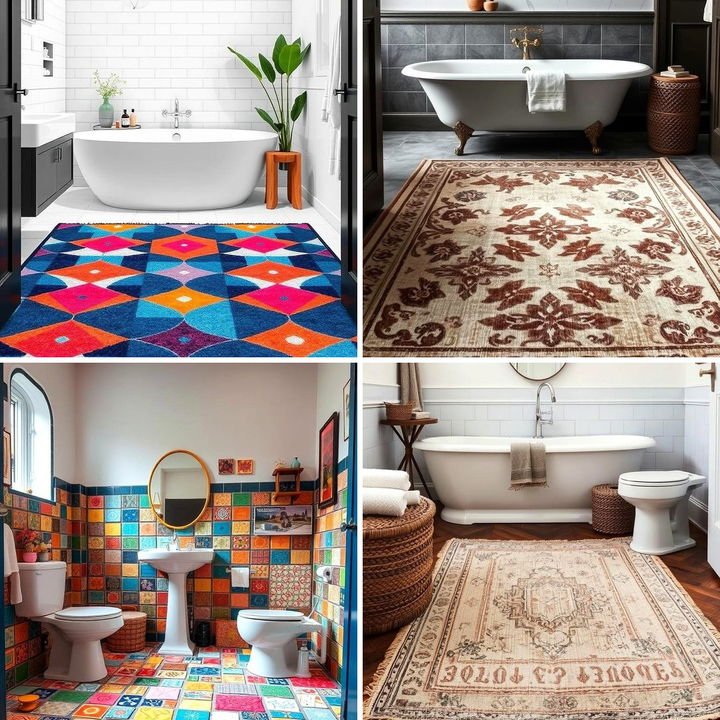
- Small vintage-style rugs
- Simple geometric patterns
- Neutral rugs in cream, gray, tan, black, or muted blue
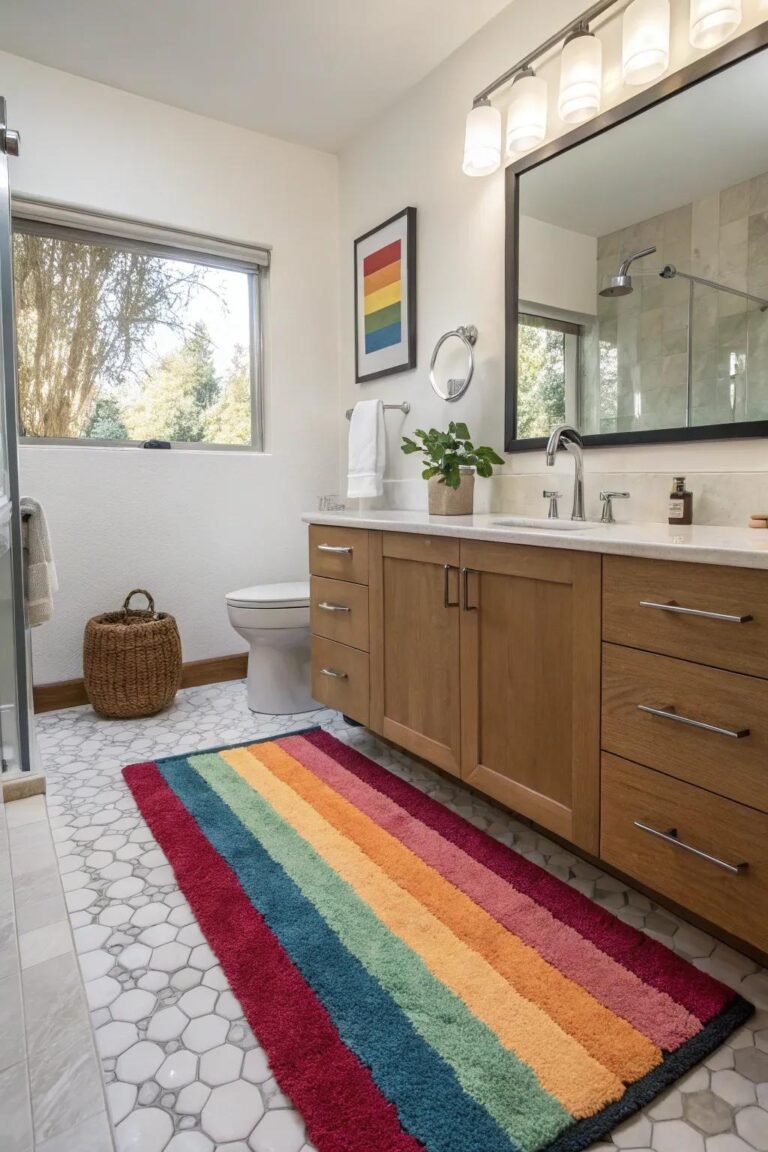
- Narrow runners in larger bathrooms
- Carefully placed accent rugs near a vanity
The key change is placement. Designers and homeowners are less likely to cover the entire bathroom floor with several small mats. Instead, they often use one intentional rug in a spot where it provides comfort and improves the room’s appearance.
A rug can also connect separate colors in the room. For example, a rug with soft blue, white, and tan may tie together blue cabinets, white tile, and wood accents. This makes the bathroom feel planned rather than assembled piece by piece.
Still, style should not replace function. A rug that stays damp, curls at the edges, slides on tile, or traps dirt will make the room less comfortable. The most stylish bathroom rug is one that looks good and suits the room’s moisture level.

Bathroom Rugs vs. Bath Mats
Bathroom rugs and bath mats serve related but different purposes. A bath mat is designed mainly to absorb water and provide a dry surface after a shower or bath. A bathroom rug is usually chosen more for decoration, comfort, or room design.
The terms often overlap in stores, so check the material and care label rather than relying only on the product name.
| Feature | Bath mat | Bathroom rug |
|---|---|---|
| Main purpose | Absorb water and improve footing | Add comfort and visual interest |
| Usual location | Outside a tub or shower | Beside a vanity, in front of a sink, or in an open area |
| Typical materials | Cotton, microfiber, bamboo, rubber-backed fabric | Cotton, wool, synthetic fiber, flatweave fabric |
| Pile | Low or medium | Low, flat, or medium |
| Drying needs | Frequent and fast | Depends on material and location |
| Best use | Wet zones | Drier parts of the bathroom |
A bath mat should be placed where water is most likely to land. A decorative rug usually works better away from direct splashes. Using a decorative rug beside a shower can lead to slow drying, stains, mildew odors, and fabric damage.
A simple rule helps: use a bath mat for water and a rug for design. One item may do both jobs, but it should be labeled for bathroom use and easy to wash.

The Most Stylish Bathroom Rug Trends in the U.S.
The strongest bathroom rug trends are practical as well as attractive. They focus on texture, proportion, and easy care instead of busy decoration.
1. Low-profile and flatweave rugs
Flatweave rugs have little or no raised pile. They create a clean look and are less likely to catch under a door. They also tend to dry faster than thick rugs when they become damp.
They work well in:
- Small bathrooms
- Powder rooms
- Bathrooms with narrow door clearance
- Spaces with modern or Scandinavian design
- Homes that need frequent cleaning
2. Washable rugs
Washable rugs suit busy American households because they can be cleaned more often than delicate floor coverings. They are especially useful in bathrooms used by children, guests, or pets.
Check the care instructions before purchase. “Washable” does not always mean the rug can be washed in a standard home machine. Some rugs require a large-capacity washer, cold water, air drying, or a separate nonslip pad.
3. Vintage-inspired patterns
Vintage-style rugs can add warmth to a bathroom with white tile, plain cabinets, or modern fixtures. Muted patterns often hide small marks better than solid white rugs.
However, avoid placing a valuable antique rug in a wet bathroom. Repeated moisture can damage natural fibers, dyes, and the rug’s backing.
4. Neutral colors with subtle texture
Cream, beige, gray, taupe, and soft brown remain easy choices because they work with many bathroom finishes. Texture keeps a neutral rug from looking flat.
White rugs can look crisp, but they show makeup, hair, dust, and stains quickly. Black rugs hide some marks but may show lint and light-colored residue.
5. Narrow runners
A runner can work well in a long bathroom or in front of a double vanity. It gives the room a connected look instead of leaving separate mats in several places.
Measure the walking path first. A runner should not block drawers, doors, vents, or toilet access.
6. Natural-looking materials
Jute, sisal, wool, and cotton can bring a warm, organic feel to a bathroom. Yet not every natural fiber handles moisture well.
Jute and sisal can absorb water and may become rough, stained, or misshapen. Wool can resist some moisture, but it still needs careful care. Cotton is often easier to wash, though it can stay wet if it is thick.
For a bathroom with frequent splashes, a synthetic fiber or quick-dry cotton blend may be more practical than a delicate natural fiber.

How to Choose the Right Bathroom Rug
Choose a bathroom rug by matching its material, size, shape, and backing to the room. Appearance should be the final filter, not the first one.
Consider the room’s moisture level
A half-bath with only a toilet and sink is usually a drier setting. It can accommodate more decorative rugs, including some low-pile wool or vintage-style designs.
A full bathroom with a shower or tub needs a rug that can handle regular moisture. Look for:
- Quick-drying fabric
- Colorfast materials
- Machine-washable construction
- A stable backing or separate nonslip pad
- Low pile
- Clear care instructions
If the room has poor ventilation, use fewer rugs and choose materials that dry quickly. A bathroom fan, open door, or window can also help reduce moisture.
Measure before buying
Measure the open floor area, then account for doors, cabinets, toilets, and fixtures. Leave enough space for doors and drawers to open fully.
Common rug shapes include:
- Small rectangle: Good beside a tub, shower, or sink
- Runner: Good for long bathrooms or double vanities
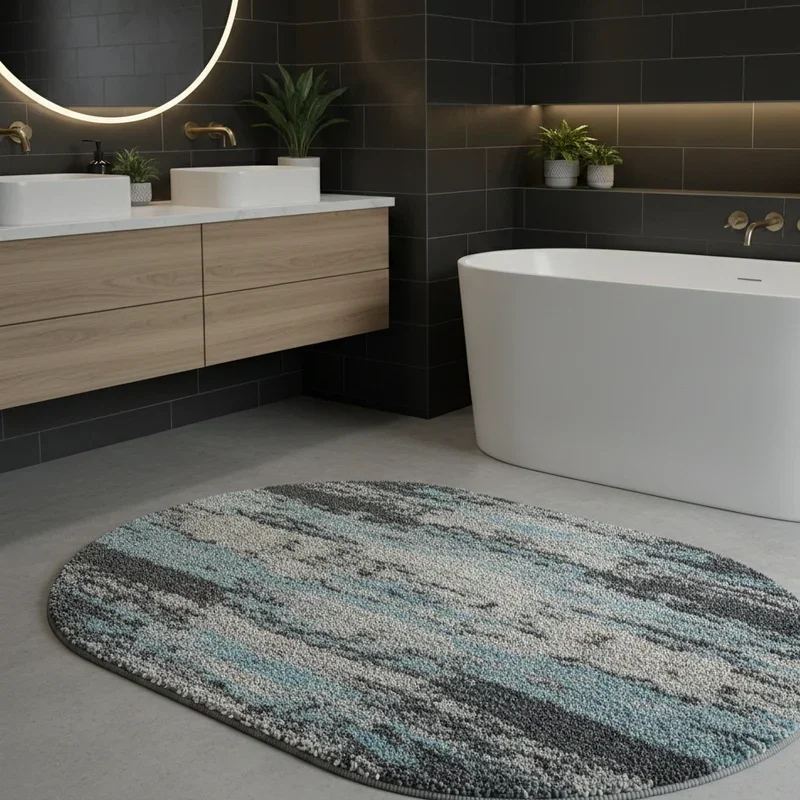
- Round rug: Useful in an open area or powder room
- U-shaped mat: Designed to fit around a toilet base
- Contoured mat: Fits around a pedestal sink or toilet
A rug that is too small may look accidental. A rug that is too large may bunch, block doors, or make the room harder to clean.
Check the pile height
Pile is the height of the rug fibers. Low-pile and flat rugs are usually easier to clean and less likely to interfere with doors.
Thick shag rugs can feel comfortable, but they have drawbacks in bathrooms. They may hold water, take longer to dry, collect hair, and create a trip point. Use them only in a dry powder room or a large space with strong airflow and enough clearance.
Choose the right backing
A rug can slide on smooth tile, vinyl, or stone. Look for a rug with a stable backing or use a separate rug pad designed for the floor type.
Do not assume every rubber or latex backing is safe for every surface. Some backings may discolor vinyl or react with certain floor finishes. Follow the flooring manufacturer’s care instructions, especially with luxury vinyl plank, sealed stone, or newly installed flooring.
A rug pad should lie flat. Replace it if it cracks, curls, becomes brittle, or loses grip.

Are Bathroom Rugs Safe?
Bathroom rugs can be safe when they stay flat, dry at a reasonable rate, and remain stable underfoot. They can also create a hazard if they slide, curl, or cover a wet floor.
The U.S. Consumer Product Safety Commission warns consumers about fall hazards from loose rugs and mats. The Centers for Disease Control and Prevention also identifies falls as a major source of injury, with risk increasing for older adults.
Use these safety steps:
- Choose a rug that lies flat.
- Use a nonslip pad suitable for the floor.
- Keep rug edges away from door swings.
- Replace rugs with curled corners or worn backing.
- Do not place a loose rug over a wet floor.
- Keep electrical cords away from damp rugs and walking paths.
- Check the rug after washing to make sure it still lies flat.
- Avoid thick rugs if they create a step-up at the bathroom entrance.
Children, older adults, and people with balance or mobility limits may need a more cautious setup. In those homes, a low-profile bath mat with a secure grip may be a better choice than a loose decorative rug.
A rug is not a substitute for fixing a leak, improving lighting, or repairing loose flooring. If the floor remains wet, address the water source and ventilation problem first.

Where Should a Bathroom Rug Go?
Place a bathroom rug where it provides comfort without blocking movement or staying wet all day. The best location depends on the room layout.
In front of the sink
This is one of the most useful locations. A small rectangular rug or runner can make standing at the sink more comfortable and protect the floor from small splashes.
Leave enough clearance for cabinet doors and drawers. A rug that folds under a vanity can become a trip hazard.
Outside the shower or bathtub
Use a bath mat here rather than a delicate decorative rug. It should absorb water and remain stable when stepped on with wet feet.
Hang or spread out the mat after use so it can dry. Do not leave it bunched on the floor.
In front of a double vanity
A runner can visually connect a long vanity. Keep it centered and make sure it does not interfere with cabinet doors or a bathroom door.
In a powder room
A powder room is often the best place for a more decorative rug because it has less direct water exposure. A patterned flatweave or vintage-inspired rug can add personality without facing the same moisture demands as a full bathroom.
Around the toilet
A contoured mat may fit around a toilet, but it is not always the cleanest or most current look. A small rectangular mat in front of the toilet can look simpler and may be easier to wash.

What Materials Work Best in a Bathroom?
The best bathroom rug material depends on how much water the room receives and how often the rug will be cleaned.
Cotton
Cotton is soft, common, and often washable. It works well for bath mats and light-use bathrooms.
Its main weakness is drying time. Thick cotton can remain damp for hours, especially in a humid room.
Microfiber
Microfiber can absorb water and dry faster than some thick cotton rugs. It is often practical for shower areas.
Check the backing and washing instructions. Some microfiber mats have coatings or foam layers that require special care.
Polyester and other synthetic fibers
Synthetic fibers often resist stains and offer many color and pattern options. They may be useful in high-use bathrooms, but performance varies by weave, backing, and construction.
A synthetic rug is not automatically mildew-proof. Any damp textile can develop odor if it stays wet.
Wool
Wool can provide a rich, comfortable look in a low-moisture bathroom or powder room. It is not the easiest choice for a shower-side mat.
Wool rugs may shed, need careful cleaning, and react poorly to repeated soaking. Use one only when the room is well ventilated and the rug can remain mostly dry.
Bamboo and wood slats
Bamboo bath mats allow air to move beneath the surface and can create a spa-like look. They do not absorb water like fabric.
They can still become slippery, especially when wet. Inspect the surface, feet, and joints often. Stop using the mat if it splinters, cracks, rocks, or loses stability.
Rubber and foam
Rubber-backed and foam mats can offer cushioning and water resistance. Their safety depends on grip, floor compatibility, and condition.
Some materials can trap moisture beneath the mat. Lift the mat regularly to inspect the floor and allow both surfaces to dry.

How to Keep Bathroom Rugs Clean and Fresh
Clean bathroom rugs based on use, moisture, and care instructions. A rug that looks clean may still hold skin oils, hair, dust, and moisture.
Follow this routine:
- Shake out or vacuum the rug regularly.
- Hang damp mats so air can reach both sides.
- Wash fabric rugs according to the label.
- Dry them fully before returning them to the floor.
- Lift the rug during routine floor cleaning.
- Clean the floor beneath the rug.
- Inspect the backing for cracks, peeling, or odor.
- Replace rugs that remain musty after washing.
Do not mix cleaning chemicals. In particular, never combine bleach with ammonia or acidic products, because dangerous gases can form.
Mold and mildew often point to a moisture problem rather than a simple cleaning problem. The U.S. Environmental Protection Agency recommends controlling moisture and drying wet areas promptly. If a rug stays damp because of poor ventilation, a leak, or water entering from a shower, fix that cause before buying another rug.
A bathroom rug does not need to be discarded at the first small stain. Replace it when the backing breaks down, the edges curl, the fabric no longer dries, or the odor returns after proper washing.
Common Bathroom Rug Mistakes
Several choices can make a bathroom rug look dated or perform poorly.
Using too many small mats
Several mats around the toilet, sink, tub, and shower can make the floor look busy. They also create more edges that can curl or move.
One well-sized rug or one bath mat often creates a cleaner look.
Choosing a rug that is too thick
A thick rug may feel soft but can block doors and hold moisture. Measure the gap under the door before buying.
Ignoring the backing
A beautiful rug without a stable base may slide on smooth flooring. Add a compatible nonslip pad or choose a rug designed for bathroom use.
Using a delicate rug in a wet zone
Silk, fragile vintage textiles, untreated jute, and other delicate materials may not tolerate repeated splashes. Save them for areas that remain dry.
Leaving the mat on the floor all day
A damp mat pressed against the floor can trap moisture. Hang it or spread it out after use.
Matching everything too closely
A rug does not need to match the shower curtain, towels, and wall color exactly. Choose one or two colors that support the room instead of repeating every color.
Buying by appearance alone
Photos do not show pile height, drying time, backing quality, or care demands. Read the specifications and measure the space before purchase.

Bathroom Rug Decision Guide
Use this quick guide to narrow your options.
| Your bathroom condition | Best starting choice | What to avoid |
|---|---|---|
| Small full bathroom | Low-profile washable mat | Thick shag rug |
| Powder room | Flatweave decorative rug | Oversized runner |
| Double vanity | Narrow runner | Rug that blocks drawers |
| Older adult’s bathroom | Flat, secure, low-profile mat | Loose edges and unstable pads |
| High-humidity bathroom | Quick-dry synthetic or light cotton | Thick, slow-drying fibers |
| Rustic bathroom | Simple woven or natural-look rug | Untreated fiber in a wet zone |
| Rental bathroom | Washable rug with removable pad | Adhesive products that may damage flooring |
| Luxury vinyl floor | Compatible pad and breathable rug | Unverified rubber backing |
These are starting points, not universal rules. The floor type, ventilation, household needs, and rug construction can change the best choice.

Frequently Asked Questions
Are bathroom rugs outdated?
No. Bathroom rugs are not outdated, but the style has become more deliberate. Low-profile rugs, washable mats, runners, and muted patterns usually look more current than bulky, heavily matched bath-mat sets.
Should a bathroom rug match the towels?
It can coordinate with the towels, but it does not need to match them exactly. A rug that repeats one accent color or complements the towels often looks more natural than a perfect color match.
Can you use a regular area rug in a bathroom?
You can use a regular area rug in a dry powder room if it lies flat and does not block doors. In a full bathroom, choose a material and backing that can handle moisture and frequent cleaning.
Are shag rugs good for bathrooms?
Shag rugs are usually not the best choice near a shower or tub. Their deep fibers can hold water, collect hair, and dry slowly. They may work in a dry powder room if the pile does not create a trip or door-clearance problem.
How often should you wash a bathroom rug?
Wash it according to use and moisture. A mat used daily beside a shower may need frequent washing, while a decorative rug in a powder room may need less frequent cleaning. Always dry it fully before putting it back.
Do bathroom rugs need a nonslip pad?
Many bathroom rugs benefit from a nonslip pad, especially on smooth tile, vinyl, or stone. Use a pad made for the specific floor and inspect it regularly for movement or deterioration.

Key Takeaways
- Bathroom rugs are still in style in the United States.
- The most practical current look uses low-profile, washable, and well-placed rugs.
- Use a bath mat for wet areas and a decorative rug in drier spaces.
- Measure around doors, cabinets, toilets, and fixtures before buying.
- Choose a stable backing or compatible nonslip pad.
- Hang damp rugs so they dry fully.
- Replace rugs with curled edges, damaged backing, or lasting odor.
- Safety and moisture control matter more than a trend.
Conclusion
Bathroom rugs remain a useful design choice when they fit the room and its moisture level. The most reliable option for a full bathroom is usually a low-pile, washable rug or bath mat with a stable base.
For a powder room, you have more freedom to use decorative patterns, natural textures, or vintage-inspired designs. For any bathroom, measure first, keep the rug flat, and choose a material that can dry and be cleaned with ease.