How Often To Change Bathroom Rugs: Easy Guide
In most U.S. homes, replace a bathroom rug when it stays damp, smells musty, shows mold, sheds fibers, or has a worn backing. With proper care, a good-quality bathroom rug may last one to two years. A heavily used rug may need replacement in six to 12 months, while a lightly used rug can last longer.
Wash bathroom rugs about once a week. Wash them sooner if they become wet, visibly dirty, or exposed to bodily fluids. Cleaning keeps a rug usable, but it does not make a damaged or moldy rug safe to keep.
Quick answer
Use this simple guide:
- Wash: Weekly in most homes.
- Replace: Usually every one to two years.
- Replace sooner: If the rug stays damp, smells bad after washing, has mold, loses its grip, or begins to fall apart.
- Wash more often: If several people use the bathroom, children use it, pets enter the room, or someone in the home is ill.
- Dry fully: After every wash and whenever the rug becomes wet.
There is no single U.S. rule that sets a fixed replacement date for bathroom rugs. The right schedule depends on moisture, foot traffic, material, washing habits, and the rug’s condition.

Why bathroom rugs need regular cleaning and replacement
Bathroom rugs collect moisture, skin oils, hair, dust, and small amounts of dirt from feet. A rug near a shower or bathtub may stay damp for hours. That damp setting can support mildew and mold growth.
A bathroom rug also sits close to the toilet. Flushing can spread tiny droplets into the surrounding area, especially when the lid is open. This does not mean every rug becomes hazardous after one use. It does mean that regular cleaning is sensible.
The backing can create another problem. Rubber, latex, or PVC backing may crack, peel, or become brittle over time. Loose pieces can stick to the floor, while a worn rug may slide under your feet. A bathroom rug that no longer stays flat can become a slip or trip hazard.
The U.S. Environmental Protection Agency advises controlling moisture to help prevent mold. Its guidance emphasizes fixing leaks, drying wet materials, and keeping indoor humidity under control. A damp rug is one small part of that larger moisture issue.
Bath mat versus bathroom rug
People often use these terms as if they mean the same thing:
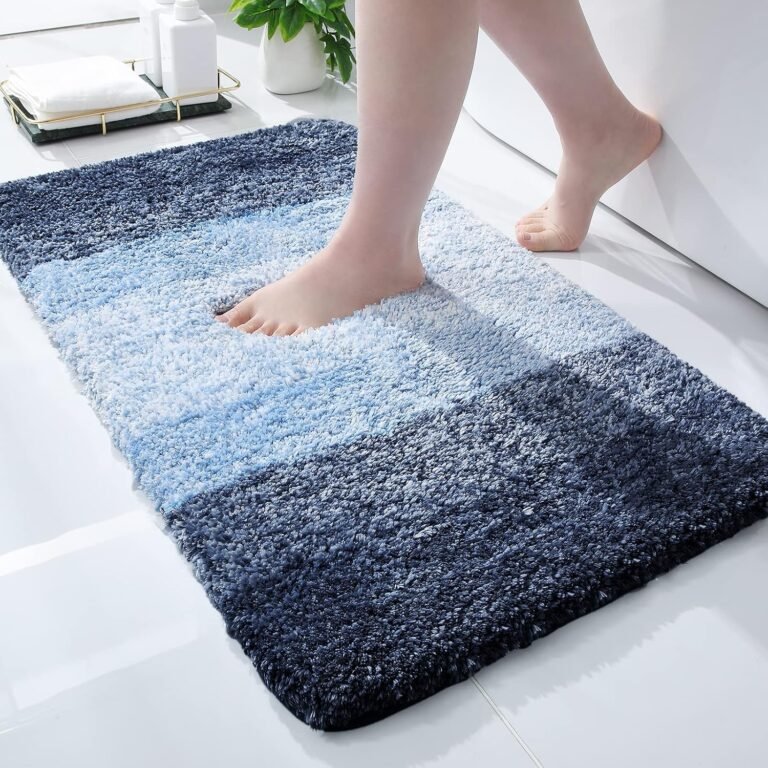
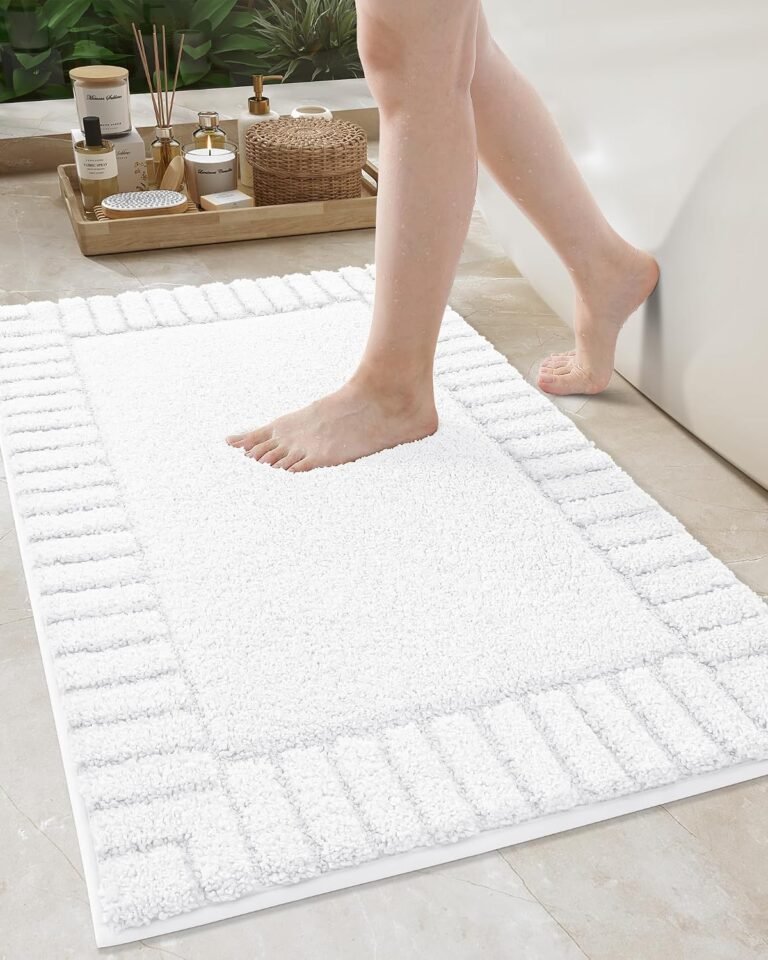
- A bath mat usually sits beside a tub or shower and absorbs water from wet feet.
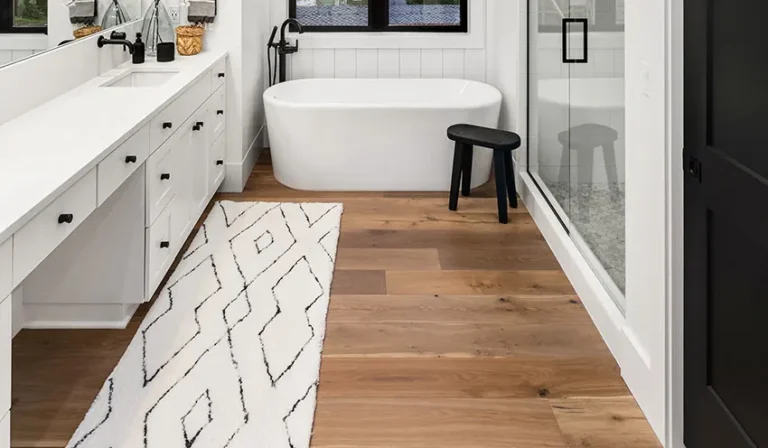
- A bathroom rug may sit near a sink, toilet, or vanity and may be more decorative.
- A toilet rug is shaped to fit around the base of a toilet. Its shape can make cleaning more difficult.
- A non-slip mat uses a textured or coated underside to reduce movement.
The care schedule differs by location. A mat beside the shower often needs more frequent washing than a rug near a dry vanity. A toilet rug may need close attention because it sits in a higher-contamination area and can trap moisture around its cutout.

How often should you wash bathroom rugs?
Wash most bathroom rugs once a week. This is a practical starting point, not a universal rule. The correct interval depends on how wet and busy the bathroom is.
Use this schedule as a guide:
| Bathroom use | Suggested washing schedule |
|---|---|
| One person, low use, good ventilation | Every 1–2 weeks |
| Two or more people, daily showers | Weekly |
| Children, pets, or frequent guests | Every 3–7 days |
| Rug beside a wet shower or tub | Weekly or more often |
| Rug exposed to urine, vomit, feces, or other body fluids | Wash promptly, following the care label |
| Rug that stays damp | Dry it at once and review the ventilation or replacement need |
These intervals are practical hygiene guidance rather than a legally required standard. If the rug remains wet between uses, washing alone will not solve the problem. Hang it so air can reach both sides, improve bathroom ventilation, or replace it with a faster-drying mat.
Wash bathroom rugs safely
Before washing, check the sewn-in care label. It may limit water temperature, detergent type, bleach use, or drying method.
A general process is:
- Shake the rug outdoors or over a trash can to remove loose hair and dirt.
- Check the backing for cracks, peeling, or sticky areas.
- Wash the rug separately or with similar items if the care label allows it.
- Use the recommended water temperature and detergent.
- Do not use chlorine bleach unless the label permits it.
- Dry the rug fully before putting it back on the floor.
- Clean the floor below the rug before replacing it.
Do not place a rubber-backed rug in a hot dryer unless the manufacturer allows it. High heat can damage the backing. It may also cause the backing to curl or break away from the fabric.
If a rug has been exposed to body fluids, wear disposable gloves while handling it. Keep contaminated laundry away from clean clothing and linens. Follow the care label and the U.S. Centers for Disease Control and Prevention’s general laundry hygiene advice.

When should you replace a bathroom rug?
Replace a bathroom rug when cleaning no longer restores a clean, dry, safe surface. Age alone is not the only test. A newer rug can need replacement quickly if it is poorly ventilated or used heavily.
Look for these signs:
1. The rug smells musty after washing
A lasting musty smell may mean that moisture or mold remains in the fibers or backing. Wash the rug once according to its care label and dry it completely. If the odor returns, replacement is usually the better choice.
Do not cover the smell with fragrance sprays. A scent can hide the problem without removing the moisture source.
2. You can see mold or mildew
Small surface spots may sometimes come out during proper laundering. If mold remains, spreads, or returns after cleaning and complete drying, discard the rug.
Porous materials can hold mold below the visible surface. Cutting out one stained area may not remove the full problem. Do not shake a moldy rug indoors, since that can spread particles.
3. The backing is cracked, peeling, or sticky
A damaged backing can leave residue on tile, vinyl, or wood floors. It can also reduce the rug’s stability. Replace the rug rather than trying to glue the backing back into place.
4. The rug slides or curls
A rug that moves when stepped on creates a fall risk. Curling edges can catch toes. This matters even more for older adults, young children, and anyone with balance or mobility limits.
A rug pad may help with a sound rug, but it is not a reliable fix for a backing that is breaking down.
5. The rug no longer dries
A thick rug that stays wet for most of the day may not suit the bathroom. Replace it with a thinner, quick-drying design or improve air flow. A fan, open door, or open window can help remove moisture, where safe and practical.
6. The fibers are thinning or coming loose
Worn fibers can trap soil and make the rug harder to clean. Loose threads can also create a trip hazard. Replace the rug when it no longer lies flat or sheds heavily.
7. The rug has permanent stains or damage
A stain alone does not always make a rug unsafe. Replace it when the stain comes with odor, mold, damaged fibers, or a coating that cannot be cleaned according to the care label.

How long do different bathroom rugs last?
A typical replacement range is six months to two years, but the material and use pattern matter more than a calendar date.
| Rug type | Common replacement range | Main concern |
|---|---|---|
| Thin cotton bath mat | About 6–18 months | Flattening, staining, slow drying |
| Microfiber mat | About 1–2 years | Fiber wear and loss of absorbency |
| Thick memory-foam mat | About 1–2 years | Trapped moisture and damaged foam |
| Rubber- or latex-backed rug | About 1–2 years | Cracking, peeling, and floor residue |
| Washable fabric rug without fragile backing | Often 1–3 years | Fraying, fading, and shape loss |
These are practical estimates, not laboratory life ratings. A rug used by one person in a well-ventilated bathroom may last longer. A rug used by a large household may wear out much sooner.
A simple replacement calculation
This hypothetical example shows why use matters:
- A household washes a rug once each week.
- The rug receives about 52 wash cycles each year.
- After two years, it has gone through about 104 wash cycles.
- If the backing begins to crack at that point, replacement is reasonable even if the fabric still looks attractive.
Another rug may be washed three times per week. In one year, it would receive about 156 wash cycles. That heavier use can shorten its life.
The number of wash cycles is not a guaranteed lifespan. It simply helps explain why two rugs of the same type may age at different rates.

How to make bathroom rugs last longer
The best way to extend a rug’s life is to reduce the time it stays wet and avoid damaging the backing.
Dry the rug after each use
Hang the rug over a shower bar, drying rack, or other clean surface that allows air to reach both sides. Do not fold a wet rug over itself.
Improve bathroom ventilation
Run the exhaust fan during a shower and for about 20 minutes afterward if the fan and home setup allow it. The U.S. Department of Energy notes that bathroom exhaust fans help remove moisture and odors from indoor air.
Make sure the fan vents outdoors rather than into an attic or another enclosed space. If you are unsure where it vents, a qualified professional can inspect it.
Follow the care label
The care label is the best source for wash temperature, drying limits, and bleach instructions for that specific rug. Do not assume that a machine-washable rug can also tolerate high heat.
Keep the rug off standing water
Fix leaks near the toilet, sink, tub, or shower. A rug should absorb normal splashes, not sit in a puddle. Remove it while repairing a leak so the floor and rug can dry fully.
Keep the floor clean
Dirt under a rug can scratch some floors and transfer back into the rug. Vacuum or sweep the floor when you wash the rug.
Rotate two rugs
Using two washable rugs can reduce wear. One rug can dry while the other is in use. This does not replace regular washing, but it can reduce the time each rug spends wet.
Choose the right rug for the room
For a wet shower area, look for a rug that:
- Dries quickly
- Has a stable, intact backing
- Fits without curling at the edges
- Can be washed as directed
- Does not block a door or create a trip point
No rug is automatically slip-proof. A product claim such as “non-slip” does not remove the need to check the rug on your own floor.
Common bathroom rug mistakes
Several habits can shorten a rug’s life or increase risk.
Leaving a wet rug on the floor
A wet rug pressed against a hard floor dries slowly. It may stain the floor, develop an odor, or support mold growth. Hang it up after bathing.
Using too much detergent
Extra detergent can stay in the fibers and attract more dirt. Use the amount listed on the product label unless the rug’s care instructions say otherwise.
Using fabric softener on absorbent mats
Fabric softener can leave a coating that reduces absorbency. Check the care instructions before using it.
Putting a damaged rubber-backed rug in a hot dryer
Heat can make some backings crack or peel. Air-dry the rug when the care label requires it.
Reusing a moldy rug
A strong wash may not remove mold from deep fibers or backing. If mold returns, discard the rug and address the moisture source.
Using a loose rug pad in a wet area
A pad can bunch, shift, or hold moisture. Use only a pad designed for the floor type and bathroom conditions. Keep both the pad and rug dry.
Ignoring the floor underneath
A clean-looking rug can hide moisture damage or mold on the floor. Inspect the floor whenever you wash the rug, especially around the toilet and tub.

Can you keep a bathroom rug if it is old but clean?
Yes. Replace a bathroom rug based on condition, not age alone. An older rug can remain useful if it washes well, dries fully, lies flat, has an intact backing, and has no lasting odor or mold.
Replace it even if it looks clean when it slides, curls, sheds, stays damp, or has damaged backing. Safety and moisture control matter more than appearance.
Should you replace a bathroom rug after mold?
Replace the rug if mold remains after cleaning, returns after drying, or has reached the backing. Also fix the moisture problem. Otherwise, a new rug may develop the same issue.
For a small washable item, follow the care label and CDC cleaning guidance. If mold affects a larger area of the bathroom, keeps returning, or occurs after water damage, consider help from a qualified mold or water-damage professional.
Are toilet rugs less hygienic than regular bath mats?
Not automatically, but toilet rugs can be harder to clean. Their shaped cutout may fit closely around the toilet base and trap moisture or soil. Wash them regularly and replace them if they develop odor, stains, mold, or a damaged backing.
A flat, washable mat may be easier to clean than a contoured toilet rug.
How often should bathroom rugs be replaced in a home with pets?
Inspect them often and wash them at least weekly. Replace them when pet hair, odor, stains, or moisture remains after washing. If pets regularly enter the bathroom, a thin washable mat may be easier to maintain than a thick rug.
What is the best bathroom rug material?
No single material is best for every U.S. bathroom. Cotton is washable and absorbent but may dry slowly. Microfiber often dries faster. Thick foam can feel soft but may hold moisture. Rubber-backed rugs can stay in place, but the backing may crack with age or heat.
Choose the material that matches the room’s drying conditions and your care routine.
Key takeaways
- Wash most bathroom rugs once a week.
- Replace a rug when it smells musty, shows mold, stays damp, slides, curls, or has damaged backing.
- A reasonable replacement range is six months to two years, depending on use and care.
- Dry rugs fully after washing and after each wet use.
- Do not use a damaged rug pad or rely on a worn backing to prevent slips.
- Fix leaks and improve ventilation if the rug remains wet.
Final recommendation
Inspect each bathroom rug once a week when you clean it. Wash it according to the care label, hang it to dry, and check the backing and floor underneath. Replace the rug when it no longer dries, stays clean, or remains stable underfoot.