How To Fluff Up A Bathroom Rug: Easy Care Tips
A flat bathroom rug often needs only a good shake, gentle cleaning, and the right drying method. For most rugs in U.S. homes, start by removing loose dirt, lifting the fibers with a soft brush, and drying the rug fully. Use low or no heat unless the care label says the rug can handle a dryer.
Introduction
Bathroom rugs in American homes face daily foot traffic, damp air, soap residue, and repeated washing. These factors can press the pile flat and make a rug feel thin or stiff.
The safest way to fluff up a bathroom rug depends on its material and backing. A cotton rug may tolerate machine washing and low heat. A memory foam, rubber-backed, or wool rug needs more care.

The Best Way to Fluff Up a Bathroom Rug
Use this simple process before trying stronger methods:
- Check the care label.
- Take the rug outside and shake it well.
- Vacuum both sides on a low setting.
- Brush the pile with a soft-bristle brush.
- Wash the rug only if the label allows it.
- Dry it fully with little or no heat.
- Brush the fibers again after drying.
This method removes dust and residue while helping the fibers stand up. It also lowers the risk of shrinking the rug or damaging its backing.
Step 1: Read the care label
Look for instructions about:
- Machine washing
- Water temperature
- Bleach
- Dryer use
- Heat level
- Air drying
- Professional cleaning
If the label is missing, treat the rug as delicate. Avoid hot water, high heat, and strong agitation until you know the material.
Step 2: Shake out loose dirt
Take the rug outdoors and shake it over a clean, dry surface. This loosens hair, dust, sand, and dry soap particles.
Do not shake a damp rug indoors. Moisture can spread mildew spores and make dust stick to the floor.
Step 3: Vacuum both sides
Place the rug flat. Vacuum the top with low suction if possible. Then turn it over and vacuum the backing.
Avoid using a rotating brush bar on long, shaggy fibers. The brush can pull loops, twist the pile, or damage a rubber backing.
Step 4: Brush the fibers
Use a soft carpet brush, upholstery brush, or clean clothes brush. Work in short strokes against the direction of the flattened pile.
Do not use a stiff wire brush. It can tear cotton loops, split synthetic fibers, and scrape the backing.

How to Fluff a Bathroom Rug in the Dryer
A dryer can help fluff some bathroom rugs, but only when the care label permits it. Use the air-fluff or no-heat setting first. If the rug remains damp, use the lowest heat setting allowed by the label.
Follow these steps:
- Remove loose dirt from the rug.
- Place the rug in the dryer by itself.
- Choose air fluff or no heat.
- Run the dryer for about 10 to 20 minutes.
- Stop the cycle and check the rug.
- Shake and brush the rug.
- Repeat only if needed.
Do not use high heat on rugs with:
- Rubber or latex backing
- Memory foam
- Adhesive layers
- Plastic grip dots
- Heat-sensitive synthetic fibers
heat can make rubber crack, curl, or peel. It can also shrink natural fibers and damage foam.
Can you add dryer balls?
Dryer balls may help separate fibers in a washable rug. Use them only if the care label allows tumble drying.
Avoid tennis balls. They may transfer dye or odor, and their hard surface can damage a delicate rug or backing.
If you use dryer balls, choose clean wool dryer balls or soft dryer balls. Use two or three, and stop the cycle if the rug begins to curl.

How to Fluff a Bathroom Rug Without a Dryer
Air drying is the safest choice for many bathroom rugs. It is especially useful for memory foam, rubber-backed, bamboo, and delicate rugs.
After washing, follow these steps:
- Press out extra water with clean towels.
- Do not twist or wring the rug.
- Lay it flat on a dry surface.
- Smooth the edges and reshape the rug.
- Turn it over during drying.
- Brush the pile when the rug is almost dry.
- Let it dry completely before placing it on the floor.
Good air circulation helps the rug dry faster. Use a fan nearby, but do not aim intense heat at the rug.
Do not hang a heavy, wet rug from one end. The weight can stretch the rug and cause permanent warping.
How to fluff a memory foam bathroom rug
Memory foam bathroom rugs should usually be air-dried. A dryer can damage the foam and make the rug lose its shape.
To refresh one:
- Shake it gently.
- Vacuum with low suction.
- Spot-clean stains.
- Press out moisture with towels.
- Lay it flat to dry.
- Massage the foam gently with your hands after drying.
Do not fold a wet memory foam rug. Folding can create creases that are hard to remove.
How to fluff a rubber-backed bathroom rug
Rubber-backed rugs need low moisture and low heat. Check the backing for cracks or peeling before washing.
If the backing feels brittle, sticky, or damaged, avoid the washer and dryer. Clean the rug by hand and replace it if the backing no longer lies flat. A damaged backing can become a slip hazard.

How to Fluff a Bathroom Rug by Material
Different fibers respond to different care methods. Use the table below as a starting point, then follow the label for your rug.
| Rug material | Safer fluffing method | Avoid |
|---|---|---|
| Cotton | Wash, shake, brush, and dry on low if allowed | High heat and over-drying |
| Polyester microfiber | Low-suction vacuum, gentle wash, air dry or low heat | Fabric softener buildup |
| Chenille | Shake, brush gently, and air dry when possible | Aggressive brushing |
| Memory foam | Spot-clean and air dry flat | Dryer heat and wringing |
| Rubber-backed | Gentle cleaning and flat drying | High heat and harsh chemicals |
| Wool | Shake, vacuum gently, and air dry flat | Hot water, strong agitation, and heat |
| Bamboo or wood-fiber blend | Gentle wash if approved and flat dry | Soaking and high heat |
Cotton bathroom rugs
Cotton rugs often become flat because the loops compress. Washing can remove body oils, soap, and dust that weigh down the fibers.
Use a mild detergent and the water temperature listed on the label. Avoid chlorine bleach unless the manufacturer permits it. Bleach can weaken fibers and damage colored rugs.
Microfiber rugs
Microfiber rugs can hold fine dust and cleaning residue. Wash them separately from towels when possible.
Skip fabric softener. It can coat the fibers and reduce absorbency. Shake the rug after washing, then dry it on air fluff or low heat if approved.
Wool bathroom rugs
Wool fibers can shrink or felt when exposed to heat, water, and friction. Shake or vacuum the rug gently instead of washing it unless the care label clearly allows washing.
For a small wool rug, lay it flat and reshape it while damp. Keep it away from direct heat and strong sunlight.
Chenille rugs
Chenille has a soft, raised surface that can flatten easily. Brush it lightly in the direction of the pile. Strong brushing may pull the yarn from the base.
How to Fix a Bathroom Rug That Is Matted or Stiff
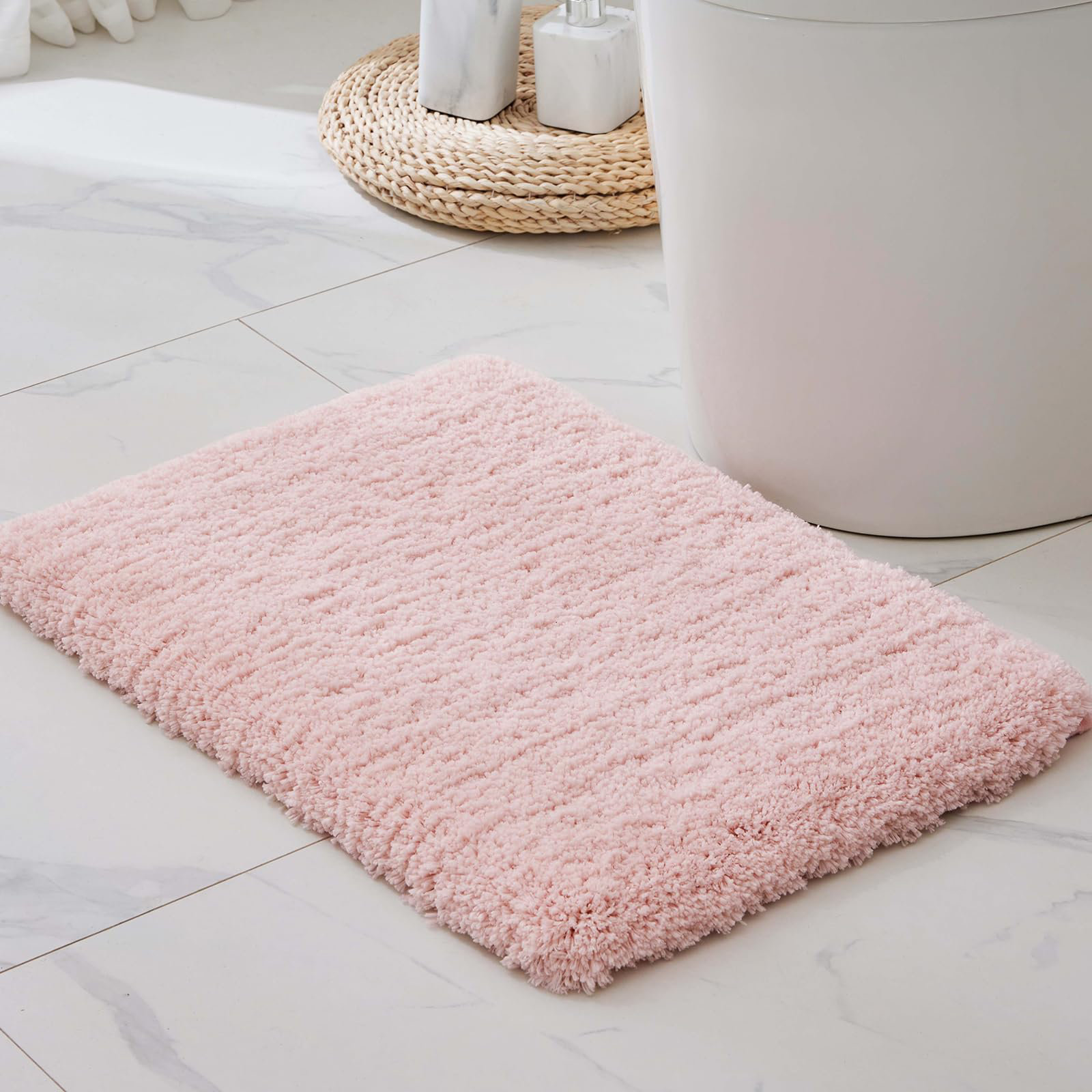
A flat rug is not always dirty. The fibers may be crushed by foot traffic, or they may be coated with soap and detergent residue.
Try this sequence:
- Vacuum the rug.
- Test a small hidden area with a damp cloth.
- Wash with the correct detergent if the label allows.
- Rinse well.
- Dry completely.
- Brush the pile in several directions.
If the rug feels stiff after washing, it may have detergent buildup. Run an extra rinse cycle if the care label permits. Do not add vinegar, bleach, or other cleaners unless the manufacturer approves them.
When the pile will not lift
The rug may have permanent fiber compression. This is common in high-traffic areas and near the shower or tub.
Signs of permanent wear include:
- Thin spots
- Frayed yarn
- Bald patches
- Cracked backing
- Flattening that returns after cleaning
- A change in texture that does not improve when dry
No fluffing method can restore fibers that have broken or worn away. Replacement may be safer than continued use if the rug slips or the backing is damaged.
When the rug smells musty
A musty smell usually points to trapped moisture or slow drying. Wash the rug according to its label and dry it fully before using it again.
Clean and dry the floor beneath the rug as well. If the smell remains, inspect the backing and nearby floor for mold or water damage. Do not use a rug with visible mold growth if it cannot be cleaned safely.

Common Mistakes That Flatten or Damage Bathroom Rugs
Avoid these errors when trying to restore a bathroom rug:
Using high heat
High heat can shrink fibers, melt synthetic parts, and damage rubber or latex backing. Choose air fluff or low heat when allowed.
Washing with too much detergent
Extra detergent does not make a rug cleaner. It can leave a coating that makes fibers stiff and attracts more dirt.
Adding fabric softener
Fabric softener may reduce the absorbency of cotton and microfiber rugs. It can also leave a residue that weighs down the pile.
Brushing too hard
Hard brushing can pull loops and damage delicate yarn. Start with a soft brush and light pressure.
Drying only the top
A rug may feel dry on top while the backing remains damp. Moisture trapped under the rug can cause odor, mildew, or floor damage.
Placing it back on a wet floor
Dry the bathroom floor before replacing the rug. A dry floor helps keep the rug fresh and lowers the risk of slipping.
Ignoring a damaged backing
A rug that curls, slides, or peels may be unsafe. Fluffing the surface will not repair a failing backing.

How to Keep a Bathroom Rug Fluffy Longer
Regular care helps prevent deep flattening:
- Shake the rug each week.
- Vacuum with low suction as needed.
- Wash it before dirt and soap build up.
- Dry it fully after every wash.
- Rotate the rug to spread foot traffic.
- Use a rug pad only if it is approved for the floor type.
- Keep the rug away from standing water.
- Avoid placing heavy furniture on it.
- Follow the care label each time.
Wash the rug when it feels oily, looks dull, or develops an odor. Frequent washing is not always better. Too much agitation can wear down fibers and backing.
A rug with a thick pile may need brushing after each wash. A thin cotton mat may only need shaking and flat drying.

Quick Decision Guide
Use this guide to choose the safest method:
- Slightly flat but clean: Shake, vacuum, and brush.
- Flat and dirty: Wash according to the label, then dry fully.
- Damp or musty: Clean, improve air flow, and dry both sides.
- Memory foam: Air dry flat; do not use high heat.
- Rubber-backed: Use low heat or air dry; inspect the backing.
- Wool: Avoid heat and strong agitation.
- Cracked or peeling backing: Replace the rug if it creates a slip risk.
- Bald or worn fibers: Fluffing will not restore missing material.
The main trade-off is speed versus safety. A dryer may fluff a washable cotton rug faster, but air drying is safer for foam, rubber, wool, and unknown materials.

Frequently Asked Questions
Can I use a steamer to fluff a bathroom rug?
Steam may loosen some crushed fibers, but it can also add moisture to the backing. Avoid steaming rubber-backed, memory foam, or delicate rugs unless the manufacturer approves it. If you use steam on a washable fabric rug, keep the steamer moving and let the rug dry fully.
Does baking soda make a bathroom rug fluffy?
Baking soda can help absorb some odors, but it does not restore crushed fibers. Fine powder may also remain in the pile or backing. Use it only when the care instructions allow it, and vacuum the rug well afterward.
Why is my bathroom rug flat after washing?
The pile may be compressed by the wash cycle, coated with detergent, or damaged by heat. Extra rinsing, low-suction vacuuming, gentle brushing, and complete drying may help. If the fibers are worn or broken, the flattening may be permanent.
How often should I wash a bathroom rug?
Wash it when it becomes visibly dirty, smells musty, feels oily, or no longer dries well. The right schedule depends on foot traffic, moisture, pets, and the rug material. Always follow the care label.
Can I put a rubber-backed bathroom rug in the dryer?
Only if the care label permits it. Use air fluff or the lowest approved heat setting. High heat may crack, curl, or loosen the backing.
Conclusion
To fluff up a bathroom rug, start with the least aggressive method: shake it, vacuum it, and brush the pile. If the care label allows washing, remove buildup with a gentle cycle and dry the rug fully. Use air drying for memory foam, wool, rubber-backed rugs, and any material that may react badly to heat.
If the rug still feels flat after cleaning and brushing, check for worn fibers or damaged backing. A rug with a slipping or peeling base should be replaced rather than forced back into shape.