What Is A Contour Rug For The Bathroom: Explained
Introduction
A contour rug for the bathroom is a small bath mat with a curved or U-shaped cutout that fits around the base of a toilet. In the United States, stores may also call it a contour bath mat, toilet rug, or U-shaped bathroom mat.
Unlike a standard rectangular bath mat, a contour rug is shaped to sit close to the toilet pedestal. It can catch drips, add warmth underfoot, and help define the space around the toilet. It does not replace a bath mat placed outside a tub or shower.
The best choice depends on the toilet shape, floor size, rug material, backing, and care needs. A soft rug may feel comfortable, but a damp or poorly fitted mat can become a cleaning and slip concern.

What Does “Contour” Mean in a Bathroom Rug?
“Contour” means the rug follows the shape of an object. In this case, the rug has a curved opening that goes around the front or base of a toilet.
Most contour rugs have:
- A U-shaped or crescent-shaped opening
- A low or medium pile
- An absorbent top layer
- A backing that helps limit movement
- A size designed for the space around a toilet
The opening is usually wider at the front and narrower near the toilet base. However, shapes vary. Some rugs fit close to a standard two-piece toilet, while others leave more space around a one-piece toilet or a larger pedestal.
A contour rug is not the same as a toilet seat cover. A toilet seat cover fits over the lid or seat. A contour rug stays on the floor.
Common names for a contour rug
You may see the same product listed under several names:
- Contour bath mat
- Contour bathroom rug
- Toilet mat
- Toilet-base rug
- U-shaped bath mat
- Pedestal mat
- Toilet rug
These names can overlap, but product shapes are not always the same. Check the product dimensions and photos instead of relying on the title alone.

How Is a Contour Rug Different From a Regular Bath Mat?
A contour rug is shaped to fit around a toilet. A regular bath mat is usually rectangular and is placed near a tub, shower, or sink.
The main differences are shape, location, and use:
| Feature | Contour rug | Regular bath mat |
|---|---|---|
| Shape | U-shaped, curved, or cut around a toilet | Usually rectangular |
| Main location | Around the toilet base | Outside a tub or shower |
| Main purpose | Catch drips and provide a soft surface near the toilet | Absorb water after bathing |
| Typical size | Smaller and narrower | Wider and longer |
| Fit concern | Must clear the toilet pedestal | Must fit the tub, shower, or sink area |
A contour rug may be useful in a bathroom with a cold hard floor. It can also cover a small area around the toilet. Still, it should not be used as a substitute for a properly sized shower mat where a person steps out of a wet tub or shower.
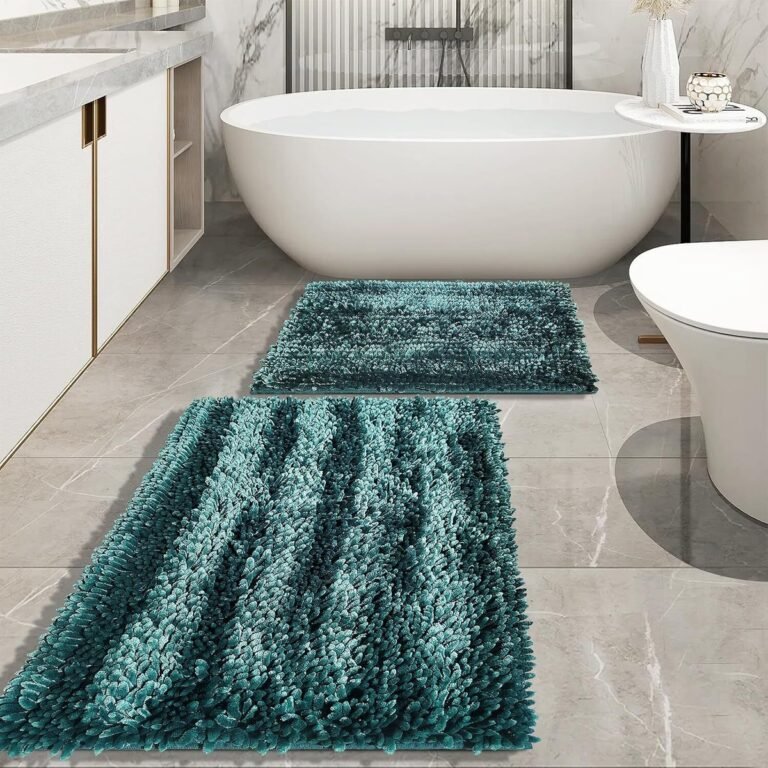
For many bathrooms, the two types work together: a contour rug around the toilet and a larger bath mat outside the shower or tub.

How to Choose the Right Contour rug
choose a contour rug by measuring the space first. A rug that is too small may leave the toilet base exposed. One that is too large may touch walls, cabinets, or the door.
1. Measure the available floor space
Measure:
- The open width in front of the toilet
- The distance from the toilet base to the nearest wall or cabinet
- The distance needed for the bathroom door to open
- The space between the toilet and nearby fixtures
Leave enough clear floor for safe movement. Do not force the rug under a toilet base if it bunches or folds.
2. Measure the toilet base
Toilets differ in shape. Measure the width of the pedestal near the floor and the distance from the wall to the front of the base.
Also check whether the toilet is:
- A standard two-piece toilet
- A one-piece toilet
- A compact toilet
- A skirted toilet
- A wall-hung toilet
A skirted toilet has smooth sides that may not match the opening of a traditional U-shaped rug. A wall-hung toilet may not need a toilet-base contour mat at all.
3. Check the rug’s opening
Look for the opening width, overall width, depth, and thickness. A product photo can be misleading because rugs may look larger or smaller than they are.
If the opening is too narrow, the rug may press against the toilet. If it is too wide, the rug may leave an awkward gap and shift more easily.
4. Consider the door and cabinet clearance
Place a sheet of paper on the floor in the approximate rug size. Open the door and move around the bathroom. This simple test can show whether the rug will catch under the door or block a cabinet.
5. Match the pile to the room
A thick, plush rug feels soft but may create problems near doors and toilet bases. A low-pile rug is easier to place under doors and often dries faster.
Choose a thicker style only when:
- The door has enough clearance
- The toilet base does not press into the rug
- The rug does not create a raised edge
- The floor remains stable when you step on it

Which Materials Are Best for a Contour Bathroom Rug?
The material affects comfort, drying time, care, and durability. No single material is best for every U.S. bathroom.
| Material | Strengths | Limits |
|---|---|---|
| Cotton | Soft, absorbent, and often machine washable | May stay damp and can shrink if washed or dried incorrectly |
| Polyester | Dries fairly quickly and resists some stains | May feel less natural and vary in absorbency |
| Microfiber | Soft and quick to absorb small amounts of water | Can trap soil if not washed often |
| Nylon | Strong and often holds color well | May feel less plush than cotton |
| Memory foam | Cushioned underfoot | Can dry slowly and may not suit damp rooms |
| Chenille | Soft texture with a plush feel | Needs careful washing and may mat over time |
Look at the full construction, not only the top fabric. The backing may be made from latex, rubber, PVC, or another coating. The backing can affect grip, floor compatibility, drying, and care.
Avoid assuming that a “non-slip” label means the rug cannot move. Dust, soap, water, worn backing, and smooth flooring can all reduce traction.

What Backing Should a Bathroom Contour Rug Have?
A bathroom rug should stay flat and resist movement, but its backing must also suit the floor.
Common backing types include:
- Latex or rubber coatings
- PVC coatings
- Silicone dots
- Woven or textured bases
- No backing
A coated backing may help reduce sliding on smooth floors. It does not make the rug slip-proof. The floor must be clean and dry, and the backing must remain intact.
Use extra care with:
- Vinyl flooring
- Sealed wood
- Laminate
- Painted floors
- Natural stone
- Floors with wax or polish
Some rubber or latex backings can leave marks, trap moisture, or react with certain finishes. Follow the floor maker’s guidance when available. If you are unsure, place the rug in a less visible area first and check beneath it after several hours.
Do not use a rug with a cracked, peeling, or brittle backing. Replace it when the backing no longer lies flat.

How Do You Clean and Maintain a Contour Rug?
Clean a contour rug according to its care label. The label is more reliable than a general washing rule because materials and backings differ.
A practical routine is:
- Shake or vacuum the rug to remove loose hair and dust.
- Wash it at the recommended temperature.
- Use the listed detergent and avoid unapproved bleach.
- Dry it as directed.
- Make sure the rug is fully dry before putting it back on the floor.
- Clean and dry the floor beneath the rug.
Do not place a rug back on the floor while its underside is wet. Trapped moisture can cause odor and may affect some flooring finishes.
Inspect the rug after washing. Replace it if you see:
- A peeling or cracked backing
- Loose threads that create a trip point
- A curled edge
- Persistent odor after cleaning
- Mold-like growth that does not come out with normal laundering
If the rug cannot be washed often, choose a thin, quick-drying style or use a washable liner only when the manufacturer allows it.

Are Contour Rugs Safe to Use Around a Toilet?
A contour rug can be safe when it lies flat, stays dry, and does not obstruct movement. It can become a hazard when it slides, bunches, curls, or blocks the door.
Reduce risk by following these steps:
- Keep the rug flat on the floor.
- Do not place it over a raised threshold.
- Keep the toilet’s water supply and floor area easy to inspect.
- Remove it before cleaning the floor.
- Replace damaged rugs.
- Keep wet rugs away from walking paths until they dry.
- Do not stack one mat on top of another.
- Check that the door does not catch the rug.
Older adults, children, and people with limited balance may be more affected by a moving bath mat. In these situations, a low-profile rug with a stable base may be more suitable than a thick, soft design.
A contour rug also should not hide an active leak. If the floor near the toilet stays wet, find the source before covering the area with a mat. A plumber may be needed if the leak comes from the toilet connection, supply line, tank, or drain.

Common Mistakes When Buying a Contour Rug
The most common mistake is buying by color alone. Bathroom rugs can look attractive online but fit poorly once they are placed around the toilet.
Avoid these errors:
Choosing the wrong shape
A U-shaped rug may not fit a skirted or unusually shaped toilet. Compare the opening with the actual toilet base.
Ignoring thickness
A thick rug may prevent a door from opening or create a raised edge. Measure door clearance before buying.
Assuming all rugs are machine washable
Some rugs have backing that can crack, peel, or lose shape in a washer or dryer. Read the care label.
Covering a leak
A rug can hide moisture from a failing wax ring, supply connection, or tank. Check the floor regularly.
Leaving the rug damp
A wet rug can develop odor and may keep the floor below it damp. Hang or dry it when needed.
Trusting “non-slip” without inspection
Check the rug after installation. If it moves when you step on it, stop using it until the cause is fixed or the rug is replaced.
Buying a toilet seat cover by mistake
A toilet seat cover fits the seat or lid. A contour rug sits on the floor. Read the product dimensions and description carefully.

Should You Buy a Contour Rug for Your Bathroom?
A contour rug is a practical choice when you want a soft, shaped mat around the toilet and have enough floor space for it to lie flat. It works best when the toilet base matches the rug opening, the door clears the pile, and the material can be cleaned with reasonable frequency.
Choose a regular rectangular bath mat instead when your main need is water absorption outside the shower or tub. Skip a contour rug if it blocks the door, creates a trip edge, hides a leak, or moves across the floor.
Before buying, measure the toilet base and available floor. Then compare the rug’s dimensions, pile height, backing, and care instructions. That short check can prevent most fit and maintenance problems.

FAQs About Contour Bathroom Rugs
What is the purpose of a contour bath mat?
A contour bath mat fits around the base of a toilet. It can provide a warmer surface underfoot and catch small drips near the toilet. It is not designed to replace a shower or tub mat.
Does a contour rug go around the front or back of the toilet?
Most contour rugs fit around the front and sides of the toilet base. They usually do not extend behind the toilet. The exact fit depends on the rug design and toilet shape.
Can a contour rug be placed under the toilet?
Do not force a rug under the toilet base. If the rug bunches, presses against the pedestal, or makes the toilet unstable, remove it. A floor rug should sit flat around the toilet rather than lift or support it.
How often should a bathroom contour rug be washed?
Wash it when it becomes damp, dirty, or odorous, and follow the care label. Bathrooms with frequent use may require more frequent washing than guest bathrooms. Dry the rug and the floor beneath it before replacing it.
Are toilet rugs sanitary?
A toilet rug can be sanitary when it is washed and dried regularly. It can become unhygienic when it stays wet, traps soil, or hides leaks. A washable, quick-drying design is often easier to maintain.
Conclusion
A contour rug for the bathroom is a floor mat shaped to fit around the base of a toilet. It adds comfort and can catch small amounts of water, but its value depends on proper fit, stable backing, easy care, and regular drying.
Measure the toilet and floor area before purchasing. Select a rug that lies flat, clears the door, suits the flooring, and can be cleaned according to its label. If the bathroom has unexplained moisture, fix the leak before covering the floor with any rug.