Bathroom Rugs Vs Bathroom Mats: Key Differences
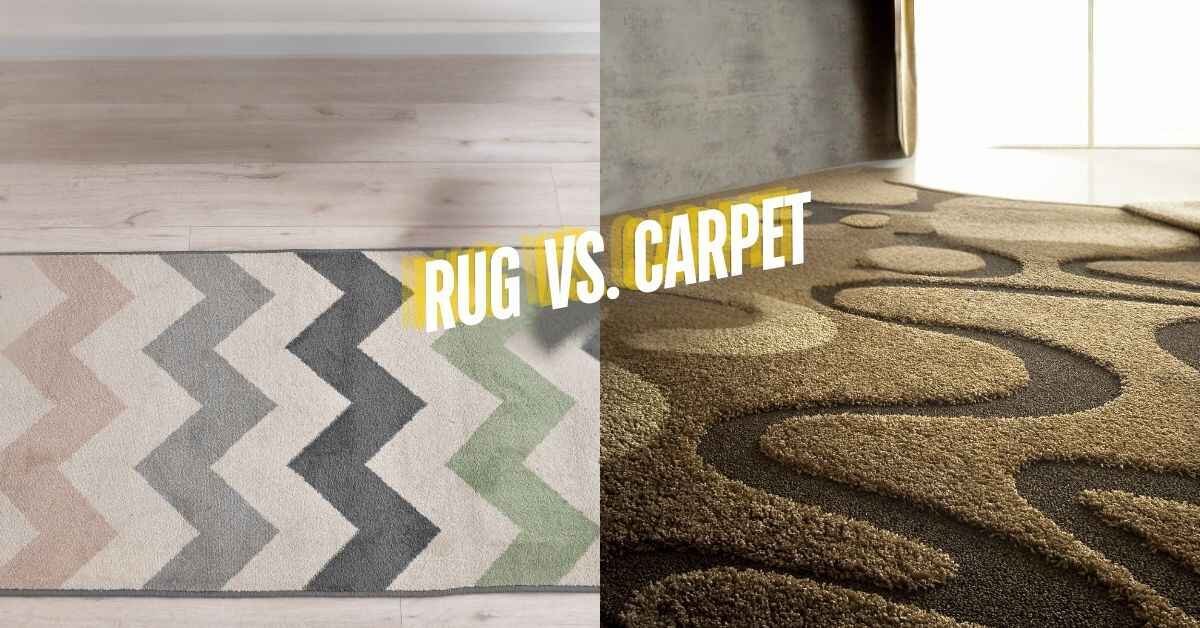
Bathroom rugs and bathroom mats both add comfort, absorb water, and help protect the floor. The main difference is their purpose and design. A bath mat is made mainly for safety and water control near a tub, shower, or sink. A bathroom rug is usually more decorative and may cover a larger area.
The terms often overlap. In the United States, stores may label a similar product as a “bath mat,” “bath rug,” or “bathroom rug.” The label alone does not tell you how absorbent, washable, or slip-resistant the item will be. Check the material, backing, size, and care instructions before buying.

What Is a Bathroom Mat?
A bathroom mat is a floor covering designed for a wet area. Its main job is to catch water when you step out of a shower or bath. It may also give your feet a softer surface and help reduce contact with a cold floor.
Most bath mats have one or more of these features:
- Fast-absorbing fibers
- A compact size
- A textured surface
- A non-slip or grip backing
- A shape made to fit beside a tub or shower
- Machine-washable construction
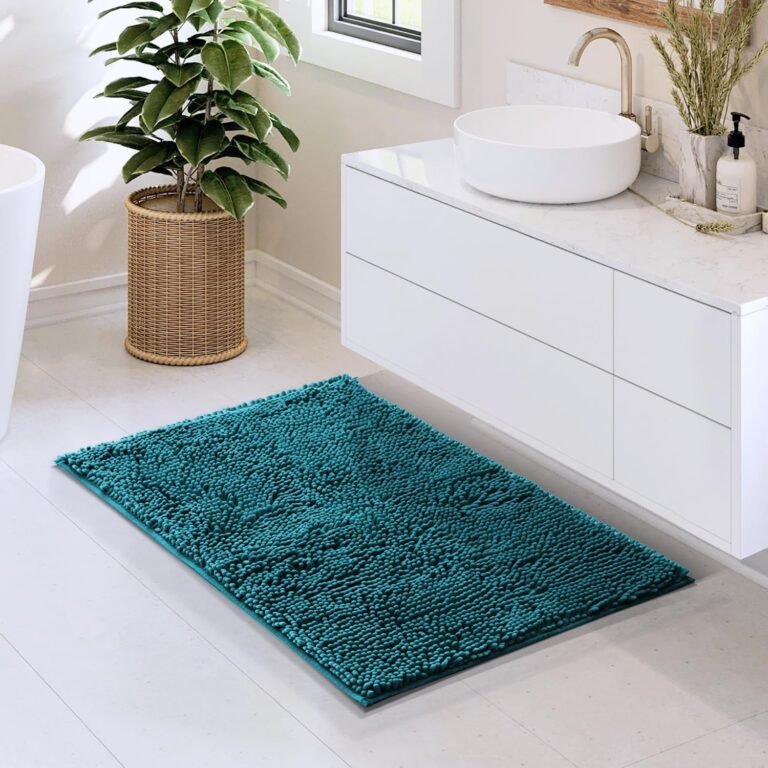
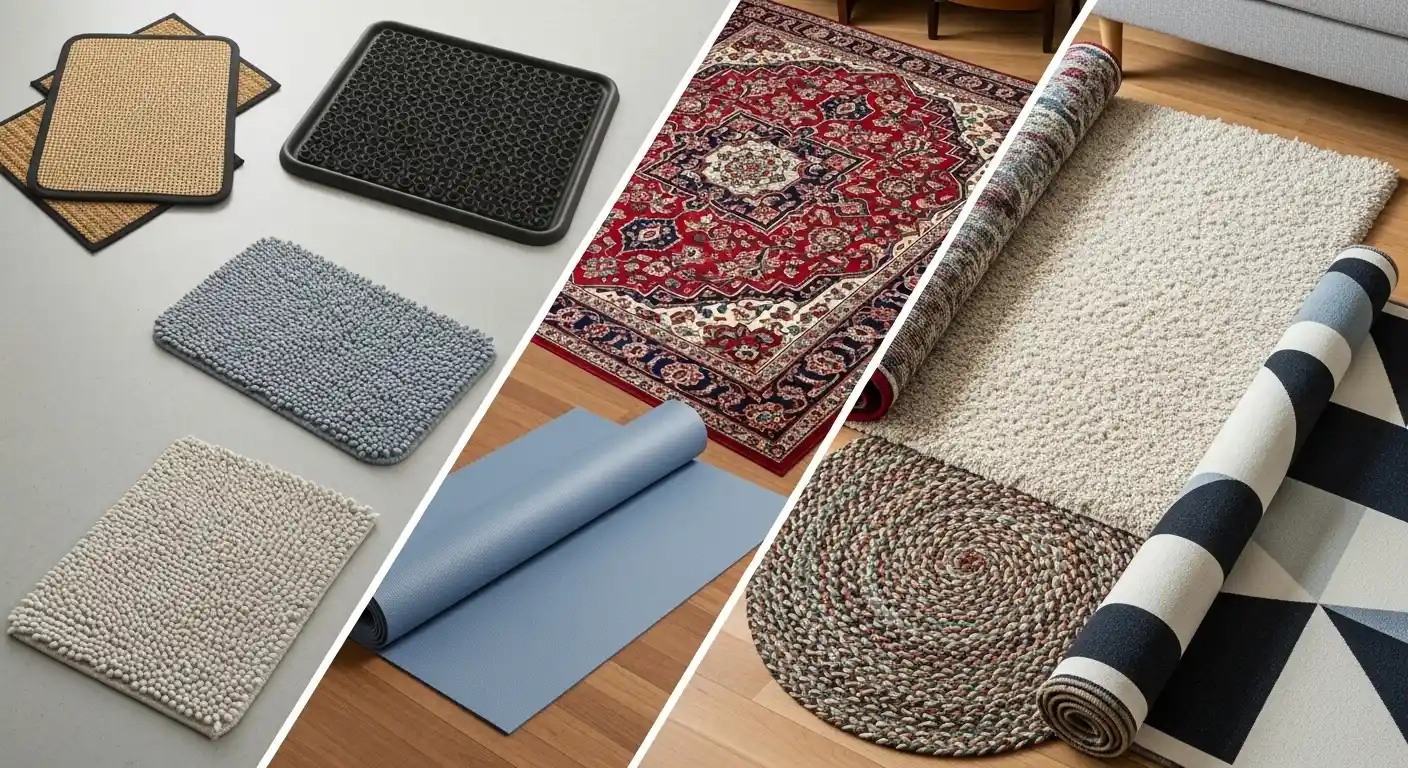
Common bath mat materials include cotton, microfiber, chenille, bamboo, and synthetic fibers. Cotton mats feel soft and absorb water well. Microfiber and chenille often dry quickly because their fibers create more surface area. Bamboo mats allow water to pass between slats, but they do not absorb water like a fabric mat.
A bath mat is usually placed where a person steps after bathing. It may sit outside a shower enclosure, along the side of a bathtub, or in front of a bathroom sink.

What Is a Bathroom Rug?
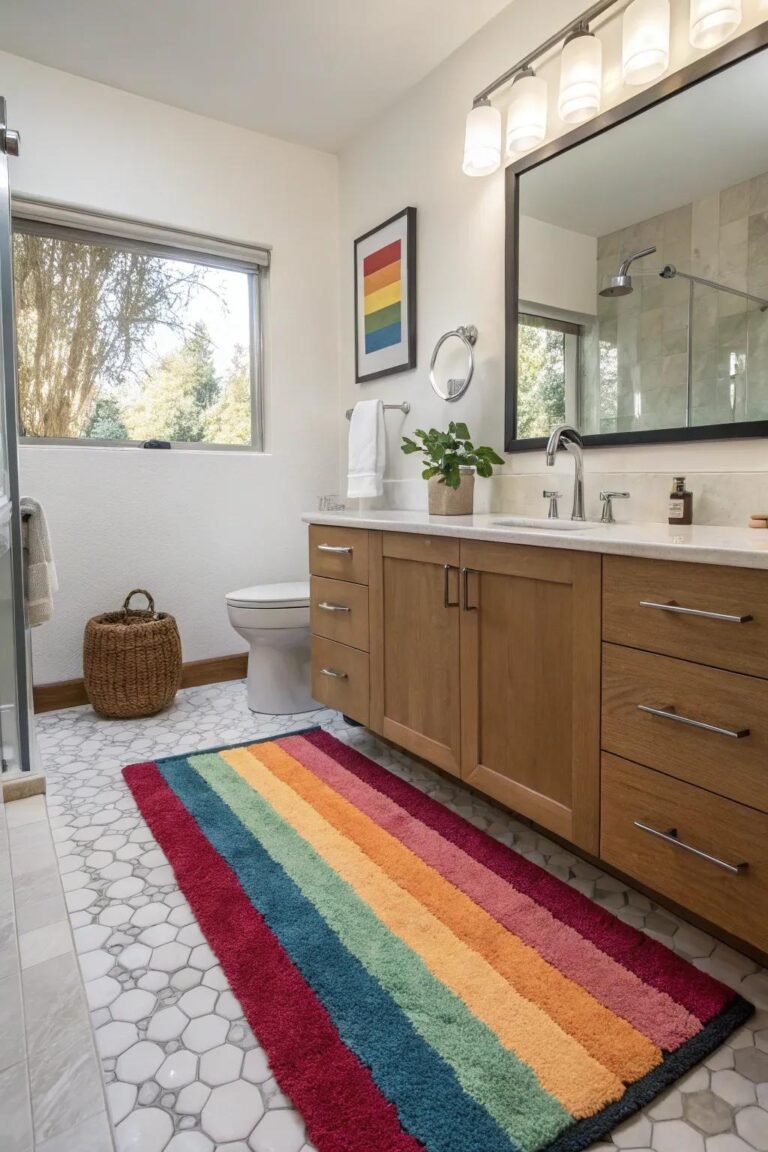
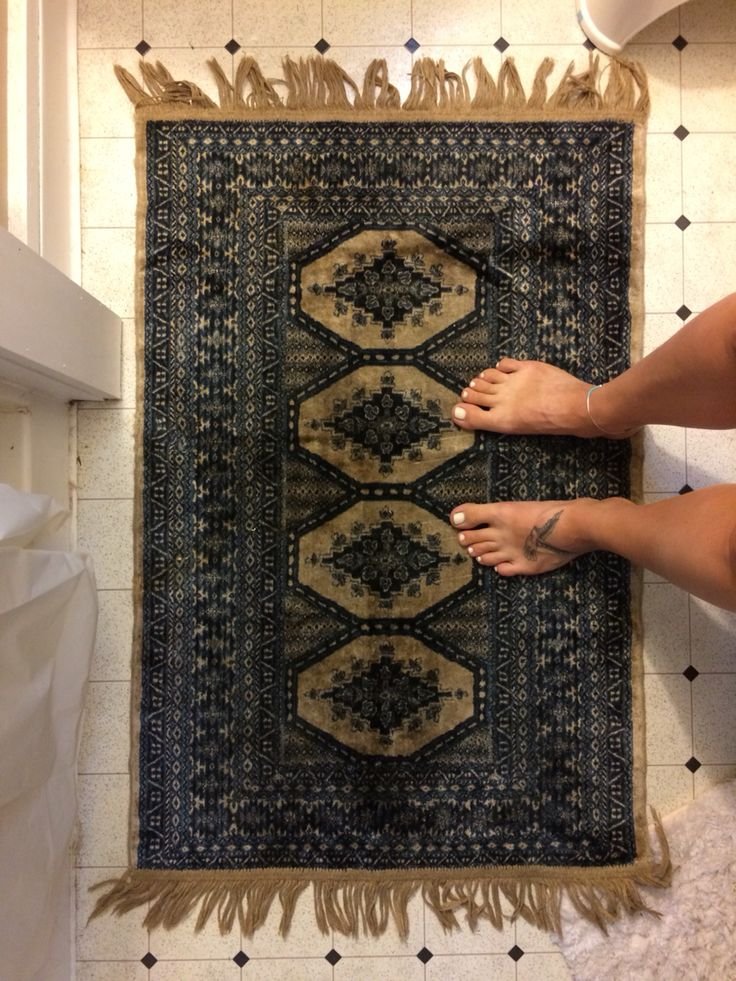
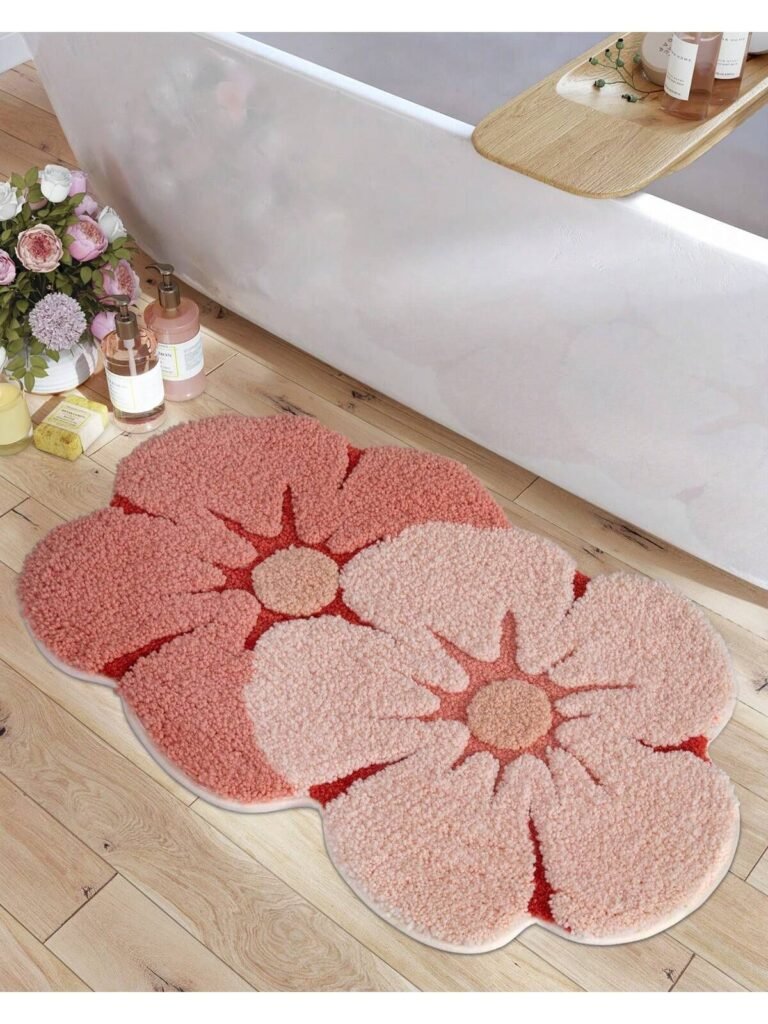
A bathroom rug is a decorative floor covering used to add color, texture, and warmth. It may also absorb water, but decoration and room design often play a larger role than they do with a bath mat.
Bathroom rugs are often:
- Larger than bath mats
- Made in decorative colors or patterns
- Designed to match towels, curtains, or other decor
- Used in open areas of the bathroom
- Made with a thicker pile or a more finished edge
Some bathroom rugs are suitable for use near a shower or tub. Others are better for dry areas, such as beside a vanity or near the bathroom door. A rug with a thick pile may feel comfortable, but it can hold more moisture and take longer to dry.
A bathroom rug is not automatically slip-resistant. A decorative rug may need a separate rug pad, but not every rug pad is safe for damp floors. Use only a pad labeled for bathroom or moisture-prone use, and follow the flooring and rug maker’s instructions.

Bathroom Rugs vs. Bathroom Mats: Key Differences
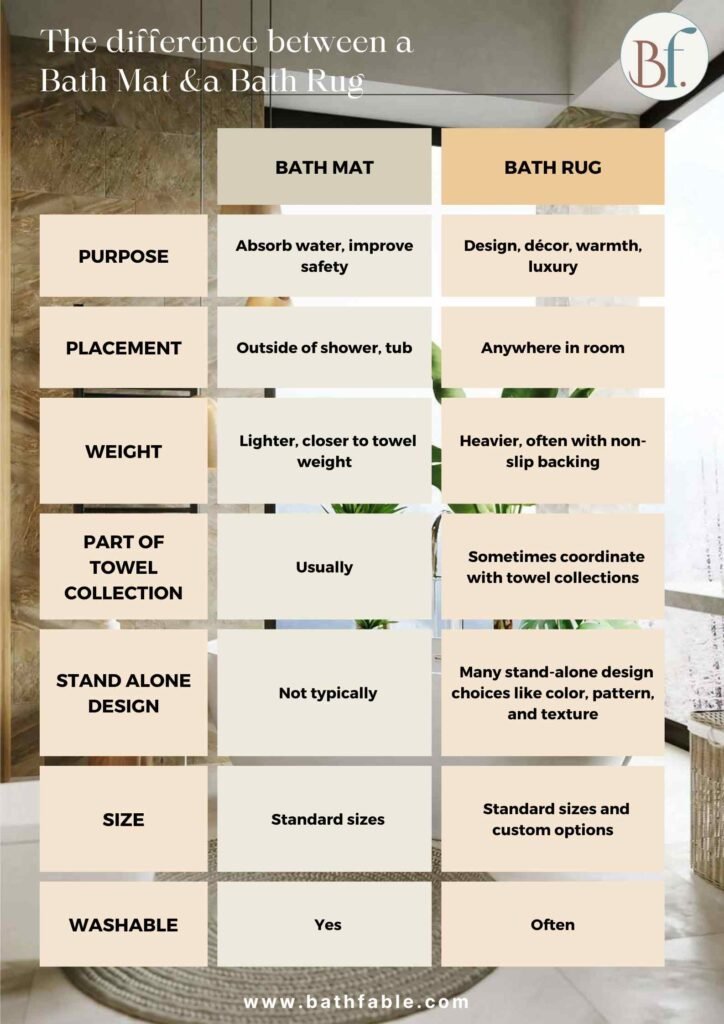
The clearest difference is function. A bath mat is usually designed for water control and foot comfort. A bathroom rug is usually chosen for style and broader floor coverage.
| Feature | Bathroom mat | Bathroom rug |
|---|---|---|
| Main purpose | Absorb water and provide a safer step | Add style, warmth, and floor coverage |
| Best location | Outside a tub or shower | Open floor areas or beside a vanity |
| Typical size | Small to medium | Medium to large |
| Water absorption | Often a key design feature | Varies by material |
| Slip resistance | Common, but must be verified | Varies widely |
| Design | Simple or coordinated | Often more decorative |
| Drying time | Often shorter | May be longer if thick |
| Best buying test | Absorption, grip, care | Size, style, pile, care, and grip |
These are general patterns, not strict rules. A large cotton bath mat can work like a rug. A small washable bathroom rug can work like a mat. The product’s construction matters more than the name on the package.
Size and coverage
Bath mats usually cover the area where one person steps. Bathroom rugs may cover a longer stretch of floor, such as the space between a double vanity and a bathtub.
Measure the available floor before you buy. Leave enough space for doors, drawers, and cabinets to open without catching the edge of the mat or rug.
Water absorption
A bath mat should absorb water without staying wet for too long. A thick rug may absorb more water, but it may also dry more slowly. Slow drying can create a damp environment that leads to odor and material damage.
Look for care instructions that allow regular washing. A washable item is easier to keep clean than one that cannot be laundered or dried properly.
Slip resistance
Neither the word “rug” nor the word “mat” guarantees a secure grip. A mat can move on tile, vinyl, stone, or wood if its backing is worn, dirty, or not suited to the floor.
A safer choice has a stable backing and lies flat. Keep the floor beneath it clean and dry when possible. Replace the item if the backing cracks, curls, peels, or becomes slippery.
Appearance
Bathroom rugs usually offer more design choices. They can help connect colors across the room. Bath mats also come in many styles, but their shape and performance often matter more than their decorative role.
Which One Should You Buy?
Choose a bathroom mat when you need a practical layer beside a shower, tub, or sink. Choose a bathroom rug when you want broader coverage or a stronger decorative effect.
Use this simple decision guide:
- For stepping out of a shower: Choose an absorbent bath mat with a stable backing.
- For a child’s bathroom: Choose a washable mat with a secure, flat design. Check it often for movement and wear.
- For an older adult or anyone at higher risk of falling: Reduce loose floor coverings. Choose a mat that stays flat and secure, and consider advice from a qualified health or home-safety professional.
- For a large bathroom: Use a rug only if it does not block doors, drawers, or walking paths.
- For a small bathroom: A compact bath mat may provide useful coverage without making the room feel crowded.
- For a decorative vanity area: A bathroom rug may work well if the floor stays mostly dry.
- For a wood floor: Check the flooring maker’s guidance. Some backings can trap moisture or affect the finish.
- For a rental home: A washable mat may be easier to remove and maintain than a large rug.
The best choice balances four factors: water, grip, size, and care. Style comes next.

Can You Use a Bathroom Rug as a Bath Mat?
You can use a bathroom rug as a bath mat only when it is designed to handle moisture and remain stable on the floor. A decorative rug with no grip may slide when stepped on. A thick rug may also stay damp for too long.
Before using a bathroom rug near a shower or tub, check that:
- The backing is suitable for the floor.
- The rug lies flat.
- The surface does not become slick when wet.
- The rug can be washed or cleaned as directed.
- The rug dries fully between uses.
- It does not interfere with a door, cabinet, or mobility aid.
Do not place a rug so close to the tub that it becomes partly trapped under a door or fixture. Do not assume that a separate rubber or plastic pad will solve every problem. Some pads can stain, discolor, or trap moisture on certain floors.

Best Materials for Bathroom Rugs and Mats
The best material depends on how much water the item will receive and how quickly it can dry.
Cotton
Cotton is soft, absorbent, and common in bath mats. Many cotton mats can be machine washed. However, a thick cotton mat may take longer to dry than a thin one.
Microfiber
Microfiber can absorb water and often dries faster than dense cotton. It may feel soft underfoot and is common in mats with a plush texture. Follow the care label because heat can affect some synthetic fibers or backings.
Chenille
Chenille mats have raised, tufted fibers. They can feel comfortable and absorb water well. Their deep texture may hold moisture, dust, and hair, so regular washing is useful.
Bamboo and wood
Bamboo and wood bath mats do not absorb water like fabric. They allow air to move below the feet and can dry quickly when kept clean. They may feel less soft and can become slippery if soap or water builds up on the surface.
Synthetic fibers
Polyester and similar fibers may resist fading and dry at a moderate rate. Performance varies by weave, pile, and backing. Material names alone do not prove that a product is non-slip or highly absorbent.
How to Clean and Maintain Bathroom Rugs and Mats
Regular care helps control odor, dirt, and dampness. It also gives you a chance to find damage before the item becomes a trip hazard.
Follow these steps:
- Read the care label first. The label gives the safest washing and drying method for that item.
- Shake out loose dirt. Do this outdoors when practical, or vacuum the dry surface.
- Wash at the stated interval. Wash more often when the mat receives heavy use or stays damp.
- Dry it fully. Do not return a wet mat to the floor.
- Clean the floor below it. Dirt and trapped moisture can affect both the floor and the backing.
- Inspect the backing. Look for cracks, peeling, curling, or a sticky surface.
- Replace damaged items. Cleaning cannot restore a backing that no longer grips the floor.
Avoid using chlorine bleach, fabric softener, high heat, or harsh cleaners unless the care label allows them. Some products can weaken fibers, damage rubber, or reduce the life of a non-slip backing.
If a mat develops a strong odor after washing, it may not be drying fast enough. Improve air flow, wash it as directed, and consider a thinner mat or a second mat that can be rotated while the first dries.

Bathroom Mat Safety: Common Mistakes to Avoid
A bathroom mat can help manage water, but it cannot replace safe bathroom design. Avoid these common mistakes:
Using a loose rug beside a wet tub
A rug that shifts underfoot can create a fall risk. Choose a stable mat made for wet areas, or remove the rug from that location.
Covering a floor drain
Do not place a mat where it blocks a drain or prevents water from leaving the floor. Standing water can damage some flooring and make the surface more slippery.
Leaving the backing damp
Moisture trapped beneath a mat can damage some floors and encourage odor. Lift the mat during cleaning and let both surfaces dry.
Choosing a very thick pile
A high pile can catch toes, interfere with mobility devices, or prevent doors from opening. A low, flat profile is often easier to walk across.
Assuming “non-slip” means fail-safe
Grip depends on the floor, moisture, dirt, wear, and the product’s condition. Test the mat gently before regular use, and remove it if it moves.
Ignoring household needs
A home with young children, older adults, pets, or mobility equipment may need fewer loose textiles. Keep walking routes clear and ask a qualified professional for personalized fall-prevention advice when needed.
Frequently Asked Questions
Are bathroom rugs and bath mats the same thing?
No. They can serve similar purposes, and retailers often use the terms loosely. A bath mat usually emphasizes water absorption and placement near a tub or shower. A bathroom rug usually emphasizes decoration and wider floor coverage.
Should a bath mat go inside or outside the shower?
For most fabric bath mats, place the mat outside the shower or tub, where you step out. Mats inside a shower must be made specifically for wet interiors and should not create a slipping or drainage problem. Follow the product directions.
Do bathroom mats prevent falls?
A well-fitted mat may help manage water and provide a stable surface, but it does not guarantee fall prevention. A loose, curled, wet, or worn mat may increase risk. Keep the floor dry, check the backing, and remove damaged mats.
How often should you wash a bathroom mat?
Wash it according to the care label and how often it gets wet. A mat used every day may need frequent washing, especially if it stays damp or develops an odor. Always dry it fully before putting it back.
Can you put a regular area rug in a bathroom?
You can use one in a dry area if it lies flat, fits the space, and does not interfere with doors or walking paths. Do not use a regular rug near a shower or tub unless its material, backing, and care instructions suit that damp location.
Final Answer: Rug or Mat?
The difference between bathroom rugs and bathroom mats is mainly one of purpose. A bath mat is usually the better choice for stepping out of a shower or tub because it focuses on water absorption, comfort, and floor grip. A bathroom rug is usually better for decoration and larger areas that stay relatively dry.
Before buying, measure the space, check the backing, confirm the care instructions, and consider how quickly the item will dry. The best bathroom floor covering is not simply the softest or most attractive one. It is the one that stays flat, handles the room’s moisture, and remains easy to clean.